Get Full Government Meeting Transcripts, Videos, & Alerts Forever!
Get email alerts on the Micromobility topic
No spam. Unsubscribe anytime.
Operator asks Fort Myers council to expand scooter program to city limits; council raises safety and enforcement concerns
Summary
A micromobility operator requested expansion from downtown to city limits, doubling the fleet to 200 and extending hours to 2 a.m.; data presented showed ~12,000 rides through November and 0 reported major incidents, while council members and advisory board members cited infrastructure and enforcement gaps and urged caution or stepwise expansion.
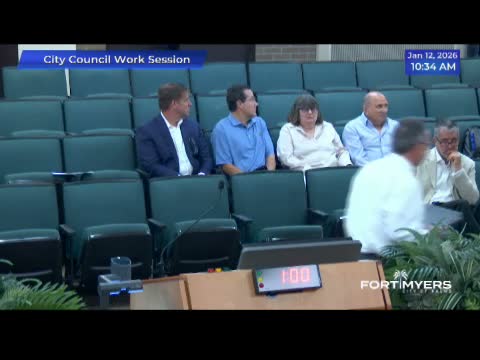
A micromobility operator on Tuesday asked the Fort Myers City Council to expand its pilot scooter program from a downtown focus to citywide limits, increase the fleet from 100 to 200 vehicles, and extend operating hours from midnight to 2 a.m.
The company representative (presenting the Phase 2 proposal) said the program has logged nearly 12,000 rides from its August launch through Nov. 30 and recorded about 5,100 unique users and roughly 21,000 miles traveled. The presenter said an estimated 76% of users were locals and that, using a conservative calculation, the program displaced "just over 3 metric tons of CO2." The presenter also said the program has captured roughly 3,000 failed scans outside the operating zone, which indicates demand beyond current boundaries.
"We estimate that's been able to capture about, just over 3, metric tons of CO2," the company representative said. The representative also told council that the operator had no "major incidents" reported to the company (that would be reported by police, hospital, fire or insurers) since launch, while acknowledging not every minor incident is captured.
Council members and advisory‑board representatives questioned whether the city has safe infrastructure for citywide scooter operation, enforcement resources, and liability protections. Councilmembers raised multiple safety anecdotes at the meeting: several members said they or constituents had near‑misses with scooters on sidewalks and raised concerns about scooters on major corridors such as MLK Boulevard and McGregor Boulevard.
Councilmember Geraldo cited public feedback from the Bicycle and Pedestrian Advisory Board and said: "we don't have the infrastructure and there are current struggles... I feel very uncomfortable expanding the number of... scooters at this moment." Another councilmember suggested stepwise expansion rather than full citywide rollout and asked the operator to exclude specific high‑risk streets.
City attorney and staff members recommended a city risk‑management analysis and review of sovereign‑immunity protections and said any expansion should be tied to liability considerations and enforcement resources. The operator offered to work with staff to identify no‑ride zones, lower speeds and other program controls.
No formal action was taken at the workshop. Staff signaled willingness to continue workshopping operational boundaries, enforcement mechanisms and potential stepwise expansion before bringing any ordinance or contract amendment back to council for a decision.