
Board recommends commutation for Jeffrey Brinkley after split deliberations, 4–1
Get AI-powered insights, summaries, and transcripts
Subscribe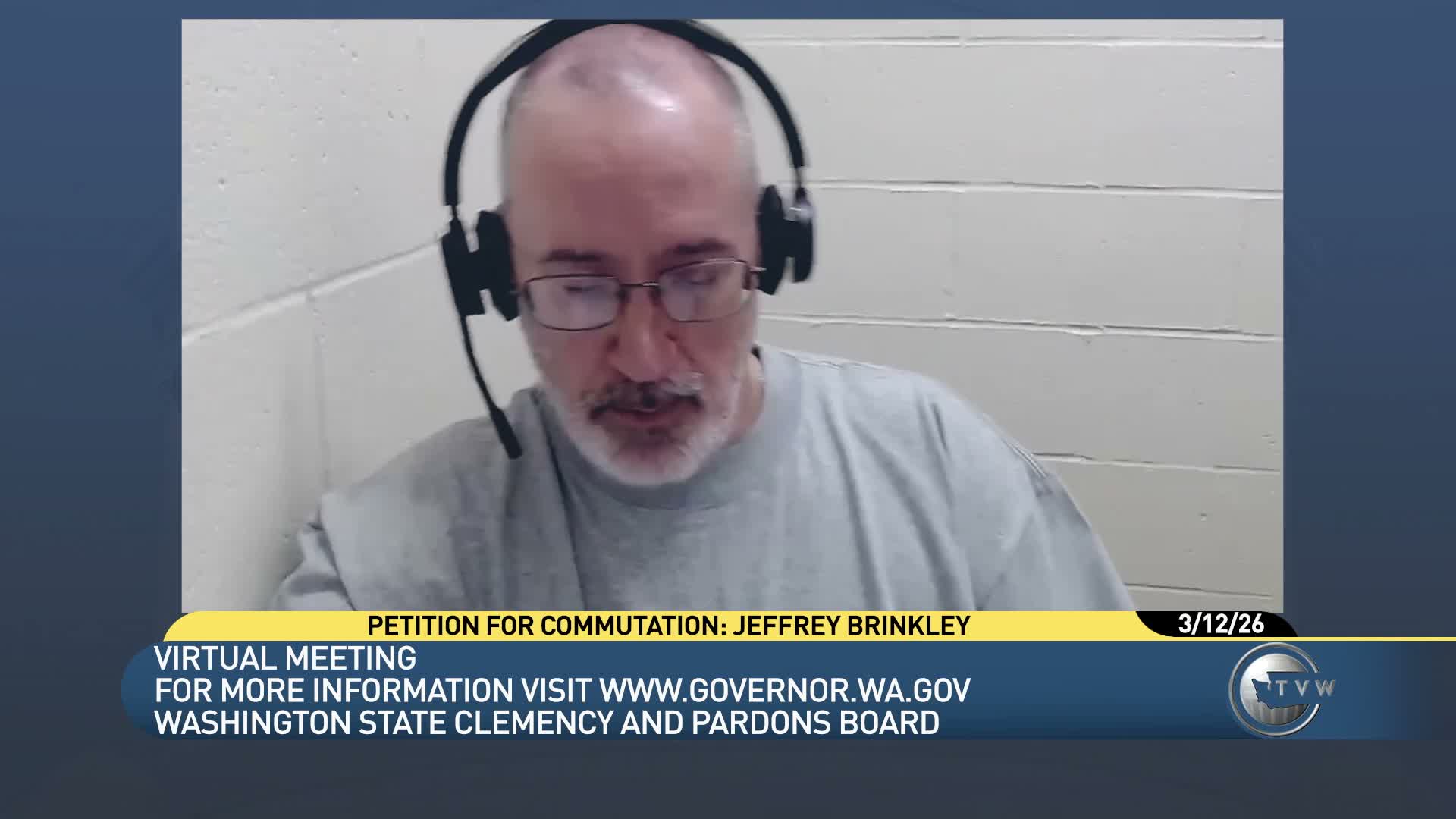
Summary
After lengthy testimony from petitioner Jeffrey Brinkley, family witnesses and the prosecutor, the Clemency and Pardons Board voted 4–1 to recommend commutation; the prosecutor opposed the petition citing the violence and victim impact in the 2011 case.
The Washington State Clemency and Pardons Board voted 4–1 on March 12, 2026, to recommend commutation for Jeffrey Brinkley, following multiple hours of testimony, witness statements and prosecutorial remarks.
Brinkley, who read a prepared statement, apologized to victims and described his history of addiction, homelessness and repeated incarceration. He said he has been sober for more than 14 years, completed available programs, volunteered in prison (including welding projects and a dog program), and developed release plans that include Oxford House sober living and family support. Brinkley said he intends to work with at-risk youth and continue recovery supports if released.
Deputy Prosecuting Attorney Jason Cummings opposed clemency in this case. Cummings described the December 1, 2011 events as violent and said the offenses set off a chain of assaults and other crimes that ultimately resulted in a death later that day. He told the board the victims (including a surviving victim who submitted written comments) continue to suffer trauma and that he was not comfortable recommending commutation at this time; he also said he believed Brinkley had not yet served the minimum range for the 2011 events as reflected in the record.
Board members split in deliberation: some cited strong evidence of remorse, long-term sobriety and concrete reentry plans, including family support and housing offers from Brinkley’s brother Daniel; others raised concerns about recent infractions while incarcerated (noted in the record as 2016 and a 2018 altercation dismissed to a minor infraction) and whether Brinkley had sufficient opportunity to demonstrate stable reentry outside protective custody. Board Member Kazi Joshua moved to recommend commutation, citing rehabilitation and family support; Vice Chair Doug Baldwin seconded. The motion carried 4–1.
Chair Raymond Delis Reyes reminded Brinkley the board’s recommendation is advisory; the governor will make the final decision. The record shows the prosecutor and at least one victim remain opposed to commutation at this time.
What happens next: the board will transfer its recommendation and supporting documents to the governor for review under the executive clemency process.