
Public commenters press commission on ethics, wolves and salmon policy
Get AI-powered insights, summaries, and transcripts
Subscribe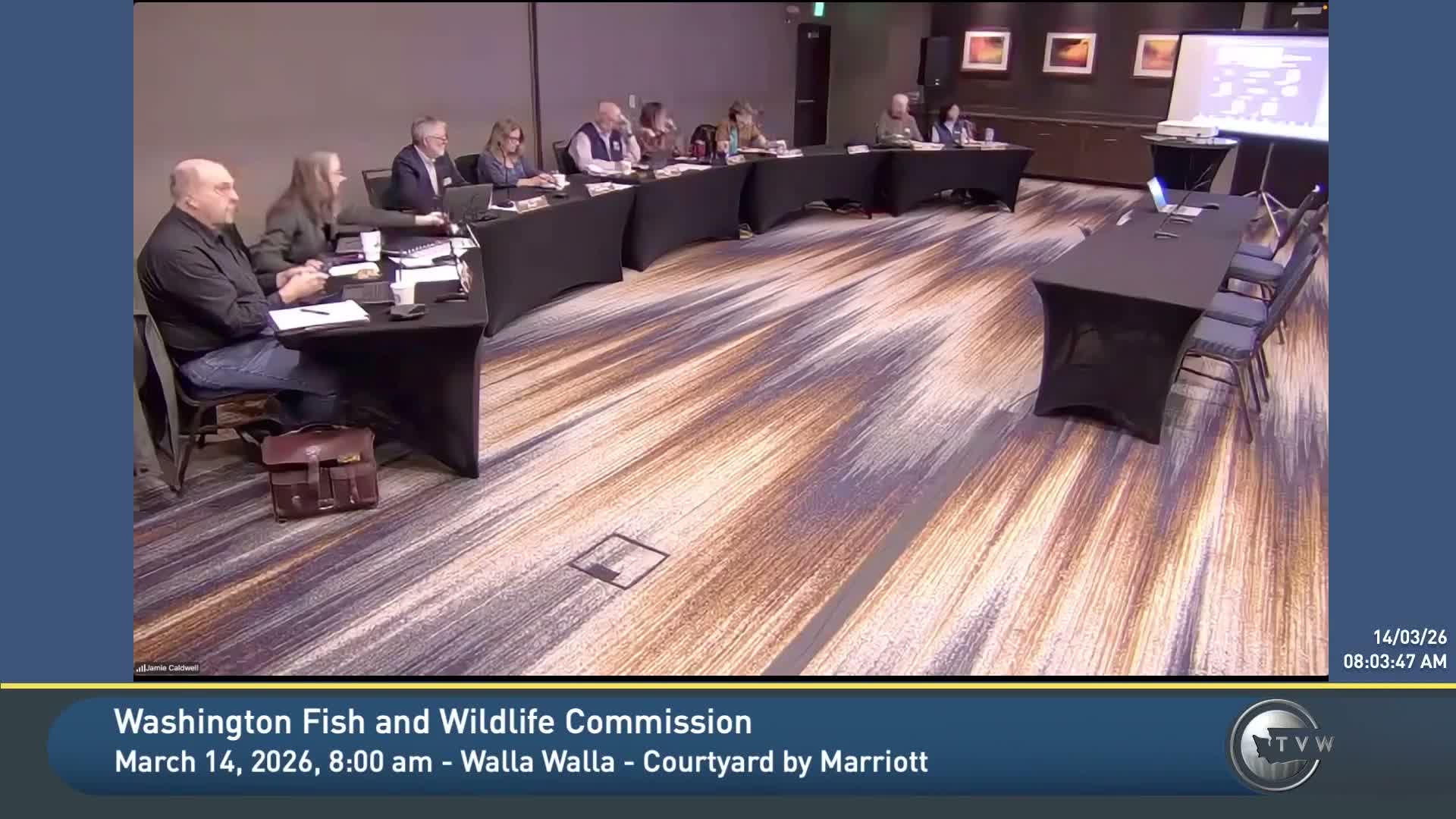
Summary
Public commenters at the March 14, 2026 meeting accused some commissioners of ethics violations, urged stronger protections for wolves and southern resident killer whales, and urged better public access to predator-prey study results; commissioners noted the comments and directed staff follow-ups.
Dozens of members of the public addressed the Washington Fish and Wildlife Commission on March 14, 2026 in Walla Walla, pressing the panel on commissioner conduct, wolf protections, salmon policy and other issues.
Douglas Bose of Skagit County told commissioners he questioned their ethics and singled out a sitting commissioner by role for allegedly not using state equipment for state business while under an ethics investigation, saying such conduct should lead to removal if basic duties are not upheld. Chair (role label) interrupted to ask commenters to avoid personal attacks, and the public comment period continued with a mix of calls for conservation and defense of hunting traditions.
Allison Anderson, a retired environmental planner, urged amendment of WAC 220-440-080 to align the agency rule with the 2011 wolf conservation management plan's definition of an "active wolf attack," argued that lethal control should be a last resort and asked the department to document whether nonlethal deterrents were tried before killing wolves. Liz Carr, representing a cattle-range conservation group in Northeast Washington, urged that the predator-prey project's five-year results be made more accessible on the agency website and used in outreach and policy discussions.
Several commenters defended hunting and accused some commissioners of pursuing anti-hunting agendas. Dane Czarnecki and Jerry Loudermilk both criticized what they described as efforts to reduce hunting opportunities and, in different ways, disputed narratives in recent op-eds and public statements. Corey Maxwell accused multiple commissioners of legal or ethical violations over recent years and defended the independence and credibility of the Ruckelshaus Center review; those claims were made during public comment and were not answered on the record by commissioners in these segments.
Commissioners and staff acknowledged the volume and variety of public input. Deputy Director Amy Windrope and staff said they would track requests raised during public comment, summarize follow-ups in the Director's report and bring specific topics (for example, an AIS summary and a September briefing on cougar harvest/first-year impacts) back to committees. There were no formal motions or votes taken on the substantive allegations during the open public comment period recorded in the public segments.
Because the allegations about commissioner conduct were made from the public-comment table and on the record, they are part of the public record and were noted by commissioners for follow-up; the transcript captures the accusations and the request that the Commission and relevant authorities address them, but it does not record formal responses, investigations opened, or outcomes within the posted segments.