
Alachua County unveils school‑rezoning proposals, prompting calls to delay votes for deeper analysis
Get AI-powered insights, summaries, and transcripts
Subscribe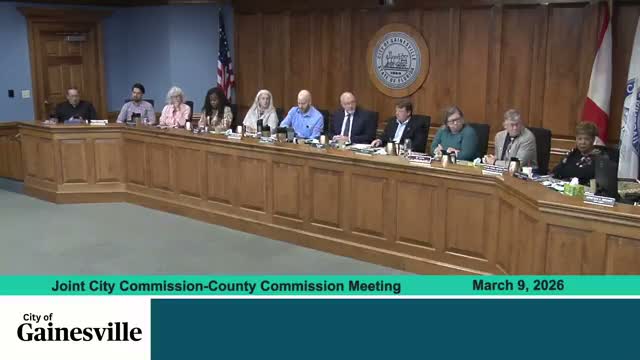
Summary
Superintendent Patton and school staff proposed closing and consolidating several elementary schools into K–8 conversions to ‘right‑size’ district capacity; elected officials and residents pushed for more data, housing and transportation analysis and urged consultation before any final votes.
Alachua County School District staff laid out a sweeping rezoning and right‑sizing proposal that would close or consolidate several elementary schools, convert some middle schools to K–8 models and rezone district attendance boundaries, prompting sharp questions from city and county officials and impassioned public testimony from affected neighborhoods.
Superintendent Patton and Kim Neal, the district’s director for state reporting and student assignment, told the joint meeting the plan responds to long‑term enrollment declines. Neal cited district numbers showing roughly 6,600 empty seats across the district — including about 2,666 at the elementary level — and a projected districtwide decline in brick‑and‑mortar enrollment that the presentation estimated could reach about 7,000 students by 2030–31.
As presented, the district’s revised recommendations would keep Duval Early Learning Academy and Rawlings Elementary open but propose closures of Alachua, Irby, Foster and Williams Elementary Schools and significant expansions to create Mebane, Lincoln and Oak View K–8 campuses. Neal said recurring general‑fund savings from an individual school closure average about $1.1 million per year and that a 10‑year savings estimate for the four‑school scenario would be roughly $44 million; facility capital savings were presented in the tens of millions as well. Neal said detailed capital estimates to convert middle schools to K–8s were still being finalized and would be provided to the board.
Elected officials from Gainesville and Alachua County pressed district staff for more analysis before any final action: How many students might leave the public system for charters, private schools or homeschooling if a neighborhood school closes? What are the capital and operating costs to convert middle schools to elementary‑plus‑middle campuses? How will transportation, walk zones and family schedules be affected? County and city leaders also urged the district to consider planned or proposed housing developments and other long‑range growth indicators when evaluating school capacities.
Public testimony was robust: parents, neighborhood activists and civic groups warned that closing neighborhood schools would further depress East Gainesville investment and community cohesion. Many speakers asked the district to delay final decisions to allow deeper community engagement and to provide the capital‑cost and student‑impact analyses requested by elected officials.
Superintendent Patton asked officials and the public for patience and said the district would deliver requested cost figures and continue to refine plans. The board did not vote on closures during the joint meeting; several city and county commissioners requested staff assistance (planning/zoning and growth data) to support the district’s decision making.
Next procedural steps described during the meeting included additional board briefings and the district providing updated capital‑cost estimates; county and city staff agreed to make planning and growth‑management data available to district staff to inform rezoning.