Get Full Government Meeting Transcripts, Videos, & Alerts Forever!
Get email alerts on the Geotechnical Policy topic
No spam. Unsubscribe anytime.
North Port debate over geotechnical surveys centers on building‑official discretion and state rulings
Summary
Staff reviewed a timeline of geotechnical survey guidance and rulings and described a year‑plus of discussion that led the building official to stop routinely requiring surveys for single‑family homes while reserving discretion. Engineer Tim Drumm and public commenters disputed the city's approach; commissioners pressed staff for forensic data and refunds for property owners who paid surveys.
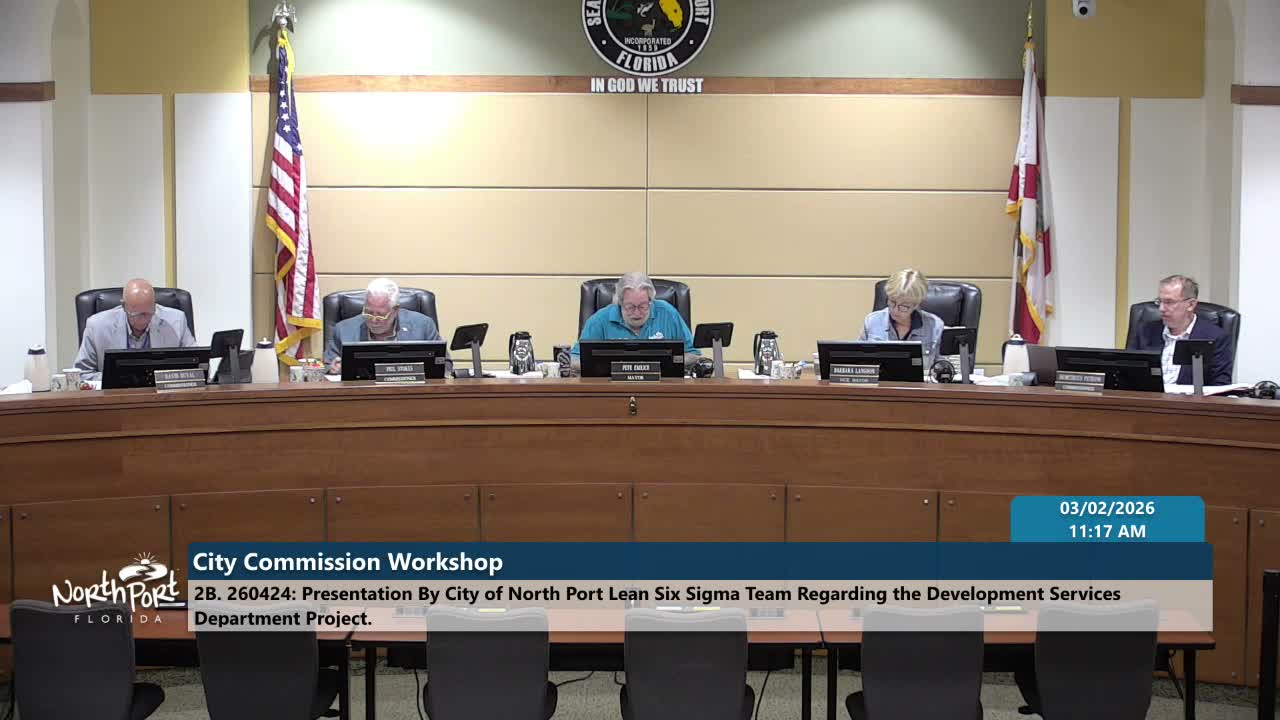
A lengthy exchange on March 2 focused on the city's prior requirement that builders submit geotechnical surveys when fill exceeded the residential code’s 24‑inch threshold. Director of Development Services Elena Ray and the city manager walked the commission through a timeline beginning in 2023: the building official announced a requirement in October 2023, the Building Officials Association of Florida issued an informal interpretation later that year and the Florida Building Commission issued a formal interpretation in June 2024. Staff said the building official subsequently exercised discretion and on Nov. 1, 2024 stopped routinely requiring such surveys while reserving the authority to request them when site conditions warrant it.
The city presented evidence staff said showed 47 foundation‑repair permits in the past five years tied to settlement or cracking; staff described plans to perform forensic analysis on foundation repair files and to overlay repair locations with geotechnical survey sites to identify trends. City Manager Jerome Fletcher stressed the building official’s statutory duty to interpret and enforce the Florida Building Code and the limits on political interference with that role.
Civil engineer Tim Drumm, who has been an outspoken critic of the city's approach, told the commission he believes local soil data and historical records show surveys were unnecessary and accused staff of overreach. Public commenters asked why it took months after formal rulings to stop requiring surveys and whether the city will refund property owners who paid for surveys; one e‑commenter described the delay as tantamount to taking money from property owners. Staff did not agree to refunds and said the timeline of internal communications was complex; staff stated they would continue investigative work and monitoring.
Commissioners pressed staff on technical questions — when surveys are required in the permitting timeline, whether alternative, engineer‑proposed methods would be acceptable, and how the city documents communications with applicants. Director Ray and staff said geotechnical reports are typically done before fill is placed because the survey specifies required fill type and compaction standards; staff also said the building official will accept alternative methods proposed and sealed by engineers in some cases.
No formal enforcement action or vote was taken at the workshop. Staff said they would continue the forensic review and return to the commission with additional data and recommendations.