
Residents accuse MPD of aiding ICE, demand accountability at oversight hearing
Get AI-powered insights, summaries, and transcripts
Sign Up Free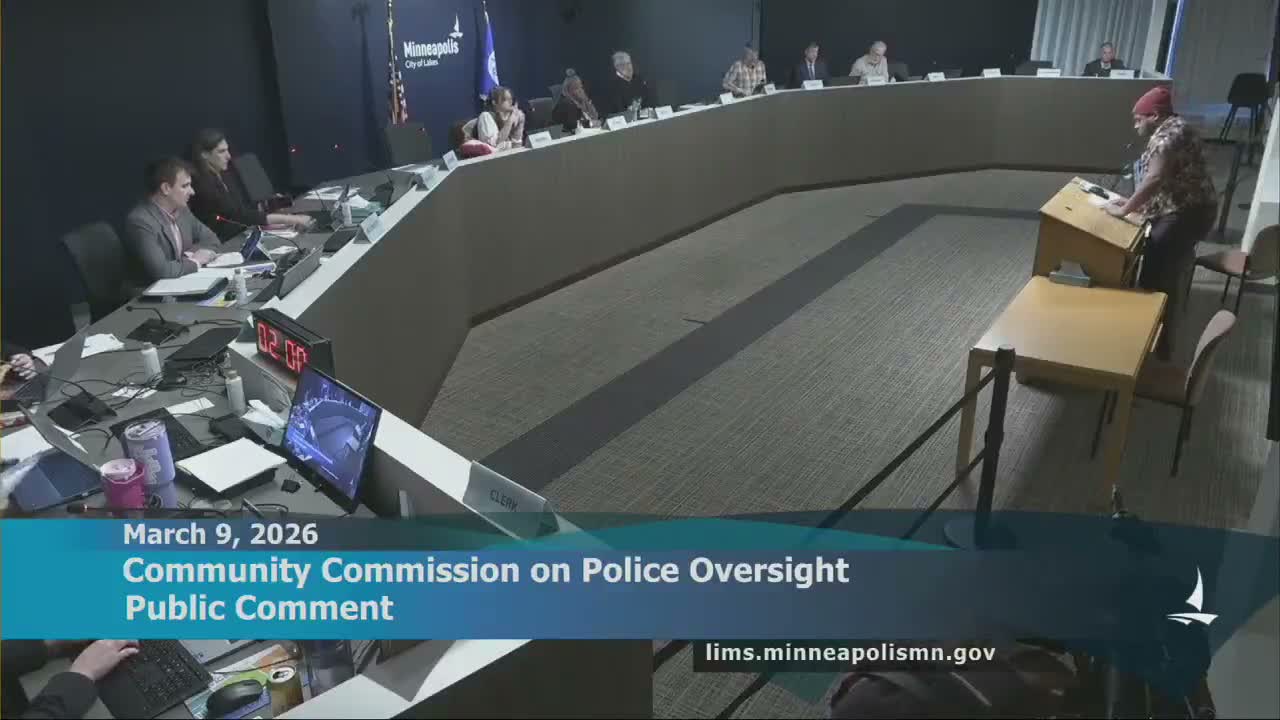
Summary
Residents and advocacy groups accused Minneapolis Police Department of cooperating with ICE during ‘Operation Metro Surge,’ saying officers provided crowd control and failed to intervene when federal agents used force; speakers demanded investigations, apologies and new civilian oversight powers.
Members of advocacy groups and affected family members told the Community Commission on Police Oversight on March 9 that the Minneapolis Police Department repeatedly failed the city during Operation Metro Surge, alleging that officers provided crowd control for federal agents, mishandled homicide investigations, and obscured facts in public statements.
At the start of the public-comment period, a representative of the Twin Cities Coalition for Justice said the Fry administration and MPD “lied to the public repeatedly about their cooperation with ICE,” and accused the department of facilitating federal operations by providing crowd control while federal agents used physical force. The commenter added that residents “witnessed ICE agents on scene” when authorities said otherwise.
Loretta Van Pelt, speaking for family members of Allison Lussier, later said MPD failed to investigate properly, citing a purported pattern of missed interviews, uncollected evidence and a public characterization that the death was an overdose. “We demand justice for Allison and demand that Chief O’Hara go on the record apologizing to the family,” she told commissioners.
Multiple speakers connected concerns about federal immigration enforcement to the city’s consent-decree work, arguing that the department’s culture and missed deadlines undermine accountability. Jana Williams criticized MPD’s rising overtime and equipment spending and called for “community control of the police” and a civilian accountability body with authority to fire officers.
Some public commenters offered a contrasting view. Howard Dotson, a former police chaplain, thanked Chief O’Hara and urged the commission to emphasize problem-solving collaboration rather than grandstanding.
Why it matters: Speakers said alleged coordination with federal agents and failures to investigate violent incidents have eroded trust in MPD and in the city’s reform process. Several commenters linked recent events to longstanding grievances in Black, Indigenous and immigrant communities.
What happened next: Commissioners heard the public record and used the statements to frame questions for MPD leadership in the reports that followed. The commission did not take a formal vote related to the public comments; instead members asked staff to forward community questions to the implementation unit for follow-up.