Get Full Government Meeting Transcripts, Videos, & Alerts Forever!
Get email alerts on the First Responder Housing topic
No spam. Unsubscribe anytime.
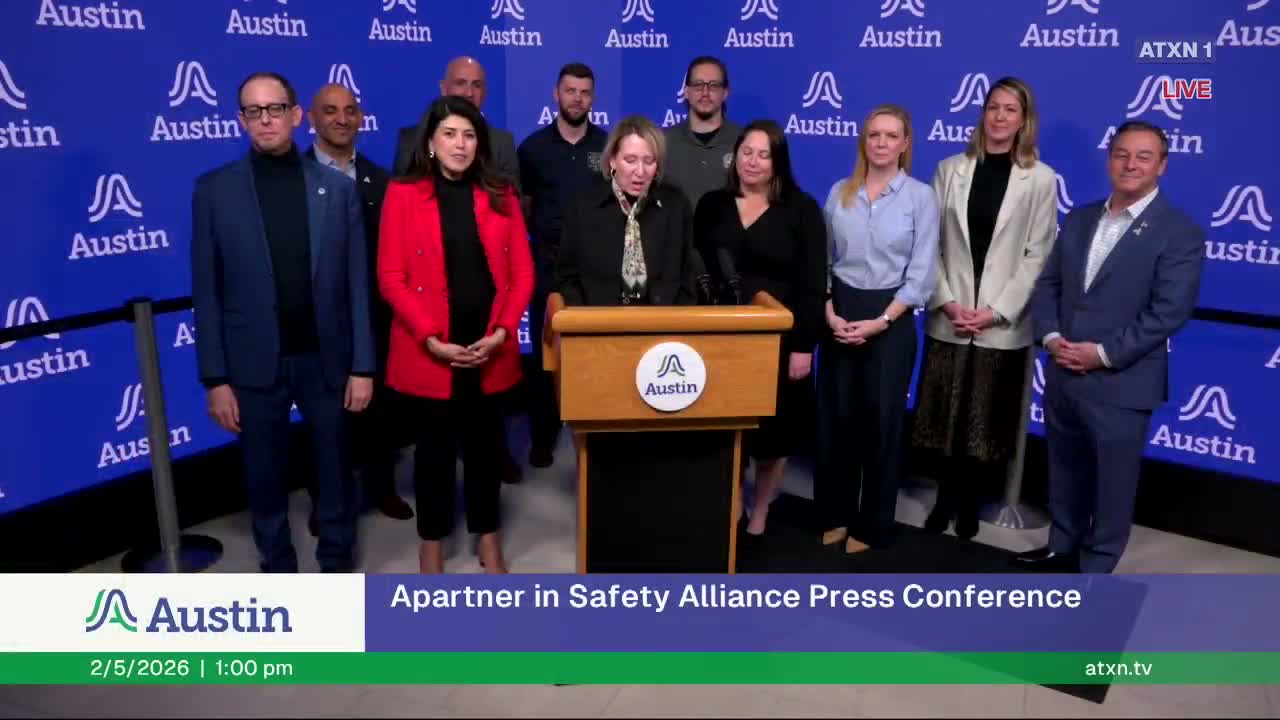
Austin Apartment Association launches Partner in Safety Alliance to help first responders find housing
Summary
The Austin Apartment Association announced the Partner in Safety Alliance, a voluntary program listing participating properties that offer housing incentives to first responders and offering optional safety walkthroughs by the Austin Police Department; 62 properties have signed up so far.
The Austin Apartment Association on Thursday launched the Partner in Safety Alliance, a voluntary program intended to make it easier for police, firefighters and emergency medical personnel to live near the communities they serve.
"Today is a special day as we officially launched the Partner in Safety Alliance," Kimberly Faulkner, president and board chair of the Austin Apartment Association, said at the event. The program will let association member properties offer incentives such as waived fees, reduced security deposits or rent discounts, Faulkner said, and the association will maintain an online directory listing participating properties and available incentives.
City Council member Crystal Lane, representing District 6, praised the initiative as a practical response to Austin's affordability pressures. "Too often that means the very people who serve our community as police officers, firefighters, and EMS professionals struggle to afford living in the city they work so hard to protect," Lane said, adding that 62 housing providers had joined the effort.
Speakers from first-responder unions and associations said the program could help recruitment and retention. "Developing these types of programs is not only beneficial for building those community relationships and getting officers to be able to live in the city that they serve, but also an important tool for us to be able to recruit," Michael Bullock, representing the Police Association, said.
James Mox, president of the Austin EMS Association, framed housing as part of public-safety infrastructure: "If a medic has to live an hour outside of town because rent keeps climbing, that's an extra hour of driving... It's less sleep, it's more stress, and it's a higher chance of burnout," he said, urging public and private partners to support policies that keep medics ready to answer calls.
Adam Fingenbinder, secretary-treasurer of the Austin Firefighters Association, also thanked the apartment association for creating the program, calling it "a great value to our members." The associations said the program aims both to help first responders and to foster neighborly connections through community engagement events hosted by participating properties.
During a media question-and-answer session, reporters asked how properties were selected and what specific incentives would look like. Emily Blair of the Austin Apartment Association said participation is voluntary: communities that choose to enroll select which properties to list and decide the incentives they will offer. "Some of the incentives have a time restriction, and they might change them in six weeks again," Blair said, noting the association will keep listings current.
Blair said the initial cohort of properties was targeted to areas convenient for first responders, such as near APD training centers and in Council member Lane's district. She said the association has been building the program for about two years and that participating properties may welcome optional safety walk-throughs conducted by the Austin Police Department to identify opportunities to improve lighting, locks and signage.
Organizers declined to state a single, uniform incentive or a cap on units available at participating properties; Blair said incentives vary by owner and are typically not limited to a fixed number of units at each property. A reporter asked whether having first responders live in these communities would amount to "policing it while they're living there." Organizers characterized the effort as education for property managers and place-based safety improvements rather than deputizing residents to enforce law.
The association said it will support participating properties with marketing and by sponsoring community events that connect residents and first responders. Faulkner said the group looks forward to expanding the program across Austin.
The launch event concluded after remarks from association and union leaders and a brief media Q&A; organizers said the online directory and property listings will be available through the association.