Lifetime Citizen Portal Access — AI Briefings, Alerts & Unlimited Follows
Contentious hearing on optometry scope: sponsor calls bill a negotiated compromise; physicians warn against expanding surgical privileges
Loading...
Summary
House Bill 2999 would list specific non‑surgical eye procedures for optometrists to remove statutory ambiguity. Supporters called it a negotiated, access-focused compromise; ophthalmologists and some optometrists warned that listing procedures in statute could freeze practice and raise safety concerns around lasers and surgical interventions.
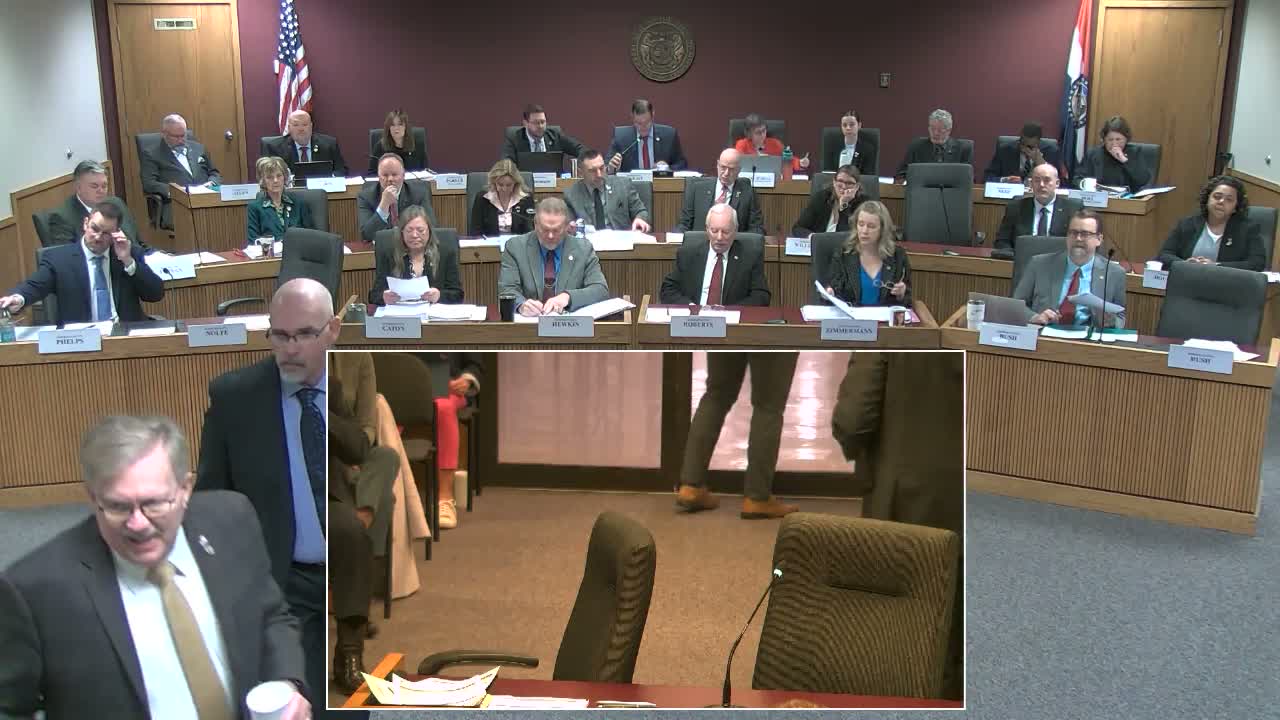
Representative Carolyn Caton, the bill sponsor, told the Committee on Professional Registration that HB 2999 is “about compromise, negotiations, and most importantly, safety,” framing the measure as an effort to codify a set of non‑surgical procedures so optometrists and ophthalmologists would not be stuck in a “gray area.”
Sponsor and committee questions centered on whether writing specific procedures into statute would freeze standards of care as technology evolves, and who participated in negotiations. Representative Caton said the bill resulted from negotiations with the optometry board and optometrists but did not provide a list of specific negotiation participants.
Dr. Jonathan Schell, an ophthalmologist from St. Louis and president of the Missouri Society of Eye Physicians and Surgeons, testified in opposition to optometrists performing surgical procedures and urged the committee to preserve surgical oversight. Schell said the state has seen growth in optometry practice but that "we are opposed to optometrists doing surgical things — injections, incisions, and shooters shooting lasers at parts of people's eyes," arguing the bill must preserve patient safety and the supervision structure for surgical care. Schell said his group helped craft a senate alternative and asserted the proposed house language adds procedures he would not endorse.
Opposition testimony came from retired optometrist Dr. Mike Nichols and others who argued that codifying a checklist of procedures in statute risks freezing practice in time and could hamper modernization as technology evolves. Nichols said Missouri's optometric scope of practice laws have lagged behind training and that hard coding procedures into statute would require frequent legislative returns to update care.
Supporters and practicing ophthalmologists also debated whether expanded privileges would improve access in rural areas. Some committee members cited data from other states showing practitioners and referral patterns did not reliably improve rural access; proponents argued that patients in some counties face long travel times for certain procedures. Witnesses discussed training programs: one optometry witness described a 32‑hour supplementary course and existing laser coursework in optometry schools; ophthalmologists described multi‑year surgical residencies and tracked procedural volume as important to safety.
Testimony recorded requests to specify training/credential requirements, to clarify that truly surgical interventions remain under the Board of Registration for Healing Arts, and to identify whether epinephrine delivery devices should be explicitly authorized. Several witnesses described efforts to negotiate; others said the drafting had been dominated by one side. The committee used the hearing to collect testimony and did not take a final vote on HB 2999 during this session.
Next steps: the bill will remain under committee consideration while stakeholders continue negotiations and the committee considers suggested clarifications about statutory lists, training standards and whether any surgical privileges should be treated separately.