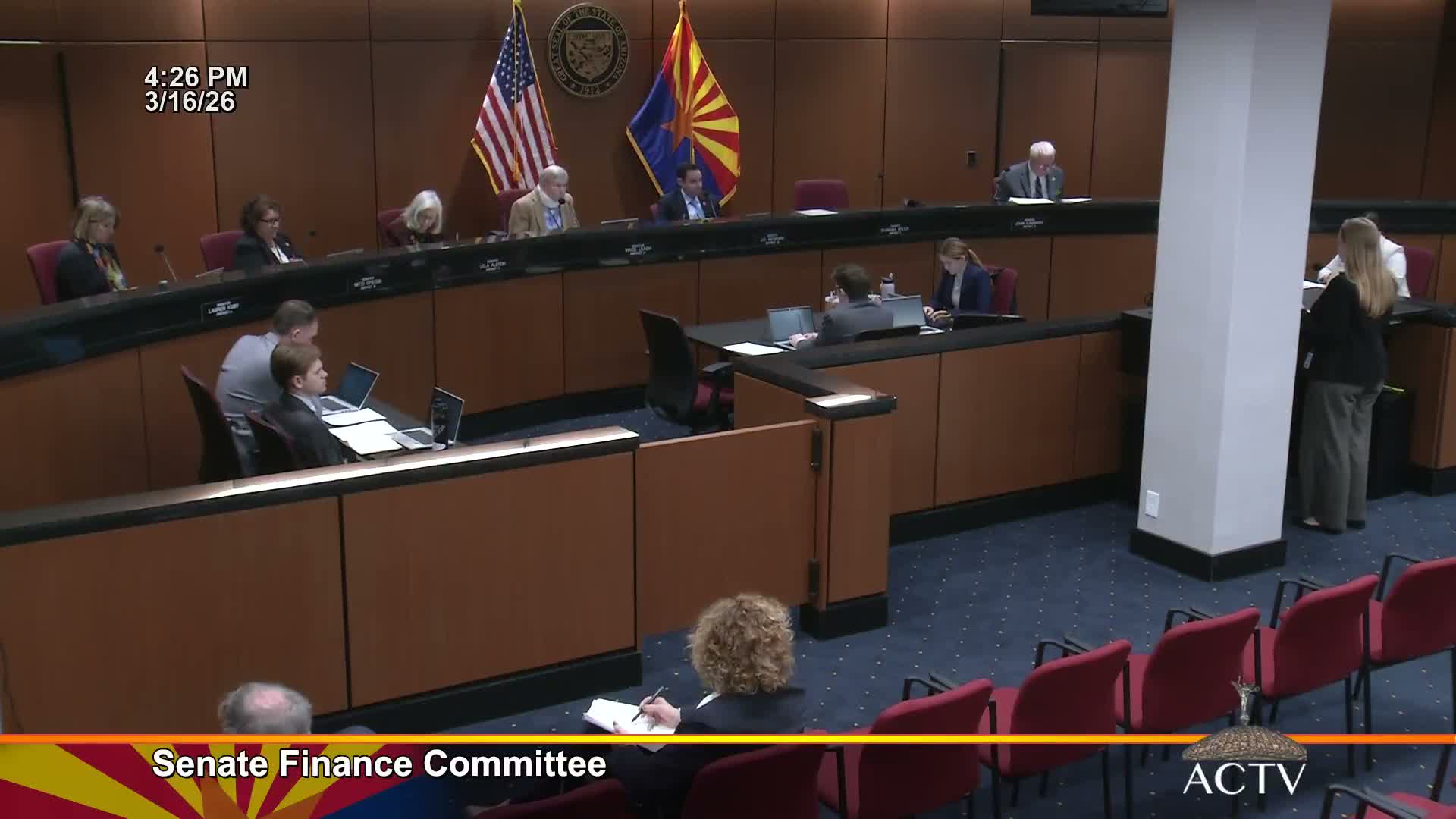
Committee advances narrow ban on state-mandated use of 'social credit scores' in lending
Loading...
Summary
The Senate Finance Committee passed House Bill 2903 prohibiting the state from requiring banks or financial institutions to use a so-called social credit score when evaluating lending; proponents warned such scores can mask ideological discrimination, while critics questioned the bill's lack of a statutory definition for the term.
The Senate Finance Committee on March 13 passed House Bill 2903, which prevents the state from mandating that banks or other financial institutions use a "social credit score" when deciding whether to lend money to a customer.
Michael Benzon of the Arizona Citizens Defense League and Cheryl Todd of Women for Gun Rights testified in favor of the bill, arguing that behavioral or ideological metrics should not be used to restrict access to financial services. "Social credit scores can be a lot of different things ... This is just a preventative measure to make sure that the banks aren't told that they should do it," Benzon said.
Cheryl Todd described personal experience she said illustrated the risk of financial discrimination tied to lawful advocacy and business in lawful industries, telling senators she had faced difficulties obtaining services at a bank and said insurers had flagged her visible advocacy.
Senators raised concerns about the bill's drafting: Senator Epstein and others noted that 'social credit score' is not defined in the bill and said that vagueness contributed to a prior veto of similar legislation. Senator Epstein said the draft as written may be difficult for banks to implement. The committee nonetheless passed the bill by a 4–3 vote.
Next steps: HB 2903 will proceed from committee; sponsors and legislators may need to address definitional and veto risk concerns in subsequent stages.