
Rules attorney says SB 1148 risks separation-of-powers conflict; committee still recommends it
Get AI-powered insights, summaries, and transcripts
Sign Up Free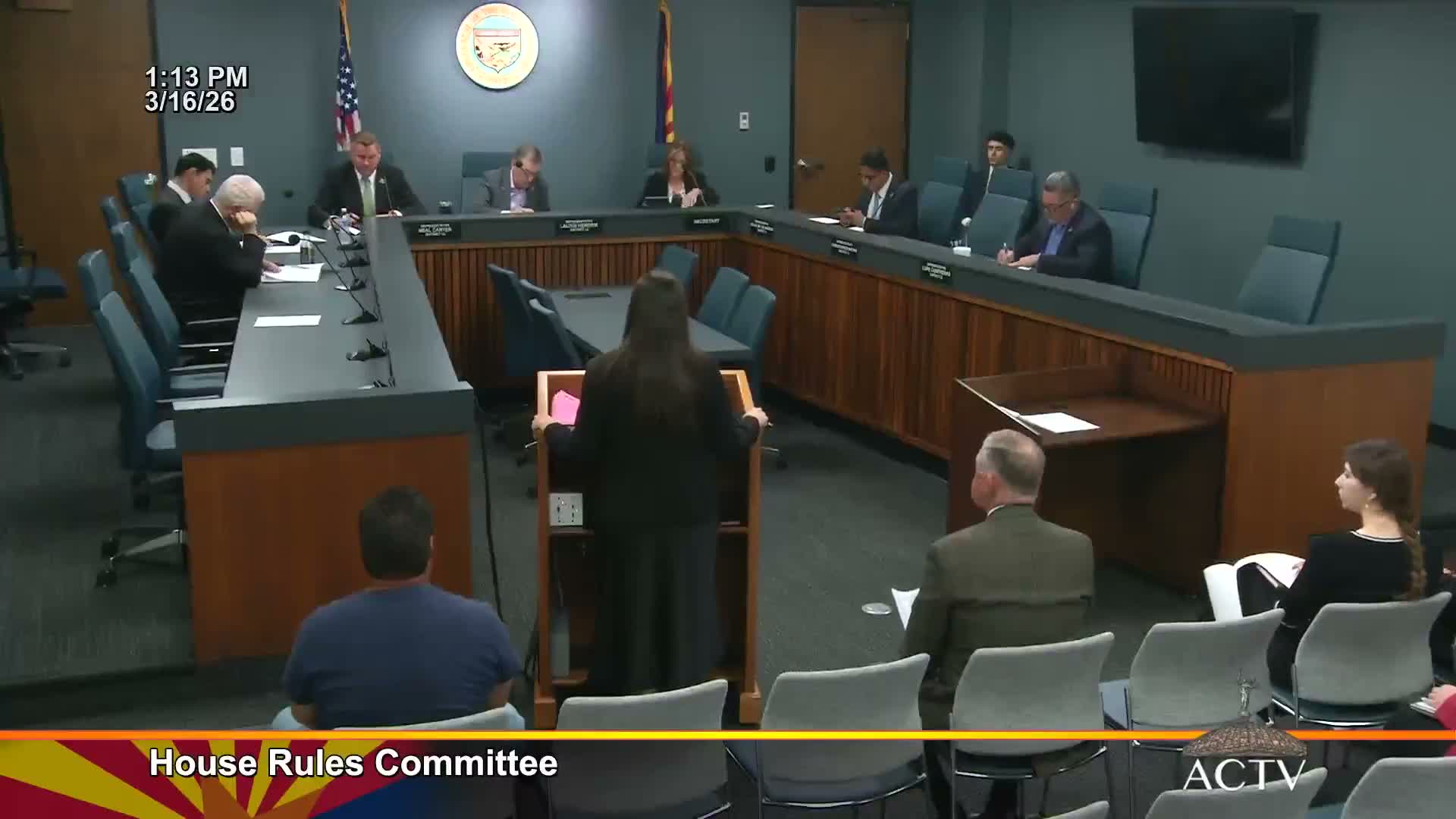
Summary
Committee rules office told the Rules Committee that Senate Bill 1148, which prescribes licensing procedures for attorneys and bars mandatory nongovernmental membership, may violate separation-of-powers principles and conflict with Arizona Supreme Court Rule 32; the committee voted to recommend the bill as constitutional and in proper form.
The Rules Committee recommended Senate Bill 1148 after hearing from the committee's rules attorney, who advised members that the measure raises separation‑of‑powers concerns and appears to conflict with existing Arizona Supreme Court authority.
The rules attorney summarized the bill and told the committee that SB 1148 "relates to the licensing of attorneys for the practice of law by requiring that the Arizona Supreme Court itself do the licensing and not delegate that duty to any other organization" and that the bill sets requirements for licensure, including testing and background checks. She said a central issue is that while the bill gives the Supreme Court licensing authority, it also "mandates exactly how that should be done, which it can't do without violating the separation of powers."
The rules attorney also identified a conflict with Arizona Supreme Court Rule 32, noting that the portion of SB 1148 that prohibits mandatory membership in a non‑governmental agency "directly conflicts" with Rule 32, which establishes the state bar and requires membership. The rules attorney said the bill is otherwise in proper form but that the separation‑of‑powers and rule‑conflict issues should be considered.
The committee voted to recommend SB 1148 as constitutional and in proper form; the roll call result announced in the hearing was four ayes, two nays and two absent.
What happens next: The rules office record will inform sponsors and may prompt amendments; the committee recommendation does not itself change court rules or create final law.