Votes at a glance: Arizona Senate advances a slate of bills including school curriculum, health-care system changes and reentry program
Loading...
Summary
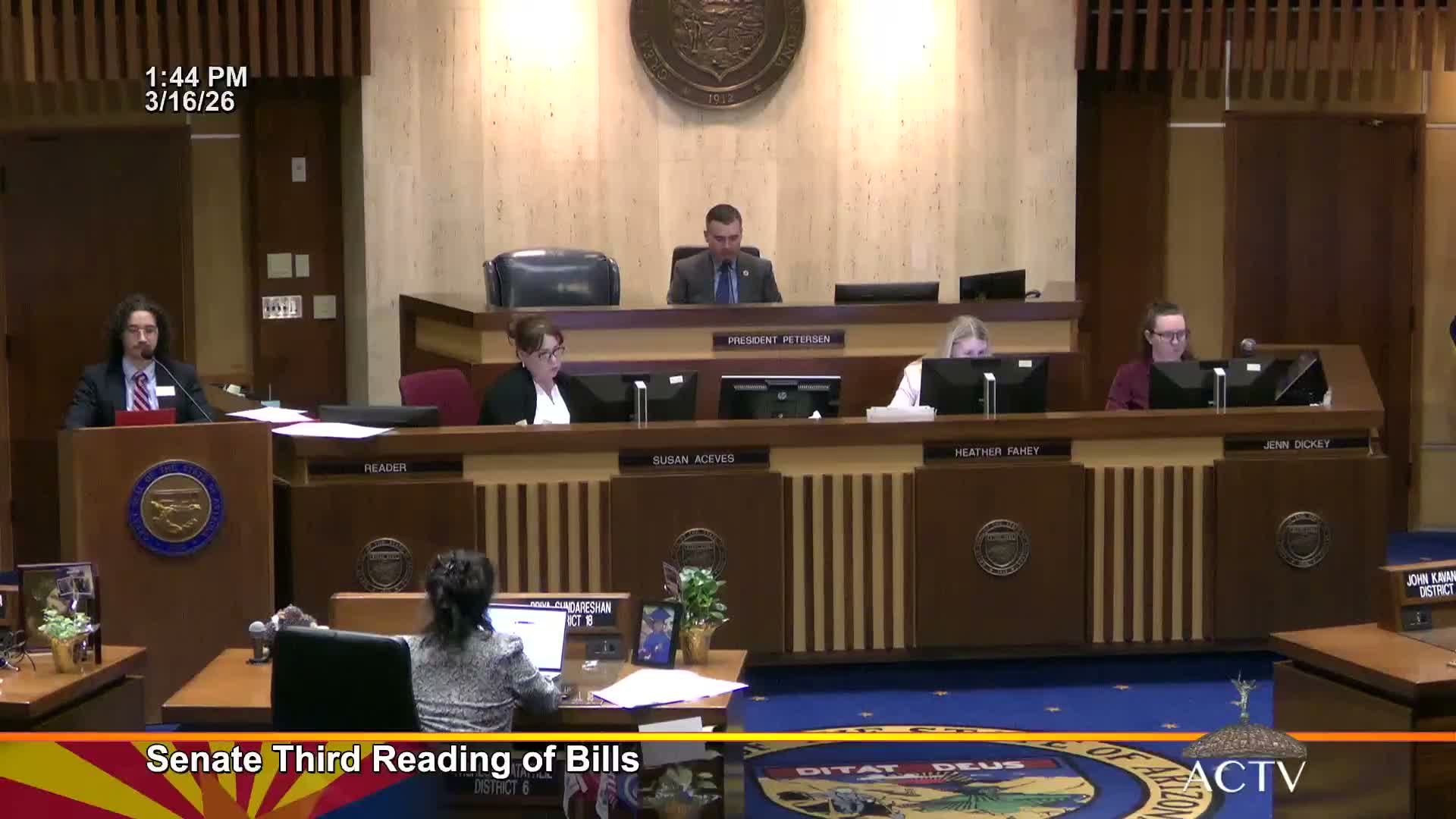
On March 16, 2026, the Arizona Senate recorded votes on multiple bills. Notable actions: SB 1009 (school curriculum including AED familiarization) passed; SB 10-86 (health care cost/taming system) passed; SB 13-17 (jail reentry program) passed amid debate over funding sources.
The Arizona Senate recorded several roll-call and voice votes on March 16, 2026, moving multiple bills forward and transmitting several measures to the House. Below are notable third-reading results recorded in the session transcript.
- SB 1009 (school curriculum; AED familiarization): Senators debated whether the bill constituted an unfunded mandate. The secretary recorded the vote as 16 ayes, 10 nays, 4 not voting; the bill passed and was transmitted to the House.
- SB 10-86 (Arizona Health Care Cost and Taming System): The clerk recorded the floor tally as 18 ayes, 8 nays, 4 not voting; the bill passed and was recorded as signed in open session.
- SB 13-17 (jail reentry program expansion): Supporters cited reductions in recidivism from pilot programs; critics warned about using the consumer restitution fund for the proposal. The clerk recorded the vote as 22 ayes, 4 nays, 4 not voting; the bill passed and was transmitted to the House.
- SB 17-09 (probation revocation changes): Debate focused on judicial discretion and due process. The secretary recorded the vote as 18 ayes, 8 nays; the bill passed and was transmitted to the House.
- SB 15-50 (property and money to the state treasurer): The clerk recorded 16 ayes, 9 nays, 5 not voting; the bill passed.
- SB 17-61 (university immunities/appropriations): The clerk recorded 25 ayes, 1 nay, 4 not voting; the bill passed.
These and other bills were recorded, reported as passed on the Senate floor, and transmitted to the House where applicable. Some votes prompted short explanations of vote choices from senators who either supported the policy or raised concerns about funding sources and the scope of statutory changes.
What to watch: Several bills that passed on March 16 proceed to the House for further consideration; sponsors and critics noted potential funding-source issues (for example, debate about use of the consumer restitution fund for SB 13-17).