
AB 1698 would create modest tax credit for small restaurants to offset food-handler costs
Get AI-powered insights, summaries, and transcripts
Subscribe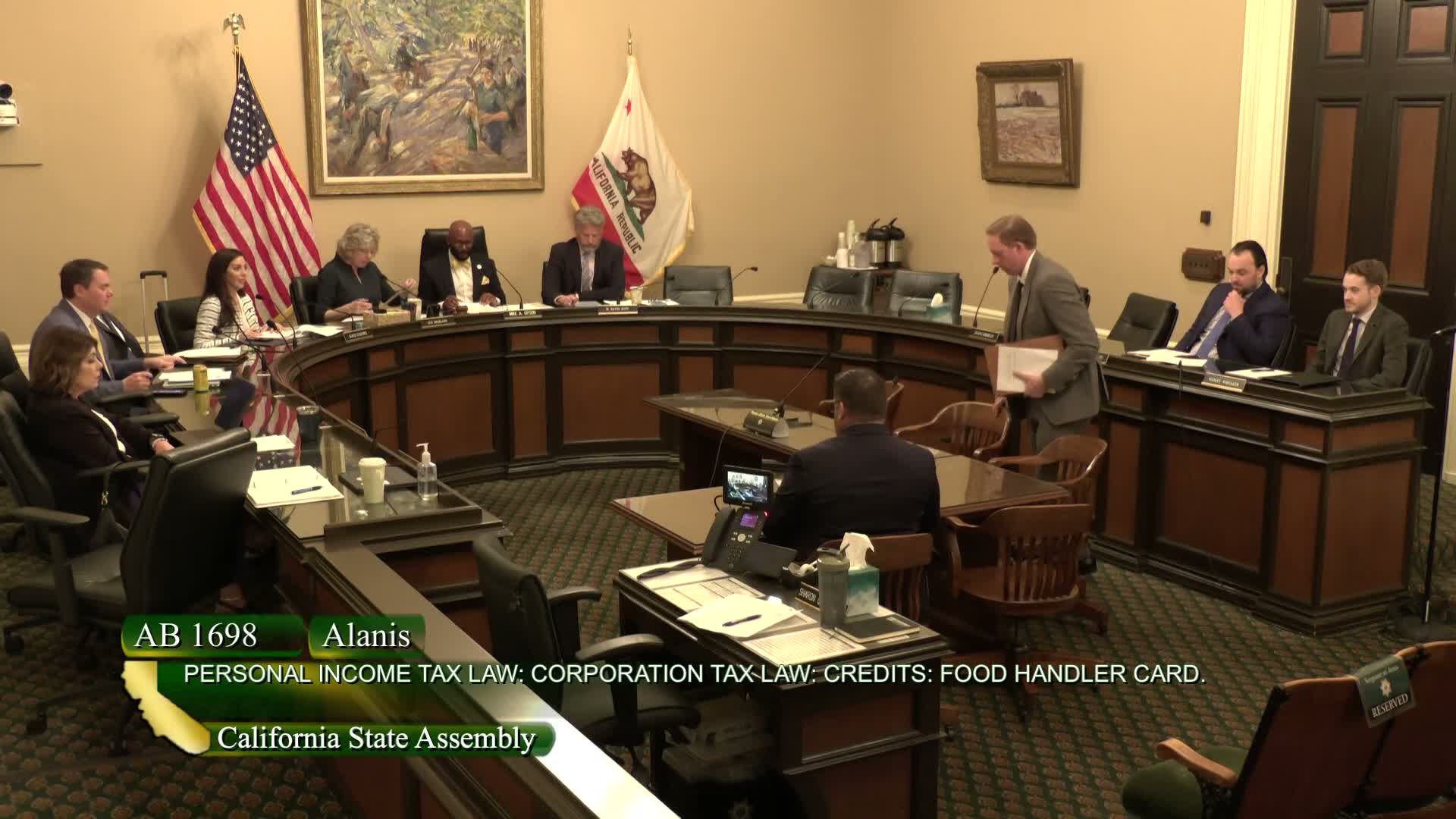
Summary
AB 1698 would let qualifying restaurants (50 or fewer employees) claim a tax credit up to $250 per year to offset employer costs tied to food-handler certification rules; supporters framed it as relief for small restaurants, opponents called it an inappropriate subsidy. The committee referred the bill to the suspense file.
Assemblymember Alaniz introduced AB 1698, which would permit restaurants with 50 or fewer employees to claim a tax credit equal to employer costs for food-handler certification, capped at $250 per year.
Pat Joyce of the California Restaurant Association testified in support, saying the 2023 requirement that employers pay for employee food-handler cards and compensation for training time has shifted small costs onto employers and increased turnover-related expenses. "Given how challenging it is for these small businesses to keep their doors open, this bill is a small yet meaningful way to offer some relief," Joyce said.
Danny Kando Kaiser (California Tax Reform Association) opposed the bill, arguing a 100% refundable credit would amount to a direct state payment with little precedent and that compliance costs are deductible business expenses. Other industry representatives discussed alternatives and said a modest credit could help small restaurants manage rising costs.
Chair Gibson referred AB 1698 to the committee's suspense file; the author and supporters said they would press for targeted, modest relief rather than a large-scale subsidy.