Get Full Government Meeting Transcripts, Videos, & Alerts Forever!
Get email alerts on the Refuse Rates topic
No spam. Unsubscribe anytime.
Hanford council directs staff to start Prop. 218 notices for phased refuse-rate increases
Summary
After a presentation showing a $3 million reserve shortfall and rising tipping fees, Hanford council gave unanimous direction to begin Prop. 218 notices on a phased increase scenario (described as 10%, 10%, then 5% annually) and return with adoption if protests do not prevail.
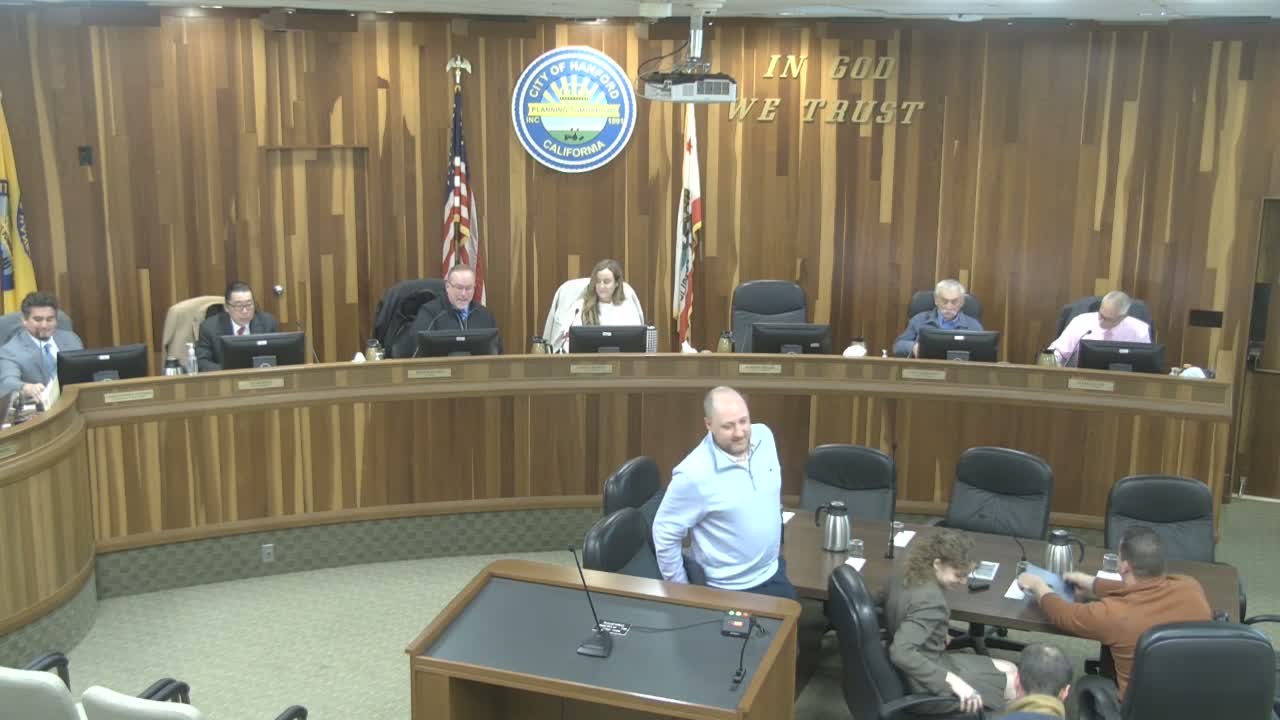
Hanford — The City Council on Dec. 2 directed staff to begin the Prop. 218 notice and 45‑day protest period for a phased refuse‑rate adjustment to shore up the solid‑waste enterprise fund.
Public Works Director Russ Sterling and consultants told council the refuse division faces sustained cost pressure from higher tipping fees at the Kings County transfer station, accelerated vehicle replacement costs and new state mandates for recycling and organics. The consultants’ model found the division entered the fiscal year with about a $3 million operating reserve shortfall and a projected current‑year budget shortfall of roughly $274,000.
Staff presented two multi‑year scenarios. Council members and the vice mayor said they favored a slower, phased approach discussed in the presentation — characterized in council dialogue as 10% and 10% increases followed by smaller annual adjustments (5% in later years) — arguing it balances fiscal recovery and ratepayer impact.
“I think easing into it is better for residents who are struggling,” Vice Mayor House said during deliberations.
Mayor Payton led a formal roll call that resulted in unanimous consensus to proceed with staff’s Scenario 2 and begin the Prop. 218 notification process. Under that direction, staff will publish required notices, start the 45‑day protest period and return to council in February for a resolution adopting the study and any final rate adjustments unless a majority protest blocks the increase.
Sterling told council the model currently assumes no immediate additional increase in tipping fees but noted that if Kings County rates rise materially, the city would need to implement higher rates under the maximums council authorized. He also flagged long‑term capital needs including vehicle replacement and possible future electric‑vehicle purchases, which could further increase costs.
The decision was procedural direction, not final adoption. Council emphasized the need for public outreach to explain why enterprise funds for refuse are separate from general‑fund spending.