
Senate passes a cluster of bills on education, transparency, public safety and administrative reforms
Get AI-powered insights, summaries, and transcripts
Sign Up Free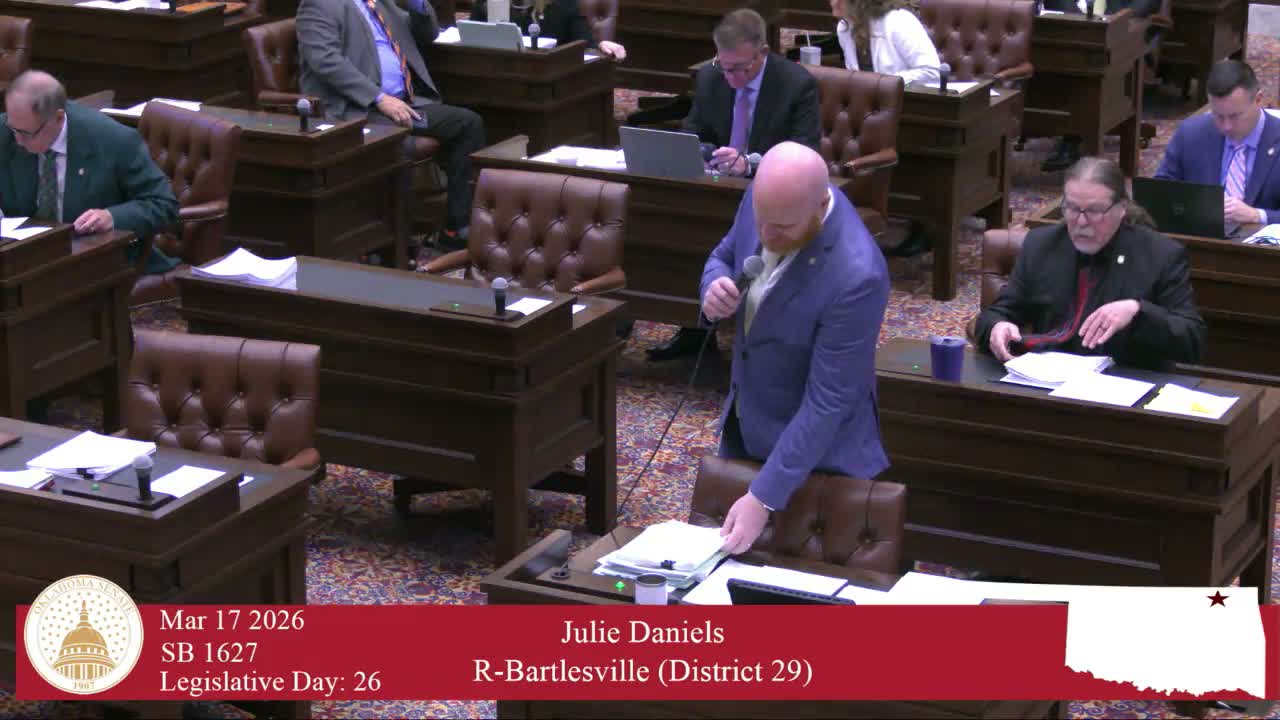
Summary
On Wednesday the Oklahoma Senate advanced and in many cases passed multiple bills on third reading — ranging from guidance-transparency requirements and school funding changes to fee adjustments and public-safety updates — often by large margins and, in several cases, as emergency measures.
The Oklahoma Senate’s floor session on March 18 produced a steady stream of third-reading actions. Lawmakers advanced and passed multiple bills that affect education, administrative transparency, public safety and agency processes.
Key outcomes included:
- SB 16-27 (criminal code cleanup): advanced and declared passed (45-0); advanced as an emergency measure.
- SB 2-27 (tax clarification for oil and gas means of production): passed 37-9 after extended floor debate about local revenue impacts.
- SB 366 (charter schools: first right of refusal): passed 40-6 and advanced as an emergency measure.
- SB 11-93 (remove general-fund carryover caps for school districts): passed 46-0 and advanced as an emergency measure.
- SB 14-33 (guidance transparency act): passed 37-7; requires agencies to post guidance documents in a searchable database and excludes privileged materials.
- SB 18-10 (expert testimony in human trafficking cases): passed 45-0.
- SB 18-12 (benchmark testing access for parents): passed 46-0.
- SB 19-21 (OSBI fee increases for background checks): passed 39-7.
- SB 19-48 (fireworks law updates): passed 39-5 after questions about safety and preemption; author said the measure is intended to allow consumer displays on private property while preserving burn-ban exceptions.
- SB 12-66 (increase penalty for fraudulent immigration assistance, "anti-notario"): passed 45-0.
Several other bills (broadly listed on the agenda) were advanced or passed by recorded vote; leadership also moved and the Senate approved a short adjournment to March 23, 2026.
Why it matters: The cluster of votes streamlines statutory language, clarifies administrative practice, alters education finance rules and updates a range of regulatory and public-safety provisions. Several measures were advanced as emergency measures, accelerating their potential effect if the other chamber concurs.
What to watch next: Bills that passed the Senate will move to the House for consideration; stakeholders in education, county government and the oil-and-gas sector may seek further clarification or amendments in the other chamber.