Get Full Government Meeting Transcripts, Videos, & Alerts Forever!
Get email alerts on the Transportation Infrastructure topic
No spam. Unsubscribe anytime.
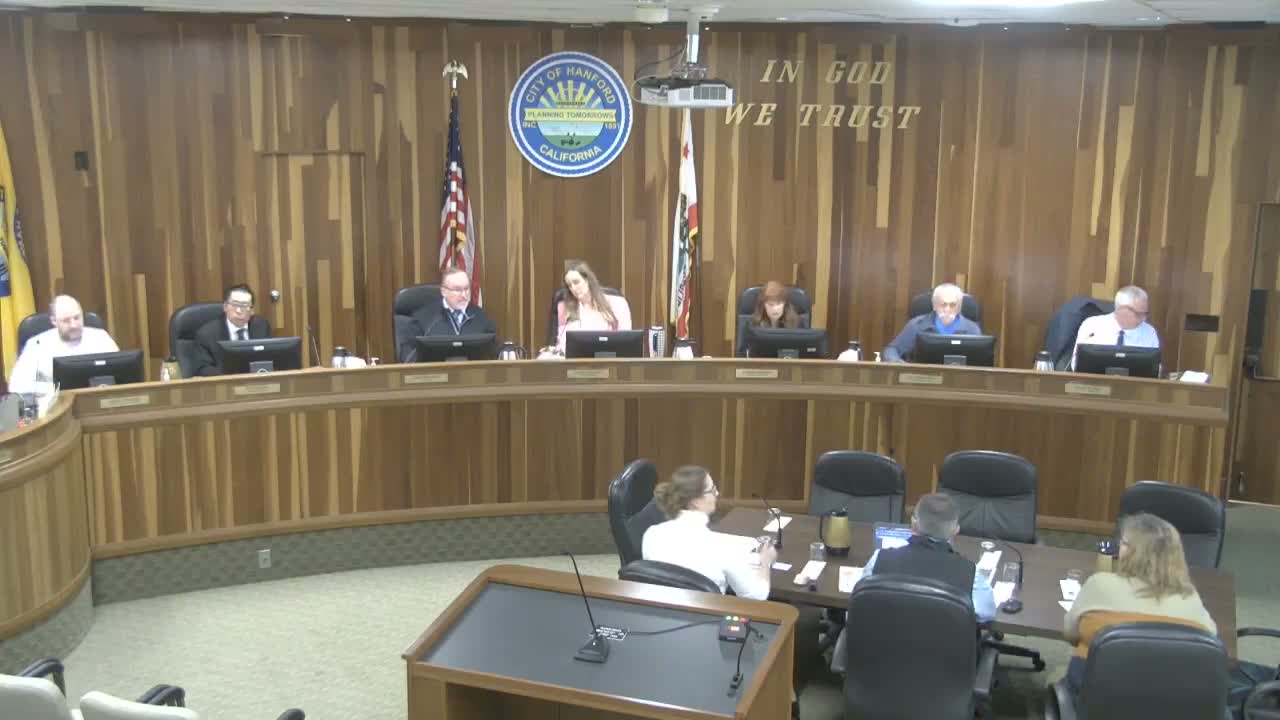
Hanford staff present East Lacey Boulevard complete‑streets plan, note parking and driveway concerns from businesses
Summary
City engineers presented a two‑part complete‑streets concept for East Lacey Boulevard — an urban core with shared sidewalks and on‑street parking and an easterly gateway with protected bike lanes and medians — and reported extensive public outreach citing access, parking and utility concerns; staff will refine design and pursue NEPA and grant funding.
Frank Centeno, the city’s utilities and engineering director, told the City Council the East Lacey Boulevard project is built around complete‑streets principles intended to improve safety, accessibility and multimodal connections.
“At that meeting, staff committed to conduct public outreach and to report back with the results,” Centeno said, describing design work that splits the corridor into a westerly urban core with shared bike/pedestrian sidewalks and on‑street parking, and an easterly gateway segment with protected bike lanes, raised medians and landscaping infrastructure.
Jacqueline Hart, an associate engineer, summarized staff outreach: two open‑house events with mailed notices, printed surveys and a heat‑map exercise that produced “hundreds of comments.” Hart said the top concerns were large‑truck access and driveway impacts, potential right‑of‑way and property impacts, and on‑street parking and loading that some businesses currently rely on. She said staff plans one‑on‑one meetings with affected property owners.
“Looking at all those concerns, the top concerns…were access and driveways, property impacts, and the median design,” Hart said, adding that city engineering recognizes the need to work individually with businesses to minimize disruption.
City Engineer Lisa Doc outlined next steps and regulatory constraints: staff will refine the conceptual plan, analyze the 10th Avenue intersection, determine median and bike‑lane placements, coordinate with Union Pacific on the Lacey crossing and complete the NEPA transportation analysis (using a vehicle‑miles‑traveled approach) before initiating right‑of‑way appraisals. Doc said staff hopes to finish design by 2027 and obligate construction funding by September 2027.
The council and staff discussed design tradeoffs, including parking impacts where protected bike lanes would replace informal curbside space. Doc said the westerly urban core offers more opportunities for on‑street parking, while the eastern gateway is designed for protected bike lanes and future landscaping. Several council members expressed concern about water use and long‑term maintenance for landscaped medians; others emphasized median safety benefits and traffic calming.
Angie Dow, executive director of the county transit agency (CAPTA), joined staff to discuss a joint TRSIP grant application to fund median‑based transit stops and electric buses. Dow said CAPTA’s smaller electric vehicles and median stops could reduce vehicle miles traveled and help score competitive grant applications that favor greenhouse‑gas‑reduction elements.
Staff emphasized the conceptual nature of the plan and the need for further refinements, including measures to accommodate large trucks and to avoid unnecessary right‑of‑way acquisitions. The council asked staff to continue outreach, coordinate with transit and utility partners (including Southern California Edison for undergrounding work) and return with 60% plans and individualized briefings for property owners before any right‑of‑way discussions or final design decisions.
The study session closed with staff and council agreeing to continue design work informed by outreach and to pursue grant funding and NEPA clearance as required for later right‑of‑way actions.