Get Full Government Meeting Transcripts, Videos, & Alerts Forever!
Get email alerts on the Assessment Equity topic
No spam. Unsubscribe anytime.
Plano ISD reports mixed 2025 PSAT results; trustees press for targeted action on subgroup gaps
Summary
District leaders reported gains for PSAT 9 and 10 overall but flagged declines for some subpopulations, prompting trustees to seek cohort analysis, campus-level breakdowns and targeted interventions to address gaps—particularly for African American students.
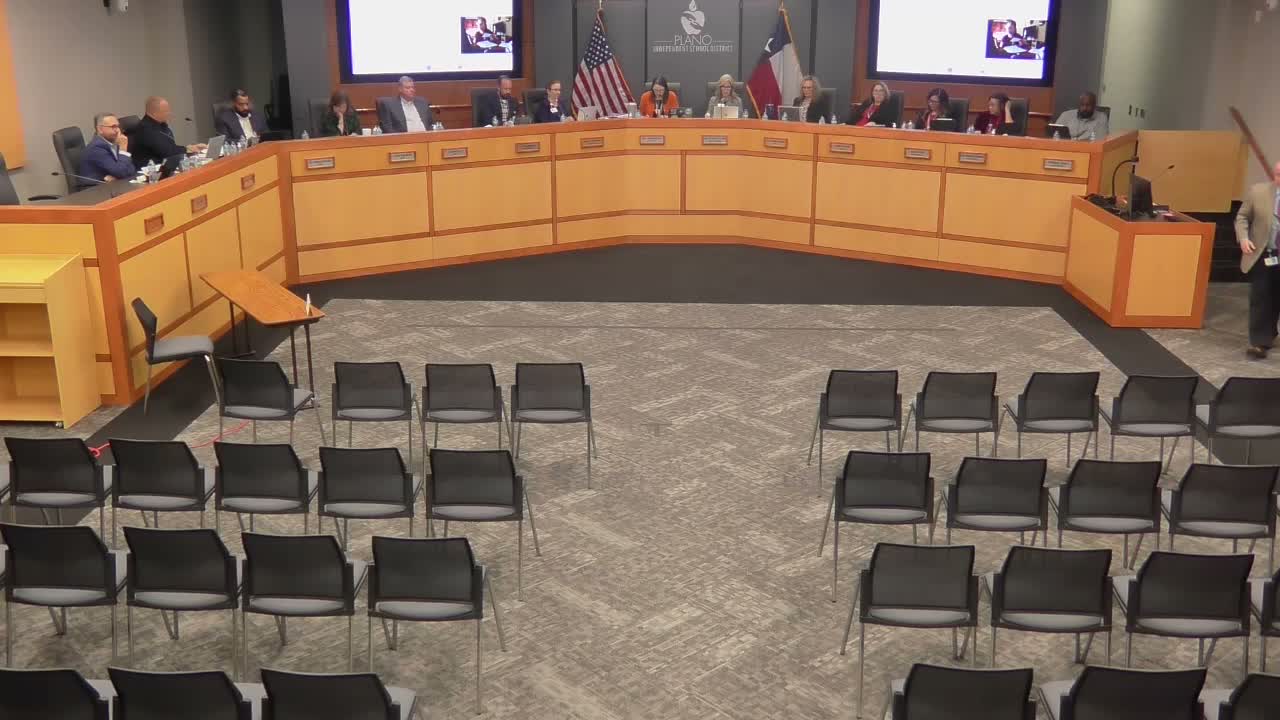
Plano Independent School District on Feb. 3 reviewed results from the district’s 2025 administration of the PSAT suite and discussed next steps to address uneven outcomes across student groups.
Dr. Kevin Moore, director of advanced academics, told trustees that the district saw mean-score increases for ninth graders and strong growth for tenth graders, which he attributed in part to greater familiarity with the College Board’s digital, multistage adaptive format. At the same time, he said, “we do not see those same… population results for PSAT 9,” and singled out declines for some groups that warrant attention.
Trustees pressed for more detailed analysis. One trustee said the gap for African American students was “really strange” given that corresponding MAP and STAAR results did not show as large a divergence, and asked why PSAT results diverged and what targeted strategies the district would deploy. Dr. Moore acknowledged the need for additional analysis, including cohort tracking and campus-level breakdowns, and suggested several possible contributors—including differences in algebra pathways and exposure to test formats—and described the district’s current responses.
District measures already under way include SAT-capacity teams (three teachers at every high school trained as campus experts), SAT/PSAT boost camps and a Plano Scholars program providing 15 hours of targeted summer prep for rising sophomores and juniors. Moore said the district is also using capacity teams to analyze data and run campus-level interventions and noted the College Board’s new peer-to-peer tutoring partnership as a potential additional resource.
Board members requested specific follow-ups: cohort-based analysis showing how ninth graders progress into tenth and eleventh grade; campus-by-campus breakdowns of PSAT outcomes; targeted plans for demographics with declines; and clarity on how Algebra 1 pathway timing may affect the PSAT math outcomes. Trustees emphasized family awareness and outreach to ensure students register for the PSAT and take advantage of free resources, including Khan Academy practice tied to College Board diagnostics.
Next steps: district staff agreed to provide cohort and campus-level data, report survey and boost-camp participation effects, and outline targeted interventions for identified subgroups. The PSAT discussion and trustee requests are part of the district’s ongoing CCMR (College, Career and Military Readiness) strategy.
This article is based on the PSAT presentation and board discussion (topic introduction: SEG 1681; last related discussion: SEG 2592).