
Madison County adopts ordinance to set rules for opioid settlement spending and green-lights related jail funding
Get AI-powered insights, summaries, and transcripts
Sign Up Free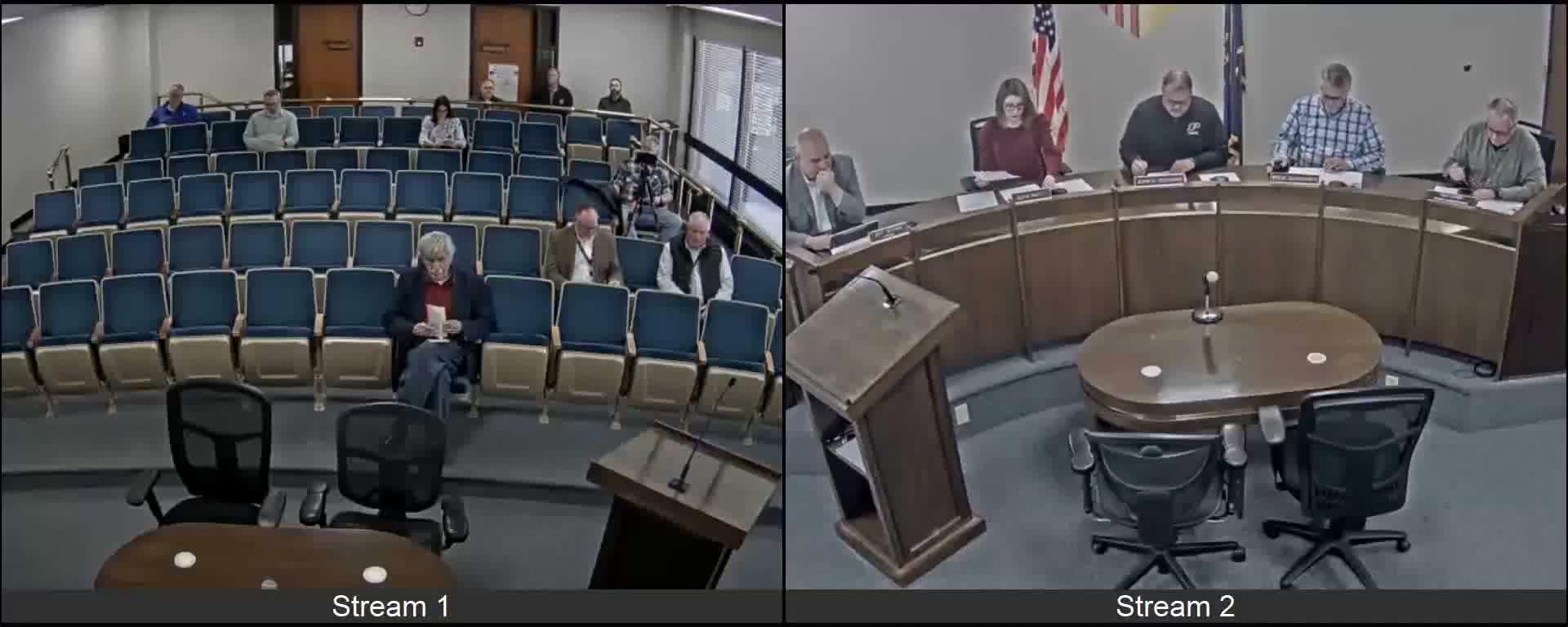
Summary
Madison County commissioners adopted an ordinance establishing procedures for appropriation, expenditure and reporting of opioid settlement funds and approved early 2026 funding tied to criminal-justice and jail-treatment services, including a new jail navigator, peer recovery support and expanded behavioral-health contracting.
Madison County commissioners voted unanimously to introduce and adopt an ordinance establishing processes for appropriation, expenditure and reporting of opioid settlement funds and approved an associated funding plan to begin supporting jail-based treatment services.
Chair (speaker S1) moved to introduce ordinance “2,026 dash PC dash o dash 2” by title only; after a second the board voted to introduce the measure and then suspended the rules to adopt it by title. The transcript notes “All 3 commissioners voted yes.”
Staff member (S3) described how the county intends to use the settlement money in the near term: “The hope is that, as you know, this kind of supercharges the treatment in the jail, especially around mental health and other things,” S3 said, adding the plan would enlarge the jail’s medical contract to include an LCSW or behavior specialist, support peer recovery coaches at the health department and create a new jail navigator position to assess people when they enter custody and help coordinate a treatment plan.
Why it matters: The ordinance creates a formal approval process and reporting structure for opioid settlement proceeds, and the early funding actions direct money to treatment-oriented services inside the county detention system rather than to unrelated uses. County officials said the ordinance itself establishes allowable processes and that specific program expenditures will still require appropriation by the county council.
Officials described the next steps as administrative and procedural. Chair (S1) and staff noted the ordinance must be paired with future budget actions: the ordinance sets policy and intent, while the county council must appropriate funds before expenditures occur. At a later point in the meeting the commissioners also approved a broader criminal-justice restructure and jail-project funding request that “correlates with the county ordinance number 2 that we just passed today,” the chair said, noting a funding schedule through 2030.
What was not specified or remains to be decided: the ordinance language and transcript use multiple formatted references to the ordinance number (the meeting transcript records the number in differing forms), and the precise annual appropriation amounts and implementation schedule beyond an initial 2026 allocation were not specified in the discussion. The commissioners said unspent funds would remain in the opioid settlement fund and that formal appropriation by the council is required before spending.
The board did not receive public comment on the ordinance during the meeting; the chair asked for comments and recorded none. The ordinance will move to the county council for appropriation steps before funded programs begin.