Get Full Government Meeting Transcripts, Videos, & Alerts Forever!
Get email alerts on the Property Tax Reappraisal topic
No spam. Unsubscribe anytime.
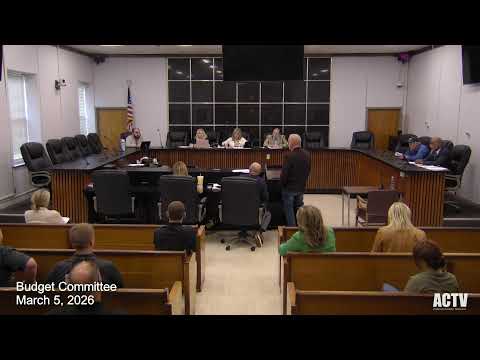
Anderson County budget committee approves adding indexing option to reappraisal plan
Summary
The committee voted to amend the county's reappraisal plan to include a year-2 indexing option within a 4-year cycle, a change presenters said would reduce the need for equalization ratios that have cost the county an estimated $2.0'$2.1 million over recent years.
Anderson County's budget committee voted to seek an amendment to its recently submitted reappraisal plan to add an indexing option in year two of a four-year cycle, a procedural change proponents said would help stabilize property-tax revenue and reduce the disruptive equalization adjustments that have cut assessments in recent years.
Experts and county staff told the committee that indexing applies a market-derived multiplier to sales within discrete market areas to bring assessed values closer to current market levels without a full countywide reappraisal. "There were an additional $2,000,000 that you did not receive in property tax due to the equalization ratio," the presenter said, summarizing a five-year analysis of the county's revenue stream. The committee approved a motion to pursue the indexing option and submit an amended plan for state review.
Why it matters: the committee heard that the equalization ratio, a statutory mechanism intended to align annually assessed personal property and utilities with delayed real-property reappraisals, has lowered aggregated assessments in recent cycles. Presenters said moving from a five- to a four-year reappraisal cycle, with the option to index in year two, would eliminate one ratio year and restore assessment uniformity more frequently, which they said previously translated into roughly $2.0'$2.1 million in foregone county revenue over a recent five-year span.
Details from the presentation: the consultant (referred to in the meeting as Gabe) explained indexing as a statistical multiplier derived from sales activity across market areas and stressed that good field data is still required: "The sales analysis'the analysis of the sales data probably increases much more than it may have in the past," he said, and noted that the state Division of Property Assessments would be involved in the analysis and approval process. The assessor'who the committee identified as Johnny Alley'noted staff and training needs if the county implements indexing, estimating additional positions and vehicles could be required to support the work and succession planning.
Process and next steps: the committee's approval sends a direction to the assessor to amend the county's reappraisal plan and submit it to the Division of Property Assessments and, ultimately, the State Board of Equalization for approval (the board meets quarterly and commonly handles reappraisal-plan approvals at its April meeting). The presenter cautioned that indexing triggers a new certified tax rate calculation when values are returned to market, and that coordinated timing with neighboring jurisdictions (named in discussion) may be relevant.
What the committee decided: Commissioner Palmer moved to approve pursuing indexing in the county's plan; the motion was seconded and carried. The committee asked staff to coordinate timing and submit required documents, including a recommended resolution and memorandum of understanding, for formal consideration.
The committee also asked the assessor to provide details on any additional staffing or equipment required and to coordinate with adjacent jurisdictions and the state as the amendment is finalized for submission to the State Board of Equalization.