Get Full Government Meeting Transcripts, Videos, & Alerts Forever!
Get email alerts on the Hj27 topic
No spam. Unsubscribe anytime.
Senate committee advances interim study on green burials and water cremation (HJ 27)
Summary
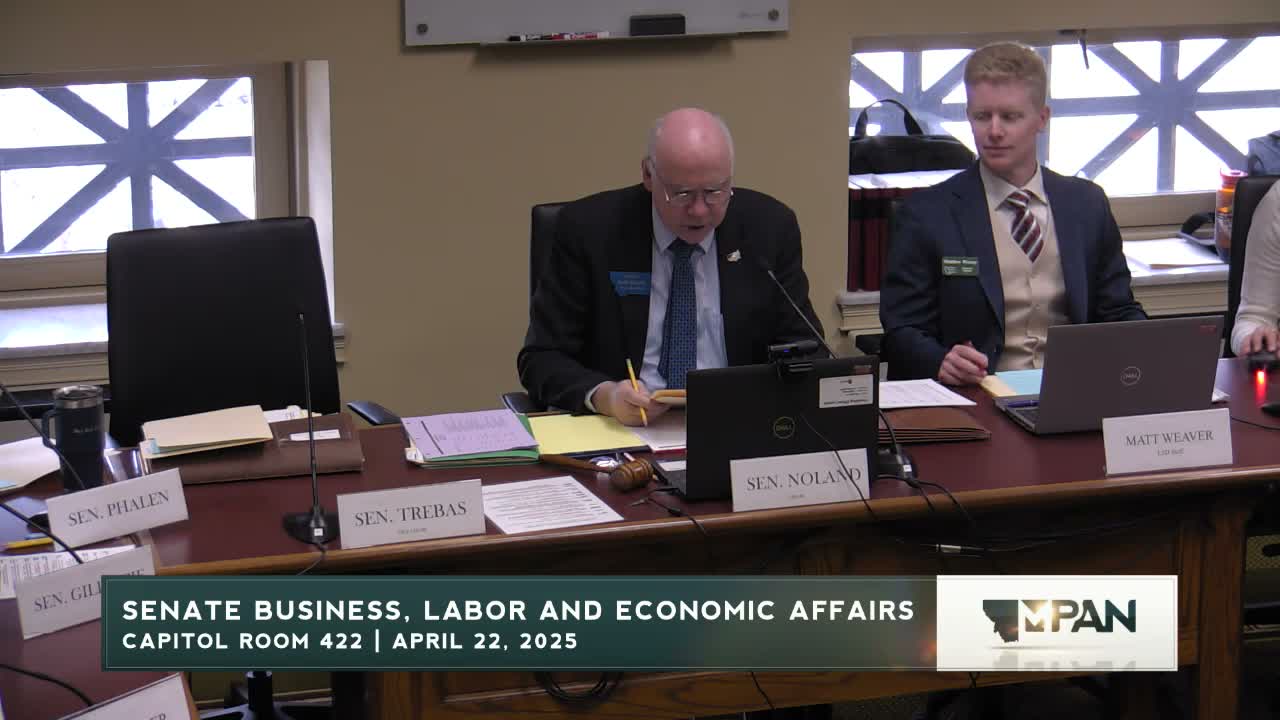
The Senate Business and Labor Committee voted to advance House Joint Resolution 27, requesting an interim study of morticians, funeral services and alternative final dispositions including natural organic reduction (green burial) and alkaline hydrolysis (water cremation). Proponents stressed code cleanup, licensing and environmental benefits.
The Senate Business and Labor Committee voted to advance House Joint Resolution 27, which requests an interim study of morticians, funeral services and alternative final dispositions including natural organic reduction (also called green burial) and alkaline hydrolysis (water cremation). The committee approved the resolution during executive action and sent it to the floor with a carrier assigned.
Representative Denise Baum (House District 45), who sponsored HJ 27, told the committee she brought the measure after a constituent described multiple, closely spaced family deaths and a need for more time and options to grieve. “I bring before this committee today HJ 27, which is a request for an interim study on morticians and funeral services along with studying alternative final dispositions such as natural organic reduction and alkaline hydrolysis,” Baum said.
Baum and industry witnesses framed the study as a chance to streamline Montana law, consolidate definitions spread across several title sections, and clarify licensing. Brad Longcake, testifying for the Montana Funeral Directors Association, said the current code runs roughly 80 pages and urged stakeholders and the Board of Funeral Services be included in the interim work. “We think by utilizing the services and the expertise of the Funeral Directors Association as well as working with the Board of Funeral Services, we can clean this up, streamline the process, and ensure that this is done correctly moving forward,” Longcake said.
Committee members asked how the study would be conducted and who would participate. Kevin Bragg, bureau chief in the Professional Licensing Bureau at the Montana Department of Labor and Industry, said the department intends to include the Board of Funeral Service, licensees, the Funeral Directors Association and legislators so the study reflects a wide set of stakeholder views.
Lawmakers also pressed practical questions the study is intended to resolve: licensing standards and certifications for providers of new services, cost comparisons, health and safety safeguards, documentation and death-certificate procedures, and how out-of-state transfers would be handled. Baum described environmental and cost motivations, citing industry figures: “the funeral industry uses approximately 4,300,000 gallons of embalming fluid, 1,600,000 tons of concrete, and 20,000,000 board feet of hardwood each year,” and said natural organic reduction uses about one-eighth the energy of cremation and can save over a metric ton of CO2 per person.
The committee discussed private on-property burials and current limits: Baum said Montana’s rules are limited and noted an apparent provision allowing up to five burials on private property before a county cemetery permit is required. She also described how natural organic reduction is carried out in other states (containers or shrouds, sometimes with mycelium/mushroom treatments) and said families in some programs may donate resulting soil to restoration forests.
After discussion and closing remarks that emphasized public outreach and code cleanup, a committee member moved that HJ 27 "do pass." The committee took executive action, recorded Senator Trebes voting aye by proxy, and the chair announced the resolution passed in committee and would move to the floor with a designated carrier.
The resolution is an interim-study request; it does not change state law immediately. The study will investigate definitions, licensing pathways (including whether morticians should hold authority for certain dispositions), health and safety procedures, certification needs for technologies such as alkaline hydrolysis, environmental and cost impacts, and any required code revisions. The committee did not set a date for floor action in the hearing record.
What happens next: HJ 27 will move to the floor with a carrier assigned by the committee. The interim study, if approved by the legislature as requested, would develop proposed statutory language and recommended licensing or code changes for consideration at a later session.