Get Full Government Meeting Transcripts, Videos, & Alerts Forever!
Get email alerts on the County Budget topic
No spam. Unsubscribe anytime.
Goochland County presents balanced FY2027 budget proposal with no tax-rate increase; recommends pay raises, benefit absorption and utility rate adjustments
Summary
Dr. Jeremy Raley told the Board of Supervisors that the proposed FY2027 budget is balanced and needs-based, with a 3.7% increase in general-fund spending, $3.4 million in identified savings, a 3% merit raise for qualifying employees and no proposed increase in real-estate or personal-property tax rates; staff also recommended modest utility-rate increases to fund a Ridgefield booster pump station.
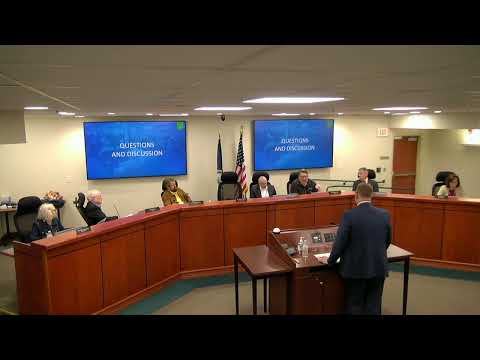
Doctor Ridley presented Goochland County's proposed fiscal year 2027 budget to the Board of Supervisors on the county's livestream, describing a balanced, needs-based plan that would hold local tax rates steady while increasing county spending and revenues by roughly 3.7 percent.
Ridley said the all-funds proposal totals about $170.1 million, including nearly $16.9 million in proposed bond proceeds tied to a Ridgefield Booster Pump Station for the county's utilities enterprise. "This is a needs-based budget ... that ultimately increases general fund expenditures and general fund revenues to the tune of 3.7%," Ridley said during the presentation.
The budget relies in part on rising assessed values; Ridley noted January assessments increased from about $9.6 billion to $10.3 billion, and staff are forecasting roughly a 4 percent further increase into January 2027. Based on those figures and other assumptions, Dr. Raley said the county expects about $55.2 million in real-estate tax revenue next fiscal year, a year-over-year increase he described as approximately $2.8 million (about 5.4 percent).
Staff also described a review of line items that Dr. Raley called "strategic abandonment," which identified about $3.4 million in reductions across copier leases, contracted professional services, deferred vehicle and equipment purchases, CIP trims and other operating efficiencies. "Each and every dollar adds up," Raley said, describing consolidated purchasing, renegotiated leases and postponed vehicle replacements as examples.
On personnel and benefits, the proposal includes a 3 percent pay increase for employees with summative evaluations of "proficient or better," an estimated $1,000,000 cost for those raises, and a county commitment to absorb a roughly 10 percent health-insurance premium increase so employees would see the full value of any pay increase. The recommendation also converts some elected-official stipends to salaries (the commissioner of revenue was cited as an example), raises part-time pay for shelter veterinarians and sets aside funds for law-enforcement career development that Dr. Raley said will largely be covered by grants.
The utilities enterprise budget was presented separately as an all-funds package of about $43.5 million that includes proposed bond proceeds to fund the Ridgefield Booster Pump Station. Dr. Raley recommended a 3 percent year-over-year increase in residential and commercial base rates and a 2.5 percent increase in connection fees to cover projected capital and operating needs. He also proposed adding three utility FTEs (two superintendent roles and a construction inspector), which the presentation said is roughly cost-neutral when compared with current contractor expenses.
Board members praised the presentation's five-year view and the attention to efficiencies but asked pointed questions about sustainability. "I like the five-year looks ... but when you add back in what we've abandoned, we're really seeing increases of cost of close to $8,000,000," said Mister Spoonhower, who urged the board to be realistic about long-term growth in spending. Dr. Raley reiterated that the proposal does not include an increase to ad valorem real-estate tax rates or the personal-property tax rate.
Supervisors pressed staff on several details: the apparent jump in landfill-hauling costs (Raley said the Republic contract is approaching sunset and negotiations may produce savings); why adopted utility revenues looked low in the current year even though next year's utility budget is substantially larger (Raley said he would research that with the director of public utilities); and how much of an anticipated $500,000 in building-permit revenue is commercial versus residential (Raley said the large majority is expected to come from known commercial projects).
Dr. Raley also listed proposed capital investments totaling about $2.6 million, including an ambulance, HVAC work and roughly $1.76 million in prioritized school projects; he noted the Goochland High School CTE addition requested by the school division is not included in the county's recommendation.
Next steps: Dr. Raley said the superintendent's presentation is scheduled for March 3, the board will have a joint work session with the school board and a countywide town hall before public hearings, and the board will meet May 5 to set tax rates and consider final adoption of the FY2027 budget. The meeting adjourned after scheduling follow-up sessions.