House narrowly rejects HB2229, a bill limiting public funds for abortion providers
Loading...
Summary
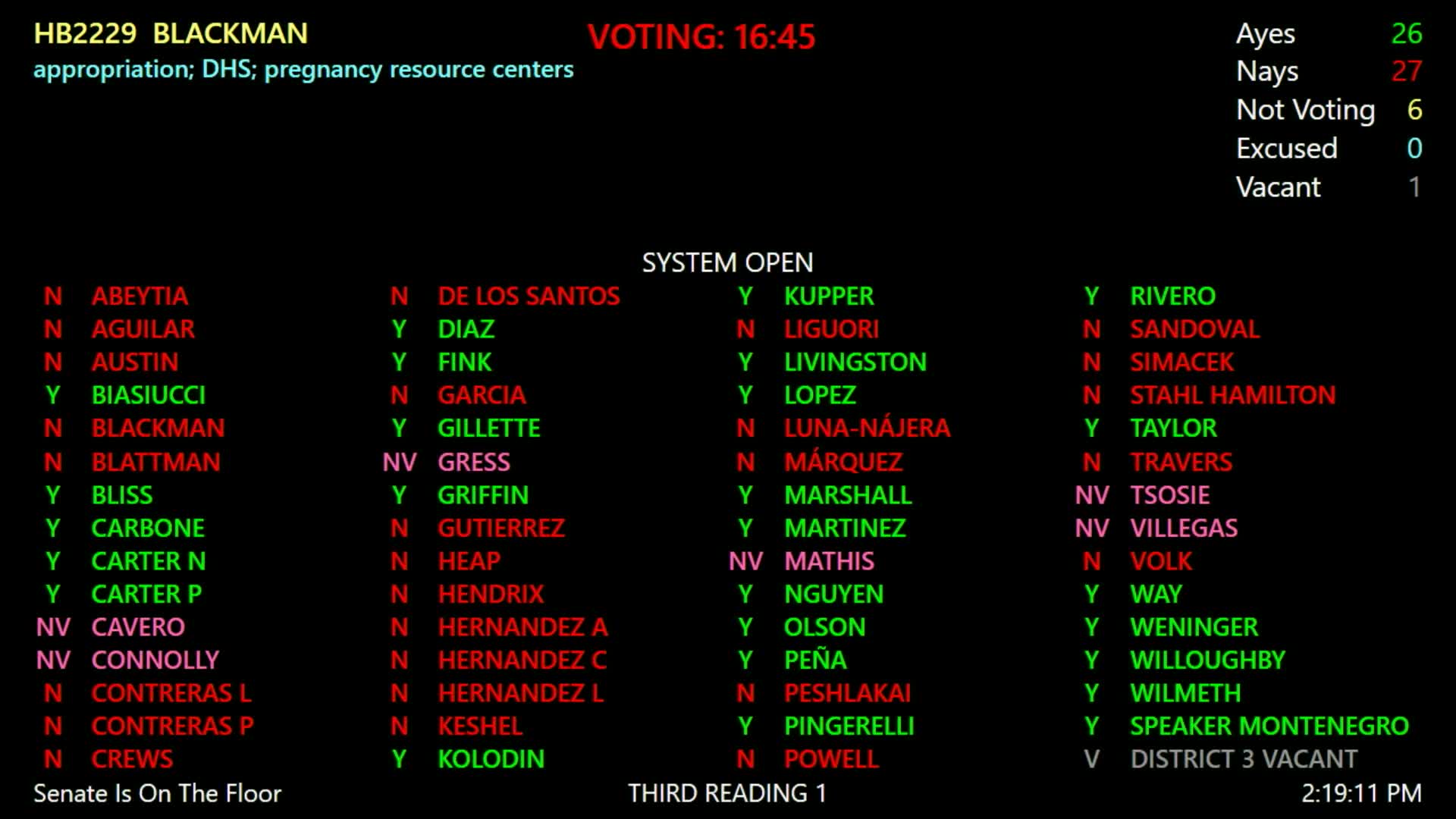
House Bill 22‑29, which would have prohibited state grants or contracts to entities that provide or refer for abortion services and included an appropriation for pregnancy resource centers, failed on March 17 by a 26–27 vote on third reading.
The Arizona House rejected House Bill 22‑29 on March 17 on a recorded vote of 26 ayes and 27 nays. The bill would have barred the state or political subdivisions from entering contracts or making grants to entities that perform abortions, maintain or operate facilities where abortions are performed, or provide referrals for abortion services as a component of family‑planning programs funded with public monies; it also included a stated appropriation for pregnancy resource centers.
Supporters framed the measure as a restriction on the use of public funds, not a ban on abortion itself. Representative Veil Carter read from the bill on the floor and said the plain English of the measure prohibits public monies being spent for abortion‑related referrals or services within family planning programs; he urged an aye vote and recorded a yes.
Opponents argued the bill's effect would be to deny reproductive health coverage to people on state insurance in certain circumstances. Representative De Los Santos said the bill's text, as she read it, would require a 12‑year‑old who had been raped by her stepfather to carry the pregnancy to term; she said the majority was using its power to pass such a law and voted no. A point of order challenged that reading, and other members disputed whether the claim matched the bill’s text. The chair ruled on decorum but the debate remained sharp.
The clerk recorded 26 ayes and 27 nays; the bill failed on third reading and will not be transmitted to the Senate. Several members said they would pursue reconsideration motions in other cases; the transcript records a later successful motion to reconsider a distinct bill.