Get Full Government Meeting Transcripts, Videos, & Alerts Forever!
Get email alerts on the Budget Carryover topic
No spam. Unsubscribe anytime.
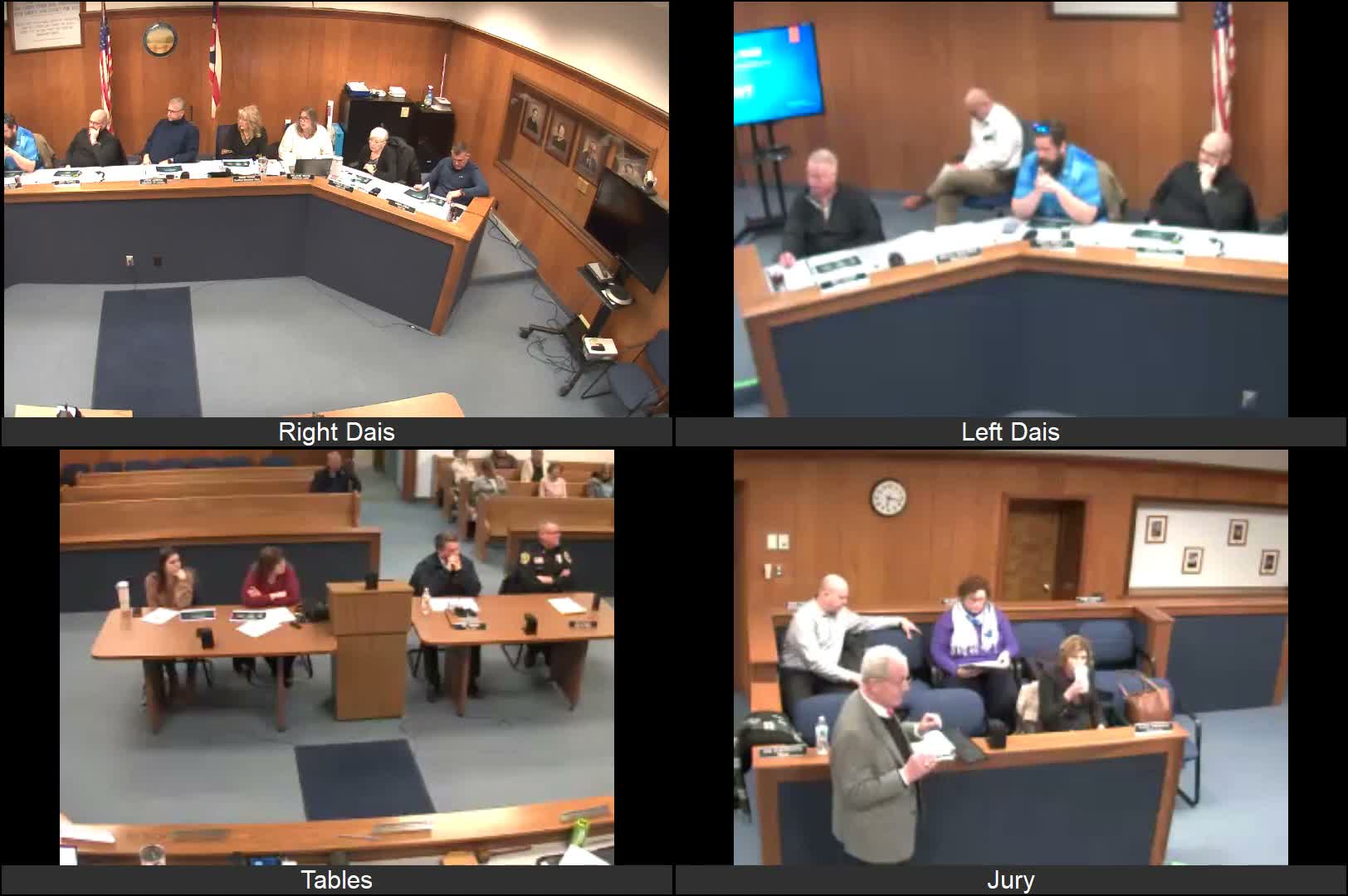
Vermilion council debates using $5 million carryover for streets, equipment and sewer needs
Summary
Councilors discussed allocating a roughly $5 million carryover, including a $2 million proposal for street capital, $570,000 for service-department equipment and transfers to water/sewer capital; residents urged maintenance-first spending and some members pushed for modest senior services funding.
Vermilion City Council debated on how to spend about $5 million in carryover funds, with competing proposals to prioritize street repairs, service-department equipment and sewer capital transfers.
During the Finance Committee update, Finance Director Amy Hendricks said the proposed general fund appropriation is about $9.4 million and explained reimbursements tied to the wastewater treatment plant design project. A council member proposed directing $2 million to street capital — specifically a section of Station Road between Vermillion Road and Highbridge — setting aside $570,000 for equipment for the service department, and moving remaining sums into water and sewer capital funds while preserving roughly a 60‑day operating reserve.
Supporters said investing in street capital would address heavily used, deteriorated roadways and that equipment replacements are necessary. One council member urged reserving a small allocation for senior services — suggesting modest programs (lawn care, winter shoveling) and proposing the council consider starting with around $25,000.
Residents at the meeting pressed for targeted maintenance instead of large-scale replacements. Homer Tab, a resident, urged returning the half‑percent income‑tax credit to residents and questioned transfers into water and sewer funds, arguing users should pay for sewer costs. Marilyn Brown and other commenters emphasized maintenance on streets like Edison Estates to avoid more expensive full-depth replacements later.
Councilors and staff described how roads are selected: the service director said choices often come down to dollars-per-linear-foot, grant match opportunities (for example, OPWC), and whether state or federal funds can be leveraged. When the city funds a project directly, officials said they consider the number of residents served and access to schools, pools and other community assets.
No formal appropriation was enacted at this meeting; councilors asked staff for more detailed cost breakdowns (for example, separating the snow-plow truck and water-dump truck prices) and indicated they would revisit specific allocations at a future session.
Next steps: staff were asked to produce cost estimates for vehicles and program options for seniors and to return with refined recommendations for use of the carryover.