Get Full Government Meeting Transcripts, Videos, & Alerts Forever!
Get email alerts on the Camp Safety topic
No spam. Unsubscribe anytime.
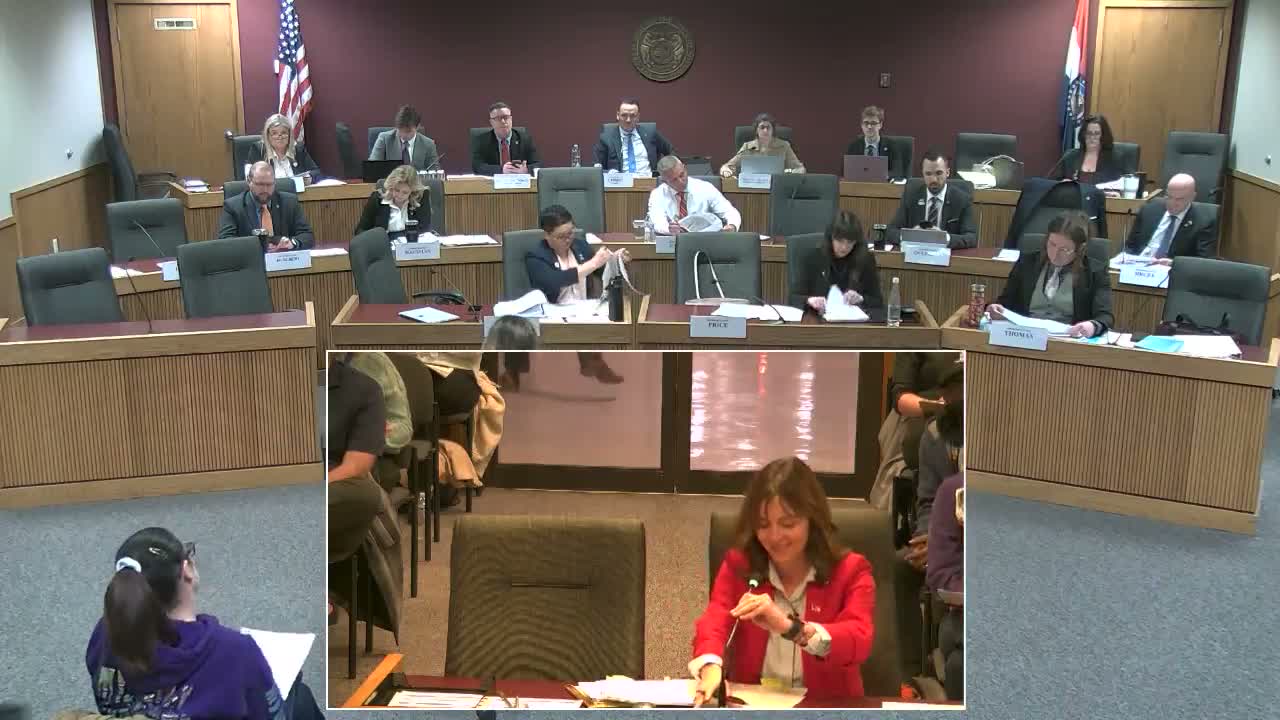
Parents of Camp Mystic victims urge Missouri lawmakers to adopt statewide camp-safety standards
Summary
Families who lost children in the Camp Mystic flood urged the House committee to pass HB 31—42, asking for licensing, emergency plans, staff training and parent notifications for overnight camps; witnesses and the American Camp Association backed a version that distinguishes day and residential camps.
Representative Cameron Parker introduced HB 31 42 on behalf of parents and families who lost children in the Camp Mystic floods, saying the bill would "ensure that when Missouri parents send their children to camp, they do so with confidence, not just hope." Parker told the committee the measure would require comprehensive emergency plans, staff training, coordination with local emergency management and clear communication with families.
Davin Hunt, who identified himself as the father of Jamie Hunt (killed at Camp Mystic on 07/04/2025), described the loss in emotional testimony and said Missouri lacks licensing, background checks and emergency action plans for many overnight camps. "My daughter is dead due to countless missteps, complacency, and the lack of foresight/ planning," Hunt said, and urged the committee to "vote HB 31 42 out of committee."
Clark Baker, father of Mary Grace Baker, and Matthew Childress, who lost a daughter who was serving as a counselor, repeated calls for mandatory safety standards, evacuation routes and real-time weather alerts. Baker said camps should be held to standards "similar to other institutions that oversee our children, require licensure, ensure employees are not criminals with background checks." Childress listed licensing, emergency preparedness, infrastructure standards, and training as central components the bill would secure.
Representatives and witnesses pressed for clarity on scope. Representative Weber asked whether the bill should fall under the Department of Social Services rather than the Department of Elementary and Secondary Education (DESE); Parker said he was open to locating the program where it fits best. Sponsors said they intended to exempt or tailor requirements for low-risk day camps, and witnesses representing day-camp providers (Erin Beline, Campfire Heartland) urged careful definitions to avoid burdening parent-run or library-based day programs.
The American Camp Association (Earl Scissors) supported the bill's safety focus but warned that ACA—s national accreditation is not a perfect fit for every camp type and that legislation should recognize differences among day camps, overnight camps, and specialty programs. Several faith-based camp managers opposed the bill's original oversight placement and cost implications for small church camps, arguing many camps already follow safety practices voluntarily.
The committee heard multiple firsthand accounts of operational failures described by witnesses who testified they had filed litigation against Camp Mystic. Witnesses cited a range of failures, from lack of evacuation procedures to insufficient lifeguard staffing and un-used AEDs. Several speakers asked the committee to craft statutory language that protects children while avoiding unnecessary burdens for low-risk programs. The hearing concluded after supporters and opponents made their cases; sponsors said they would work with stakeholders on definitions and agency placement before advancing the bill.
What happens next: The committee concluded the public hearing on HB 31 42; sponsors signaled willingness to adjust agency placement and carve outs for day camps while preserving licensing, emergency planning, and training requirements for overnight programs.