Survivors and providers urge sealing eviction records after five years; committee sets effective date to 2027
Loading...
Summary
Supporters including eviction survivors, faith-based groups and housing providers told the subcommittee S.983 would reduce long-term barriers to housing by removing eviction records and related personal information from public indexes five years after final disposition; the committee made the bill effective Jan. 1, 2027 and advanced it as amended.
Miss Baker told the subcommittee S.983 would remove certain filings and defendants' personal information from public indexes five years after final disposition (or five years after filing if no subsequent filing is recorded), explicitly including orders of eviction, settlements and cases resolved by payment.
Multiple witnesses described the long-term harms of visible eviction records. Kiana Stacy, a Charleston mother of four, said her 2020 eviction followed the family and limited housing options despite her later work and stability. Melinda Dukes, representing a faith-based coalition, cited about 15,000 eviction filings in Greenville County over the last three years and argued sealing records promotes housing stability and workforce participation. Tenant and child-advocacy speakers described harms to children and families, and housing-industry witnesses including the South Carolina Apartment Association and property managers said compromised language had reached consensus among stakeholders.
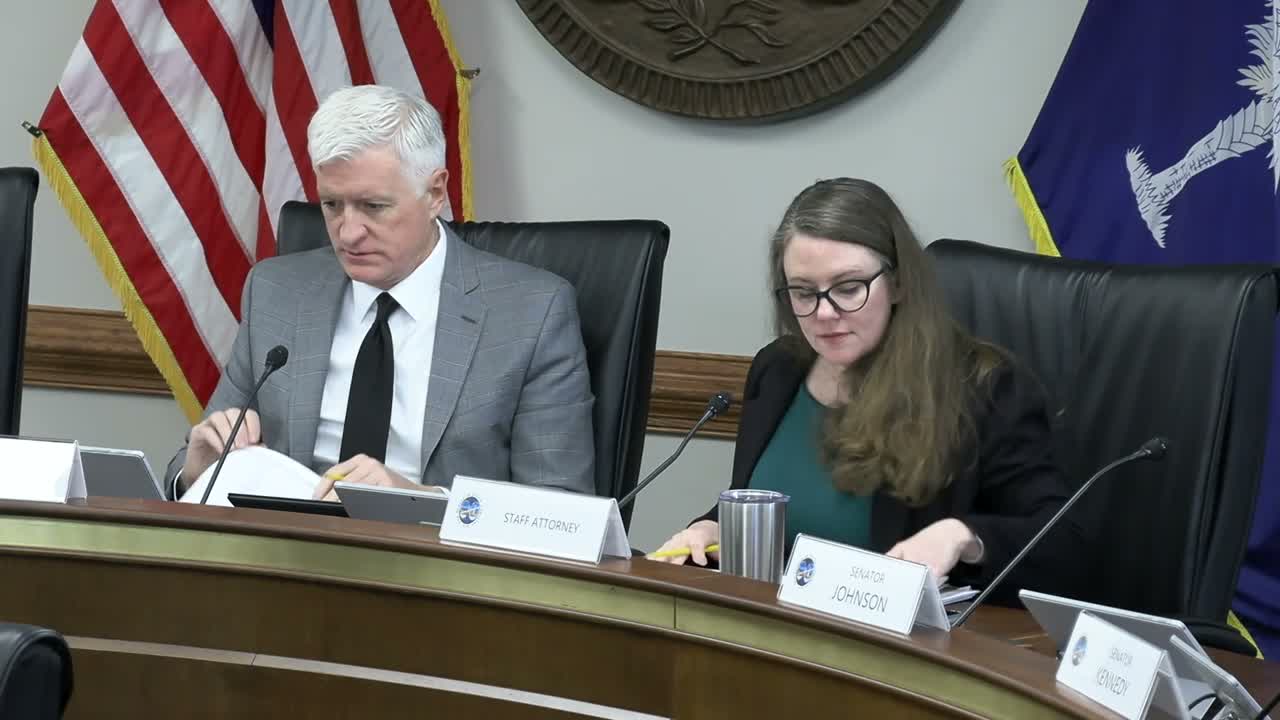
Committee members asked court-administration officials about readiness and the transcript records an amendment to make the effective date 01/01/2027 to allow court systems and local offices time to prepare. The subcommittee voted to advance the bill favorably as amended.