Get Full Government Meeting Transcripts, Videos, & Alerts Forever!
Get email alerts on the Transportation Mobility topic
No spam. Unsubscribe anytime.
Boca Raton outlines Vision Zero mobility plan and roughly $7.4 million in bike/ped grants
Summary
Public works director Zach Beier presented a Vision Zero-driven mobility update, saying the city secured $5.8 million in federal grants with approximately $1.6 million in local match (about $7.4M total) for bike and pedestrian projects, identified a 27-segment high-injury crash network, and discussed coordinated signal timing and other countermeasures.
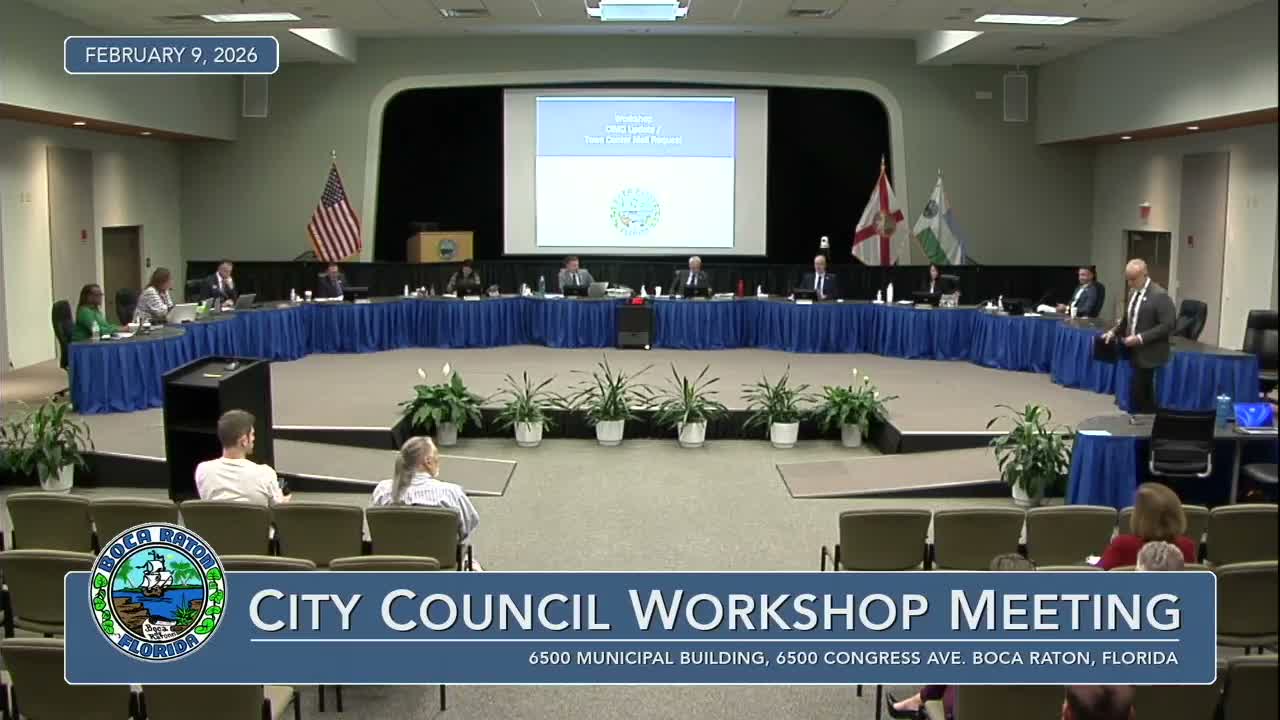
Zach Beier, Boca Raton's public works and engineering director, briefed the council on the city's mobility priorities on Feb. 9, framing the work around three pillars: the federal Safe Streets and Roads for All program, pedestrian and bicycle safety investments, and a mobility plan intended to feed the countywide transportation plan.
Beier said staff has positioned the city to receive three federal grants and reported the funding package: a $5.8 million federal award paired with a local match of about $1.6 million, "leading to an overall funding of, dollars 7,400,000.0," he told council. He explained the grants will fund bike and pedestrian investments, signal upgrades (including coordinated signal timing sometimes described as "AI"), and demonstration/implementation projects.
On safety data, Beier said staff identified a high-injury crash network that accounts for about 7% of the roadway lane miles but concentrates serious and fatal crashes; the network included 27 corridor segments and 63 intersections for targeted countermeasures. He listed speed management, protection of vulnerable road users, site-specific countermeasures, and policy/program changes as primary strategies.
Beier described technology pilots and outcomes: coordinated signal timing pilots on Yamato and Glades corridors yielded roughly 15-20% efficiency gains in traffic flow in pilot areas, he said, and staff is implementing corridor-by-corridor deployments rather than a single systemwide turn-on. He also described school-flasher upgrades, expanded pedestrian enhancements downtown, and community outreach events including a planned bike rodeo in May 2026 and bike month activities in March.
Councilmembers praised the work and requested follow-ups. Councilmember Drucker, who said she serves on MPO and state groups, called the grants a "total win" and urged a bike-month proclamation. Council asked staff to place the grant items on the consent agenda and to return with a downtown-specific mobility slide and follow-up on train-preemption coordination at crossings.
Next steps: Staff will place the grant and Vision Zero items on the upcoming consent agenda, continue mobility planning work over roughly a year, and return with additional corridor-specific proposals and implementation timetables.