
DOT outlines bridge plan as AMHS faces $77.9M federal funding shortfall
Get AI-powered insights, summaries, and transcripts
Sign Up Free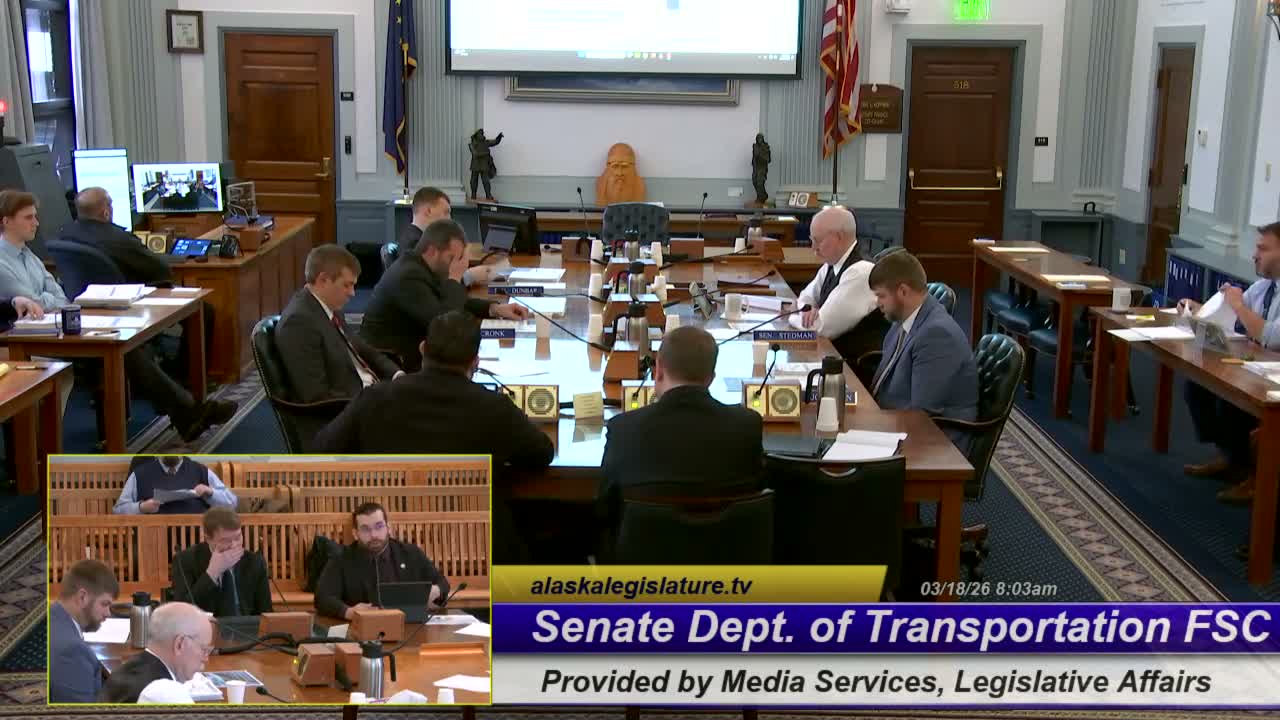
Summary
DOT officials told the subcommittee a delayed Federal Transit Administration rural ferry award created a roughly $77.9 million operating shortfall for the Alaska Marine Highway System; DOT proposed a 'waterfall' budget model and short‑term swaps (including accessing $20M of next year's marine highway funds) and discussed vessel layups/disposals to buy time.
On March 18, 2026, Alaska DOT officials told the DOT finance subcommittee that a delayed Federal Transit Administration award left the Alaska Marine Highway System with a $77.9 million shortfall in the 2026 operating budget and described a multi‑part bridge plan to keep service running.
Commissioner Ryan Anderson said DOT staff met with federal agencies and were told the delay stemmed from workload and staffing in the administering agency; DOT was told a notice of funding opportunity would be posted in March with a likely award in August or September. Anderson said the federal notice would cover the full remaining rural ferry program funds (more than $400 million), but timing remains uncertain.
DOT staff presented a ‘‘waterfall’’ budget model for AMHS that would allow the department to carry excesses forward and, crucially, access portions of the next fiscal year to bridge timing gaps. As part of that approach, staff said DOT would access approximately $20,000,000 of next year's marine highway funds and use federal highway funds as needed to make the two years' budgets net even once the federal award arrives.
To reduce near‑term operating costs, DOT said it plans to dispose of the ferry Matanuska (put it out for RFI) and rely on substitutions among other vessels (Columbia and Kennecott) during the summer; DOT estimated the layup/hotel‑ship use of Matanuska was "about $800,000 a month" (presenter described that as an approximation). DOT also described moving the Taslina into the capital program after adding crew‑quarters/modernization work to remove it from operating costs (presenter estimated about $350,000 a month in operating savings when capitalized).
Committee members asked about contingency plans if federal funds are further delayed. Anderson and DOT staff said the waterfall model and use of federal highway funds provide options, and agreed to continue working with the Legislative Finance Division on contingency language and timing to avoid cash‑flow gaps.
No formal votes or final decisions were taken; the committee requested additional detail and follow‑up.