
Senate concurs with House amendment to limit local civil‑rights ordinances after weeks of debate
Get AI-powered insights, summaries, and transcripts
Sign Up Free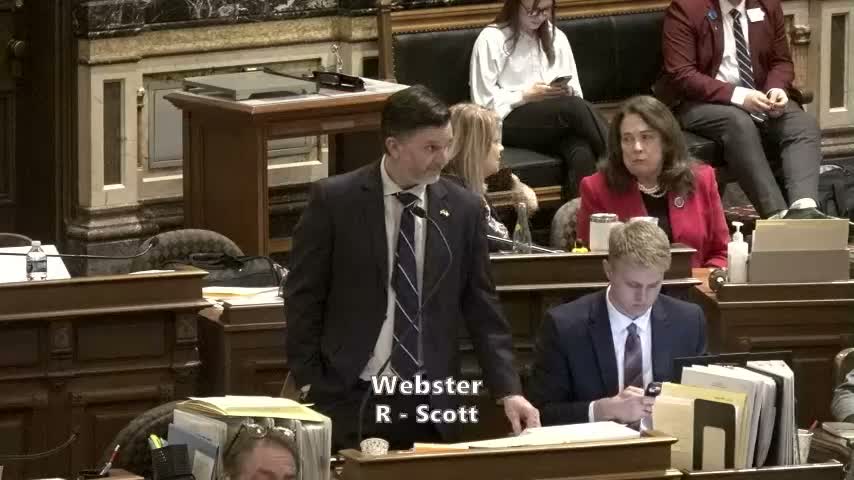
Summary
Senate File 5‑79, with House Amendment 50‑75, passed after extended debate over whether the measure strips municipalities of the ability to adopt civil‑rights protections broader than state law. A proposed amendment to preserve local control was defeated (16–29).
Senate File 5‑79, a bill that changes how local civil‑rights complaints are handled and limits the ability of cities to adopt protections broader than state law, passed the Iowa Senate after an extended, often emotional debate about local control and protections for transgender residents.
Senator Webster explained the House amendment (50‑75) would prevent cities and local governments from enacting ordinances with categories of unfair or discriminatory practices broader than state law; the bill also removes a mandatory civil‑rights commission requirement for cities exceeding a population threshold (previously 29,000), though cities may still establish local commissions.
Senator Kornbach offered a floor amendment (Senate Amendment 50‑81) to restore local control and preserve the ability of municipalities to enact broader protections; Kornbach framed the amendment as protecting communities that have already adopted local protections, citing Ames and Iowa City as examples. The debate focused squarely on home rule, local enforcement capacity, and the practical effects on residents who bring discrimination complaints locally.
Kornbach’s amendment (50‑81) was defeated on a roll call (16 ayes, 29 nays). The Senate then voted to concur in the House amendment by roll call (29 ayes, 16 nays), adopting the House language and subsequently passing SF 5‑79 as amended. Supporters argued the change creates state uniformity and addresses delays in local cases; opponents said it removes local oversight, weakens access to community‑level remedies, and targets vulnerable residents.
Next steps: Senate ordered SF 5‑79 messaged to the House.