
Senate approves a package of bills on March 6, including child-labor changes, school construction tax break and school safety measure
Get AI-powered insights, summaries, and transcripts
Sign Up Free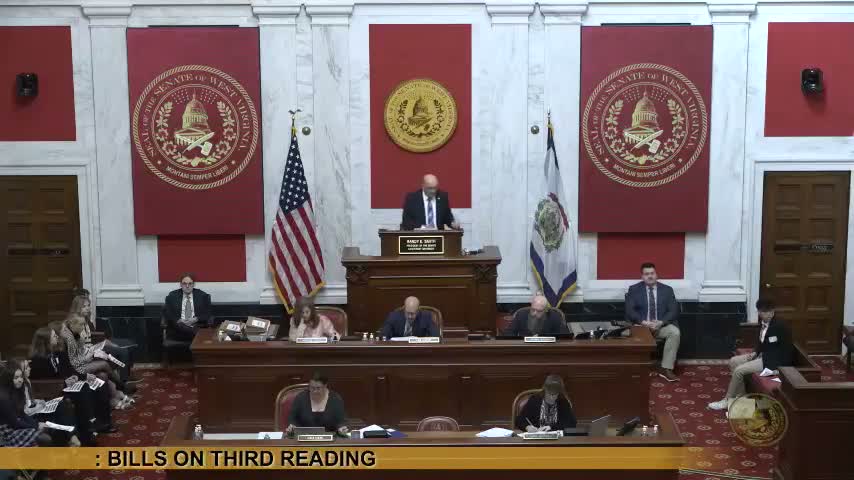
Summary
The West Virginia Senate on March 6 passed a series of bills on third reading, including changes to youth employment rules, a sales-tax exemption for school construction materials, and Alyssa’s Law permitting wearable panic-alert devices for schools; most measures passed by lopsided margins or unanimous votes.
CHARLESTON — The West Virginia Senate on March 6 approved a slate of bills on third reading, voting in favor of measures that lawmakers said aim to expand opportunities for youth, ease costs for school construction and bolster school safety.
The chamber passed House Bill 4005, a measure aligning certain work categories for 16‑ and 17‑year‑olds with U.S. Department of Labor standards and clarifying student‑learner and apprenticeship arrangements. The sponsor, the senator from Randolph, described the bill as a way to “allow youth to be introduced to various trades on a temporary basis” while requiring direct supervision. The Senate recorded 27 yeas and 7 nays on that vote and the chair declared the bill passed.
Lawmakers also approved a sales‑tax exemption for construction materials that become part of finished public school facilities (House Bill 40 28). The junior senator from the sixteenth urged passage and the bill passed by a 34–0 margin.
In another finance‑related move, the Senate passed changes to the State Parks and Recreation Endowment and the State Parks operational fund (House Bill 41 26). The sponsor said the bill directs 50% of specified royalties to the endowment and 50% to the operational fund, with investment authority and provisions tied to fund balance; the measure passed 34–0 and was later made effective July 1, 2026 after a supermajority vote.
The chamber approved updates to the state’s 811 underground‑facilities notification system (House Bill 44 64), clarifying when the 48‑hour response window begins, authorizing mutual waivers of the window and strengthening enforcement by permitting liens on property for unpaid penalties; the bill passed 26–8.
Senators also approved Alyssa’s Law (House Bill 47 98), which requires a rule and a program to permit a wearable panic‑alert device in public schools contingent on funding. The senator for Mason described the device as a lanyard‑worn alert with staged activation that can contact administrators and law enforcement; the bill passed 34–0.
Several other bills and amendments were advanced, including measures related to background checks under the West Virginia Cares program, local government disposal of property, and various professional licensure and administrative changes. Where recorded on the floor, votes matched the tallies the clerk announced during the session and the chair ordered the clerk to communicate the Senate’s action to the House.
A full roll of passage tallies and title‑amendment actions was recorded in the Senate Journal and by the clerk during the floor session. The Senate recessed at 4:30 p.m. and planned further work later in the day.