Get Full Government Meeting Transcripts, Videos, & Alerts Forever!
Get email alerts on the Growth Management topic
No spam. Unsubscribe anytime.
Hudson council declines to activate growth-management residential allocation system for 2026
Summary
Following a staff presentation and public hearing, the council accepted the city manager's recommendation not to implement the growth-management residential allocation system during calendar year 2026 and approved resolution 25-174 by a 7-0 vote.
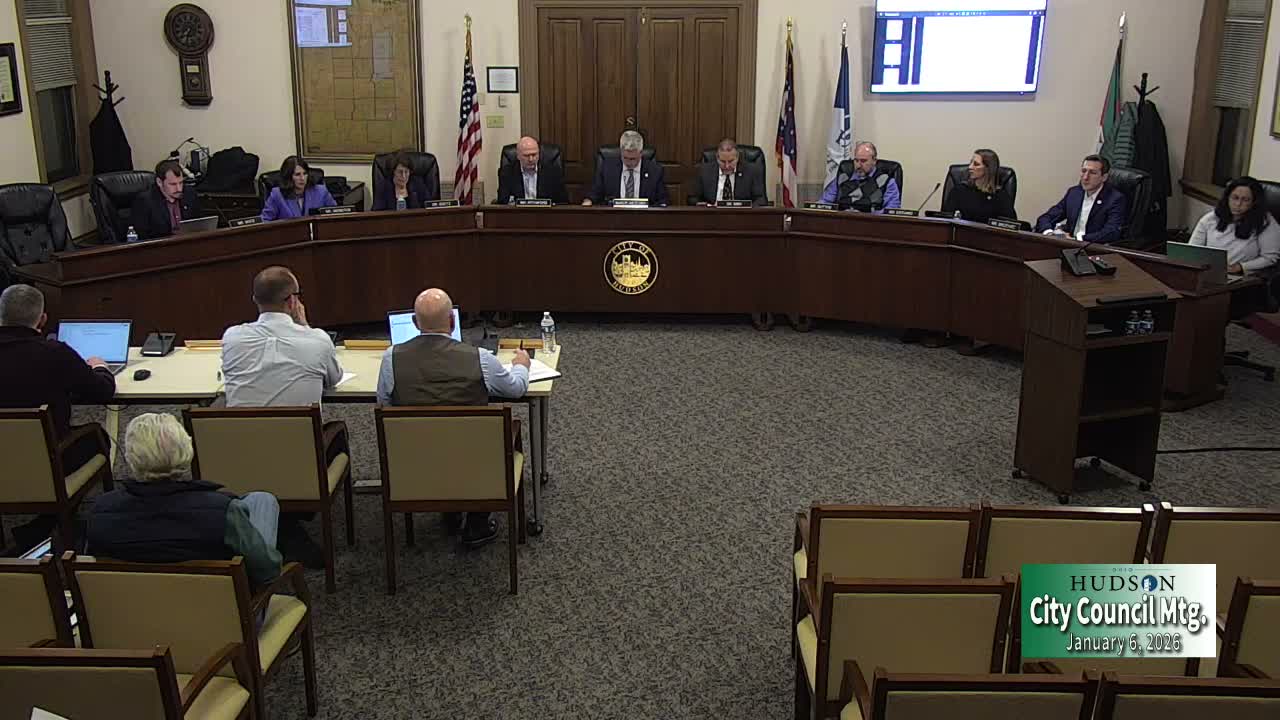
The Hudson City Council on Jan. 6 accepted the city manager's recommendation not to implement the city's growth-management residential development allocation system during calendar year 2026, approving resolution 25-174 by a unanimous 7-0 vote.
Solicitor Pitchford reviewed the allocation system's origins and purpose, tracing it to the city's 1995 comprehensive plan and earlier concerns about whether infrastructure could keep pace with rapid housing starts. He described the system's history as once employing a lottery and a cap on zoning certificates; city code requires annual review to determine whether to reactivate the allocation mechanism. Pitchford told council staff return each year with a monitoring report and noted that current growth indicators do not warrant reactivation.
During the legislative portion of the meeting, Councillor Weinstein urged caution about development intensity while also stressing flexibility to allow a diversity of housing types in planned areas such as Clinton Crossing. "I did hear from some folks that want us to be cautious about not implementing and cautious in our development, to make sure that we kind of maintain the charm and kind of small town feel of Hudson," Weinstein said, adding that the decision not to implement the allocation system provides flexibility to move some developments forward.
A public hearing on the resolution included the staff overview; no public commenters addressed that specific hearing item. The resolution passed on third reading with a roll-call vote recorded as 7 in favor, 0 opposed.
Council did not record additional conditions or directions tied to the resolution at the meeting.