Get Full Government Meeting Transcripts, Videos, & Alerts Forever!
Get email alerts on the Council Procedure topic
No spam. Unsubscribe anytime.
Council debates rule change that would let single members move workshop items to council agendas
Summary
Councilors dissected a proposed change to codified ordinances (220.031 and 220.06) that would allow items introduced at a workshop to be placed on regular meeting agendas without the prior four‑member affirmative vote; history, transparency concerns, and a proposal to require a second under Robert's Rules were central to debate.
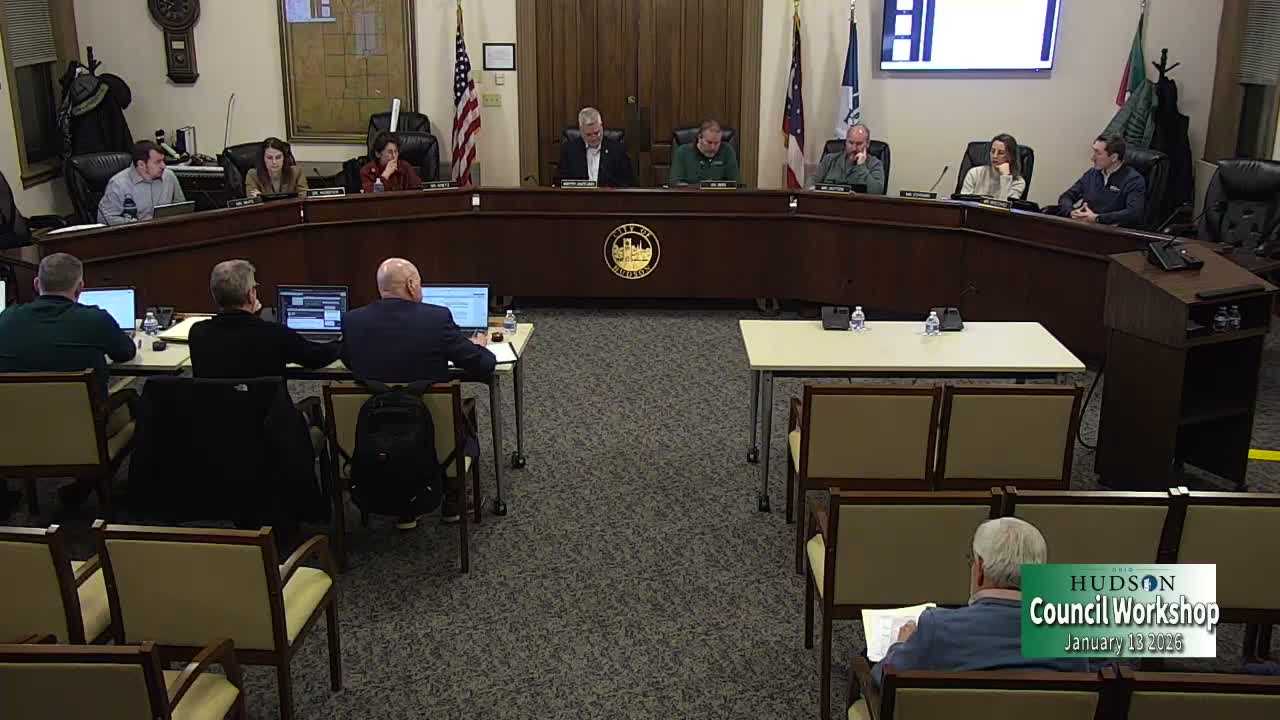
Councilors spent the bulk of the Jan. 13 workshop debating an ordinance to amend sections 220.031 and 220.06 of the codified ordinances to allow introduction of ordinances and resolutions on regular and special council agendas after consideration at a workshop.
Skyler, who said he was one of the primary authors of the earlier rule, gave historical background and warned the proposed language could create a "reverse filibuster loophole" by allowing a single member to place items on the agenda that the body could not remove. He said the prior motivation for the rule was to prevent agenda control behind closed procedures and to ensure workshop discussion happens "in the daylight." "The 2019 council president used the agenda as a political tool," he said, describing why prior safeguards were put in place.
Other councilors questioned the current draft's text and whether it unintentionally removed the ability of multiple members to stop items. One councilor suggested adapting Robert's Rules so a motion to move an item forward would require a second, so an item would not progress unless at least two members affirmatively supported it; the mayor suggested codifying agenda‑setting meetings as part of the change. Council members also discussed whether workshops can take only procedural (non‑legislative) votes and whether the mayor should have the same ability as council members to move items from workshop to the regular agenda.
The council did not adopt the proposed ordinance at the workshop. Members agreed to do more work with the city solicitor and Skyler to refine language and to consider adding language about agenda‑setting meetings; councilors indicated they would revisit the item in February or March rather than sending it immediately to the regular agenda.
Next steps: staff and the solicitor will work with council members to redraft the language (including possible amendments to require a second and clarify the mayor's role) and return with a revised proposal.