Get Full Government Meeting Transcripts, Videos, & Alerts Forever!
Get email alerts on the Planning Policy topic
No spam. Unsubscribe anytime.
Council allows larger office‑conversion flexibility in downtown DDRI, prompting mixed reaction
Summary
Council adopted a text amendment to the Downtown Development of Regional Impact that permits reducing office allocation in subareas D and G by up to 90% (5‑0 vote); supporters said it adds flexibility to reflect market demand, while opponents warned it could shift traffic patterns and undercut original DDRI intent.
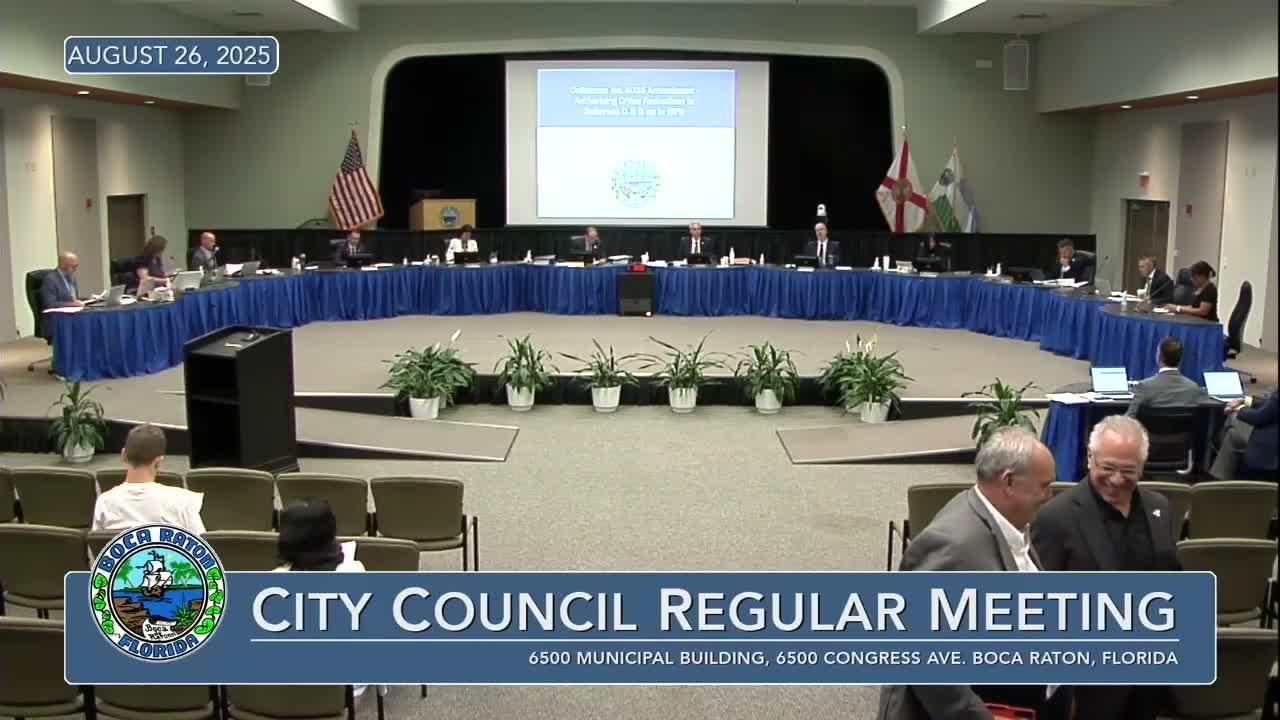
The City Council adopted an amendment to the Downtown Development of Regional Impact (DDRI) development order to allow larger reductions and conversions of office‑equivalent (OE) allocations in downtown subareas D and G.
Arlene Chees Nelson, the DDRI planning analyst, explained the DDRI divides downtown into seven subareas with allowable office equivalent allocations and caps conversion/transfer activity at 50% for certain uses. The ordinance before council increases flexibility by authorizing reductions of allocated office OE in subareas D and G up to 90% so long as subsequent conversion/transfer applications satisfy established criteria and infrastructure impact analyses.
Ellie Zacharitis (advocating for applicants) described the change as a pragmatic "Band‑Aid" to allow projects to proceed where office demand is weak and to avoid a de‑facto development pause in the downtown. She noted that after recent approvals only limited OE remained available in some subareas and that transfers/conversions would be subject to application‑level scrutiny.
Opponents, including resident John Perlman, urged caution and argued the DDRI had been carefully designed in 1988 to manage downtown traffic and land use; they warned that substantial transfers could alter the downtown character. Planning staff and the development‑services director replied that any conversion or transfer would still require an applicant to justify need, analyze infrastructure impacts and undergo staff and board review before council or CRA action.
The council voted 5‑0 to adopt ordinance 57‑35. Supporters said the amendment preserves oversight while preventing stagnation in areas where office demand has waned; critics asked for careful review of each conversion application.
Next steps: conversion or transfer proposals will be reviewed under existing DDRI procedures with required analysis of infrastructure and circulation impacts before any approval.