Get Full Government Meeting Transcripts, Videos, & Alerts Forever!
Get email alerts on the Municipal Governance topic
No spam. Unsubscribe anytime.
Lima City Council approves a slate of ordinances; alley vacation fails second reading
Summary
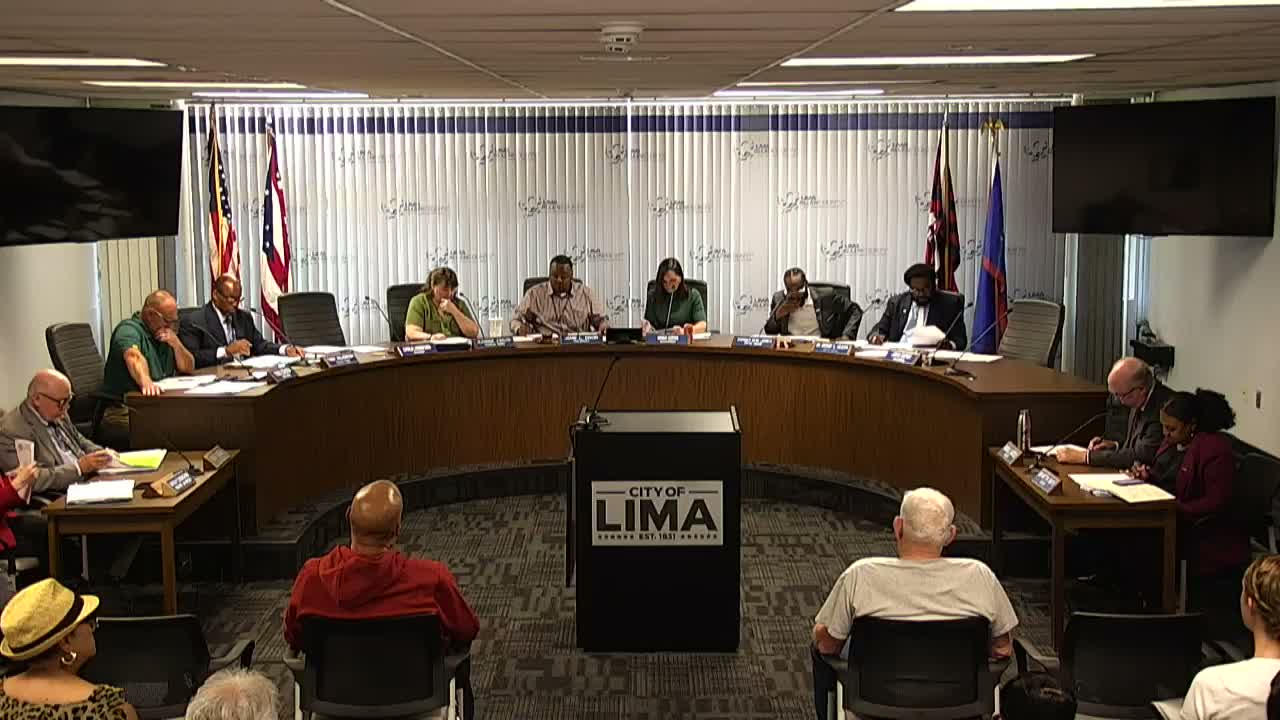
At its June 23 meeting the Lima City Council approved numerous first-reading ordinances and contracts (most by 6–0 votes), tabled two items for a council-of-the-whole meeting and allowed an alley vacation to fail its second reading after member opposition and one abstention.
The Lima City Council approved a broad package of ordinances and contract authorizations on June 23, voting largely unanimously on first readings for public-works contracts, grant applications, municipal court services and updates to the city’s code.
Council passed the 2026 tax-budget ordinance on its second reading and advanced more than a dozen first-reading ordinances by roll call, typically recorded as 6–0. Items included authorizations to contract with Clyde Kleinfelder Inc. for Public Works, to apply for federal Safe Streets and Roads for All funding, to accept an Assistance to Firefighters grant, and to enter agreements for municipal-court services and network upgrades. The council also approved an Ohio EPA WSRLA construction loan application for utilities work and granted an easement to American Electric Power for a rivergate control structure.
Why it matters: the package includes capital and operating steps that enable street resurfacing, public-safety grant applications, municipal-court vendor contracts and code updates, allowing the administration to finalize project procurement and begin implementation.
Several items were procedural or noncontroversial and moved by consent. Two ordinances that would amend the Human Relations Commission code and council employment positions were tabled so a council-of-the-whole meeting can include additional stakeholders. One land-use item, an ordinance to vacate an alley off Grand Avenue (ordinance 1 23 25), failed its second reading after several members opposed the vacation and one member abstained; that item will return for further consideration.
Council president thanked staff and the administration for their work on the budget and the capital items. The clerk recorded roll-call votes for each ordinance; where a specific tally was stated the minutes record it (for example, several first-read votes were 6–0). The meeting concluded with routine adjournment to a June 30 session.