Get Full Government Meeting Transcripts, Videos, & Alerts Forever!
Get email alerts on the Water Infrastructure topic
No spam. Unsubscribe anytime.
Mayor outlines nearly $50M in water investments, says rate increases are needed to maintain infrastructure
Summary
Mayor Jeff Gore and council explained that multi-million-dollar investments in water mains, booster pumps, filters and membranes since 2018 require rate increases; officials said projects reduce main breaks and that planned work will improve capacity and water quality.
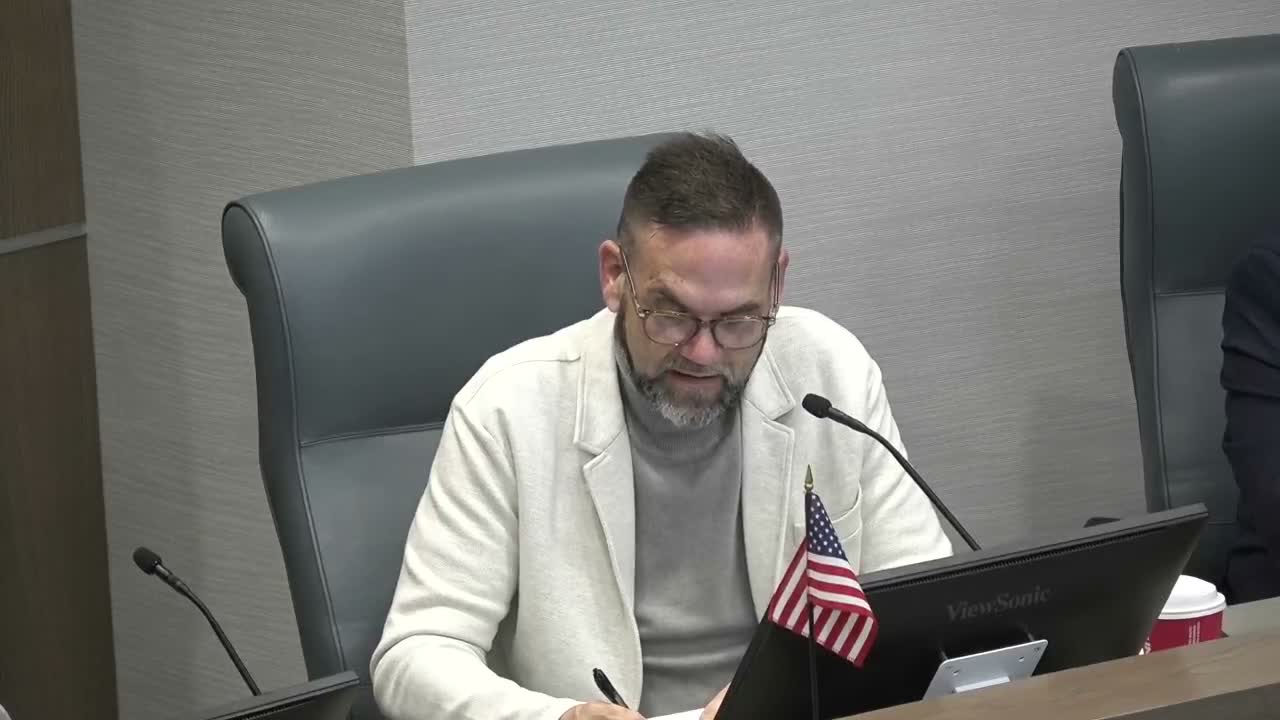
Mayor Jeff Gore delivered a detailed account of water-system investments and the rationale for recent rate increases at the Feb. 9 council meeting.
Since Jan. 1, 2018, Mayor Gore said the city has spent approximately $49.235 million on water projects, including a voter-approved water-softening system (about $13 million of that figure), booster pumps (roughly $2.5–$3 million), and about $10.5 million replacing water mains. He told the council the city saw 157 main breaks at the peak in 2022 and about 39 last year after replacements.
The mayor described recent repair work to the water-plant filter media (about $750,000) and said new membranes will be installed in April at an estimated cost he described in discussion (membrane installation figures given in the meeting). "Water is not what's expensive. It's the delivery system, and we have to make sure that delivery system is top notch," he said when explaining the need for the rate adjustment.
City officials said planned water projects total roughly $19.2 million, that the water fund had limited liquidity at the start of 2026, and that prior loan proceeds have been used for capital projects. Mayor Gore and other council members said rate increases are necessary to avoid deferring critical pipe and plant work and transferring the cost burden to future councils and residents.
Officials also addressed capacity: Huber Heights uses roughly 3.5 million gallons per day in winter and up to 5 million gallons per day in summer; the city's EPA-authorized withdrawal was stated as 5.8 million gallons per day with an expected increase to about 7.5 million gallons per day once April upgrades are complete.
Council and staff said they will continue water-project work, including a recurring investment plan (council mentioned a $6 million cycle every 18 months for replacing water lines), and encouraged residents to consult the city website and staff for individual billing or assistance options.
The council did not take separate action on rates at the Feb. 9 meeting beyond the public explanation; staff and council committed to ongoing communication and to complete the scheduled upgrades.