Get Full Government Meeting Transcripts, Videos, & Alerts Forever!
Get email alerts on the Transportation topic
No spam. Unsubscribe anytime.
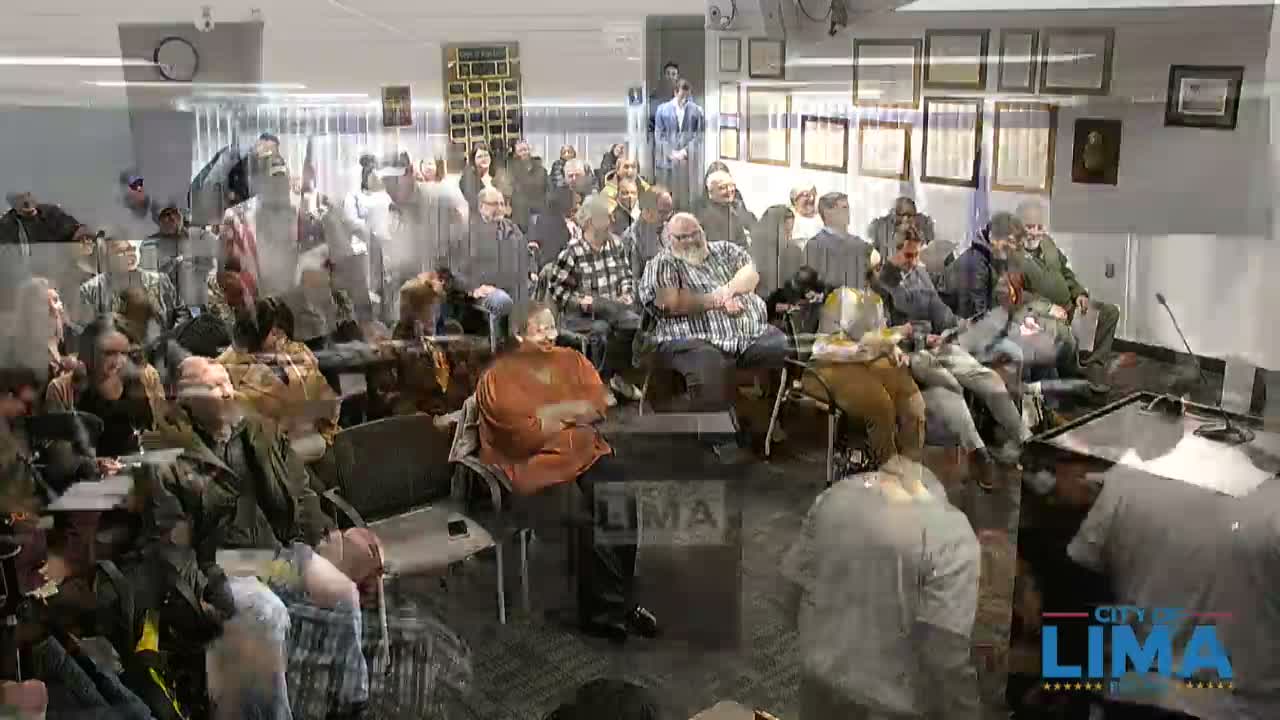
Lima City Council approves contentious Cable Road redesign after hours of debate, 5-3
Summary
After a lengthy public-comment period and more than an hour of council debate over safety data and business impacts, Lima City Council approved Ordinance 22-26 authorizing property acquisition for the Cable Road Improvement Project on a 5-3 vote; the mayor warned the city could lose millions in state and regional safety funding if it does not move forward.
Lima City Council voted 5-3 on Feb. 23 to approve Ordinance 22-26, authorizing the mayor to purchase or accept property for the Cable Road Improvement Project (PID 112573), a safety-driven redesign that opponents said would harm local businesses and emergency response.
The ordinance passed after prolonged public comment and council discussion. During public comment, resident Steven Jenkins told council the plan would “delay or obstruct” emergency response to Sherwood Park if southbound traffic is reduced to a single lane, and described school-bus routing and visibility problems he said would endanger children. Another resident, Steven Walsh, described nighttime visibility problems on Cable Road and urged changes to improve pedestrian safety.
Opponents on council repeated those concerns during debate. Councilor Nipper said the plan would “hurt and destroy businesses” along the corridor, described multiple prior projects that she said damaged small businesses, and warned area businesses were prepared to sue. Councilor Gordon said she would not support a plan that restricts southbound travel to one lane because she believed it posed a safety risk for first responders.
Proponents, including Councilor Glenn and Councilor Wilkerson, and Mayor (identified on the record as "Madam Mayor"), defended the redesign as evidence-led. The mayor said the project had been studied since 2020 and cited crash data from 2017–2021 showing 156 crashes in the corridor with about 28% resulting in injury; those findings, she said, prompted ODOT involvement and made the project eligible for safety funding. The mayor also warned that rejecting the plan would put approximately $4,000,000 in ODOT funds and an additional $2,000,000 from regional planning at risk of being reallocated to other communities.
Councilors split along those lines in the roll call: Councilor Jordan, Councilor Jones, Councilor Glenn, Councilor Dixon and Councilor Wilkerson voted yes; Councilor Lowe, Councilor Nipper and Councilor Gordon voted no. The ordinance passed on third reading, 5–3.
The debate highlighted two recurring themes: opponents’ emphasis on immediate traffic-flow and business impacts, and proponents’ emphasis on long-term crash-reduction benefits and the availability of state and regional safety funding. Councilor Nipper said she doubted the accuracy of the project’s public materials and the sufficiency of recent traffic studies; the mayor and administration officials responded that the project followed ODOT and regional planning processes and that alternative designs had been considered.
Next steps: with the ordinance approved, the mayor is authorized to proceed with property acquisition and final engineering steps needed for the Cable Road Improvement Project and to work with ODOT and regional partners on implementation. Council members and administration representatives noted public concerns about access and right-of-way acquisition will require continued coordination with affected businesses and residents.