Get Full Government Meeting Transcripts, Videos, & Alerts Forever!
Get email alerts on the Community Center Tif topic
No spam. Unsubscribe anytime.
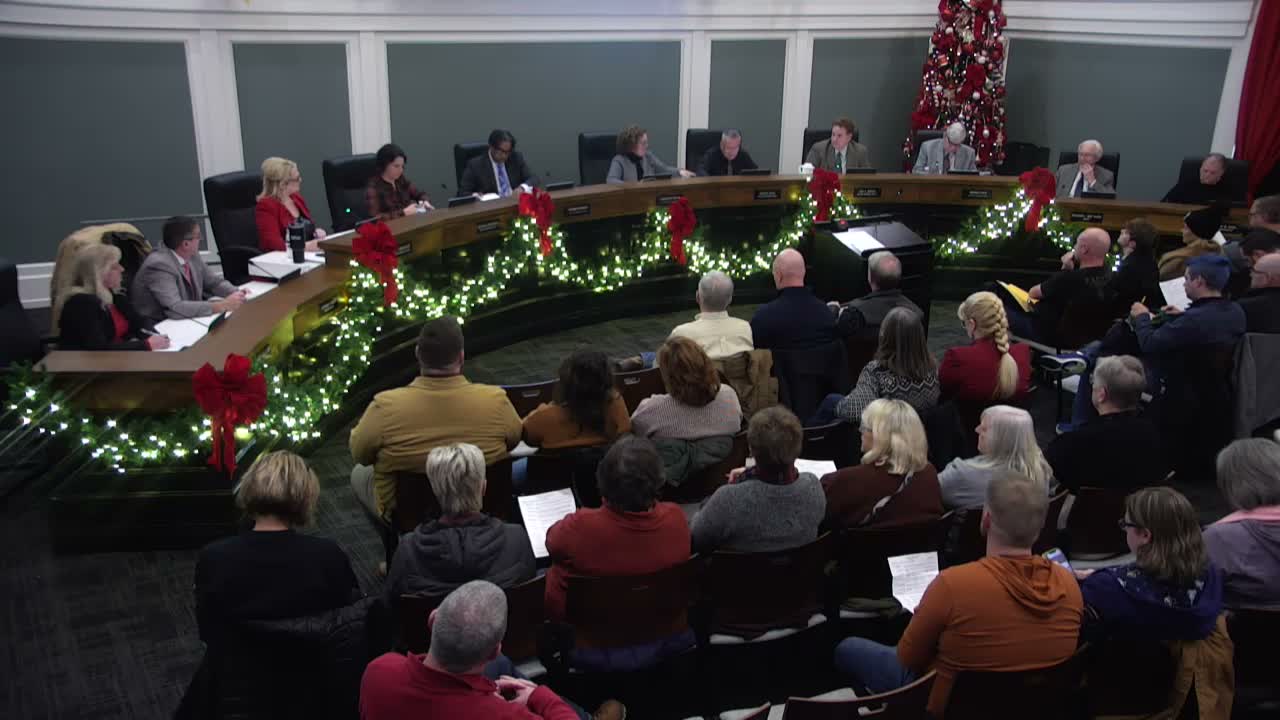
Grove City council extends Pinnacle TIF to secure funding for proposed community center after heated public debate
Summary
Council approved an extension of the Pinnacle TIF districts to secure capital funding for a proposed multi‑generational community center, advancing design and land acquisition plans after residents and township officials warned TIF revenue diverts funds from local services.
Grove City Council voted to extend the Pinnacle tax‑increment financing (TIF) districts to lock in revenue intended to pay for the capital costs of a proposed multi‑generational community center, leaders said during a lengthy exchange that included concerns from township officials and first‑responder representatives.
The council’s finance presentation, led by administration staffer Cindy, said the extension would guarantee funding for design and land acquisition (estimated at roughly $8 million) and would protect the project from rising costs tied to further delay. Cindy told the council the extension is the financing tool the administration and the finance committee recommended after months of study and consultant work.
Why it matters: supporters said extending the Pinnacle TIF is the most practical way to secure capital without raising property taxes citywide; opponents, including Jackson Township officials and the fire department, said it redirects voter‑approved tax revenue away from township services and could force future levies to replace lost dollars.
During public comment Jackson Township trustee Ron McClure said the Pinnacle TIF has diverted substantial sums from township jurisdictions: “Last year it was $1,607,837 that was diverted,” he said, and he recounted larger historical totals he calculated for previous years. Randy Little, speaking for the fire department, said the extension would continue diversion of voter‑approved fire levy dollars “for an additional 15 years” and asked the council to consider public‑safety impacts before voting. Resident Jim Rock said he supports the community center concept but opposed extending what he described as a residential TIF.
Administration and finance officials responded that TIFs do not increase tax rates and pointed to projects paid for with TIF dollars — new fire stations, road projects and parkland acquisitions — arguing the mechanism has funded local infrastructure and economic development. The administration also warned that waiting another year would increase costs substantially because of inflation and could add roughly $3.5 million in extra expense, the presentation said.
After discussion and additional public comment, the council moved and approved the TIF extension ordinance. Council members also adopted several related budget and appropriation measures required to advance the project and the city’s 2026 operating budget. The meeting record shows the council approved the 2026 budget and several housekeeping ordinances during the same session.
Votes at a glance: the council advanced and approved multiple items related to land use, development, finance and governance during the meeting, including annexations, a Forge Biologics development plan and the 2026 appropriation ordinance. (For specific ordinance/resolution identifiers and meeting actions, see the meeting timeline and actions list.)
What’s next: extending the Pinnacle TIF secures a capital funding path but does not fund day‑to‑day operations. Council and staff said an additional step — an educational campaign and a voter question on a 0.5% income‑tax increase — would be pursued to raise operations funding for the center in time for a November 2026 ballot if the council proceeds.
Council members and administration framed the decisions as part of a multi‑year program of work; township officials and some residents said they want more negotiation and transparency with affected jurisdictions before long‑term revenue diversions continue.