Get Full Government Meeting Transcripts, Videos, & Alerts Forever!
Get email alerts on the Economic Development topic
No spam. Unsubscribe anytime.
Boca Raton staff present business‑receipt snapshot; council asks for trend lines and targets to guide economic development
Summary
Economic development staff presented preliminary business tax–receipt data showing most firms report 1–50 employees and leading sectors include health care, retail, food services and financial services; council asked staff for trend analyses, employee demographics and clearer outcome targets for incentives and outreach.
Economic development staff used the May 7 strategic planning workshop to present an initial, city‑level snapshot of business composition drawn from business tax receipts (BTRs), and asked the council for directional targets to shape future recruitment and incentives.
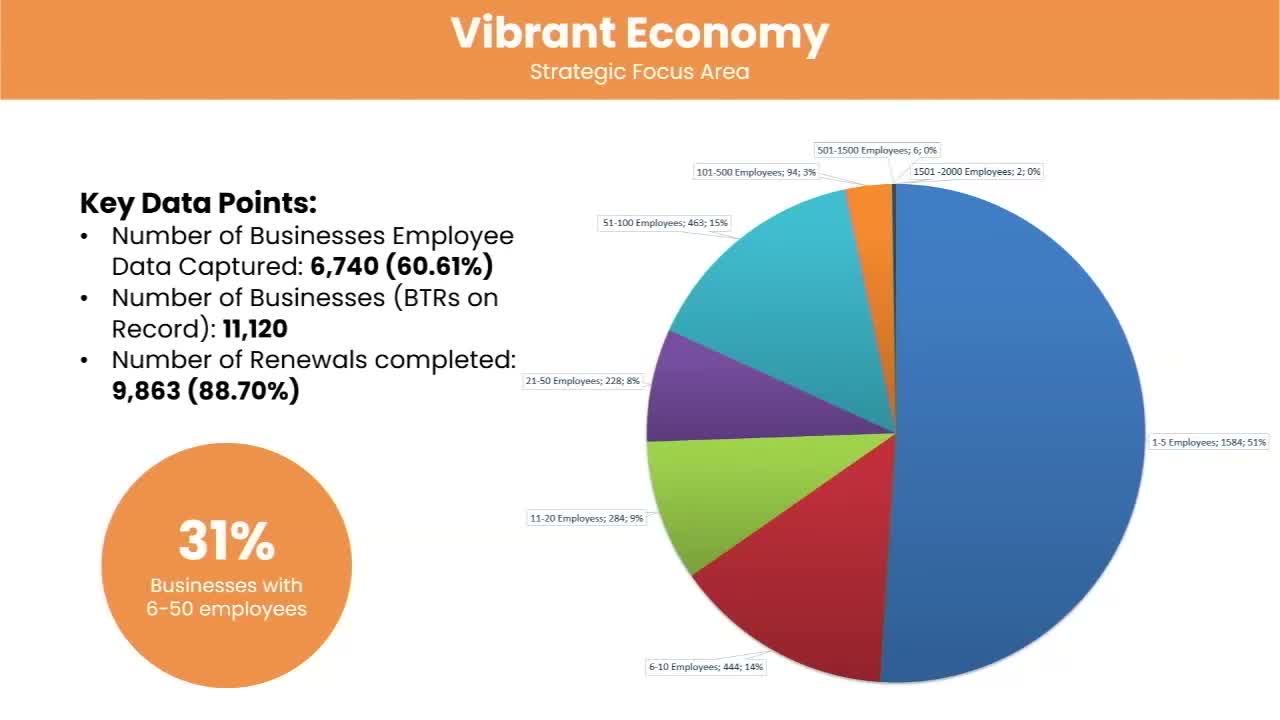
Staff said 6,740 businesses submitted employee‑count data in the most recent BTR cycle, representing about 60% of registered firms; the majority of reporting firms fall in the 1–50 employee range. Top industry categories by the staff’s snapshot included health care, retail, food services and financial services.
Councilmembers pressed for trend data, age-of‑firm measures, and employee demographic breakdowns. Several members asked staff to produce year‑over‑year trend lines (for example, square feet leased, new firms, job creation by sector) and to show the composition of jobs by wage band so the city can assess how new development would affect local affordability and the tax base.
Staff and council discussed the value of partnering with local colleges and universities to develop targeted workforce pipelines for specialized technical roles and of using NAICS or similar industry codes in the BTR system to capture more granular industry data over time. The council asked staff to return with measurable outcomes for small‑business support—examples cited included number of jobs, wage levels, retention/expansion rates and firm ‘age’ or longevity measures.
What happens next: staff will refine the BTR‑based dataset, explore additional public sources (state employment statistics, regional reports) and return with recommended metrics and a plan to collect and track year‑over‑year trends to support recruitment and incentive decisions.