Get Full Government Meeting Transcripts, Videos, & Alerts Forever!
Get email alerts on the Land Use topic
No spam. Unsubscribe anytime.
Rockwall council strengthens code: applicants who fail to appear may have cases denied; new rules set permit-expiration timelines
Summary
Council unanimously approved two city-initiated text amendments to the Unified Development Code: one lets decision bodies deny cases where applicants fail to appear without an approved delay; another sets expiration rules and an extension/appeal path for dormant building permits.
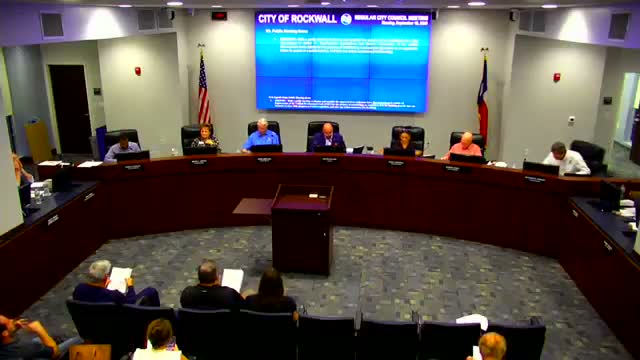
The Rockwall City Council on Sept. 15 approved two city-initiated amendments to the Unified Development Code intended to streamline review and address stalled development.
Staff summary: Planning staff said repeated no-shows at hearings limit decision-makers' ability to ask questions and render informed deliberations. The new language allows the Planning & Zoning Commission, City Council and other decision bodies to deny an application if the applicant fails to appear at a hearing without an approved delay from the director of planning and zoning. Ryan, the planning director, noted the amendment includes flexibility: an applicant may request a delay from the director and be rescheduled without penalty.
Permit-expiration rules: A companion amendment to Article 12 establishes firm expiration timelines for building permits. Under the change, permits issued after the ordinance's adoption (anticipated 10/06/2025) will expire six months from issuance if no substantial progress is shown, as determined by the chief building official. Permits issued before adoption would have a two-year window before expiration for lack of substantial progress. The amendments allow multiple extensions if justified and provide an administrative appeal path to the Board of Adjustments.
Council action: Both ordinances were read and adopted unanimously after staff explained the provisions and answered questions about appeals, extension limits, and how the chief building official would apply discretion.
Why it matters: The changes give staff and boards a clearer, consistent tool to address dormant projects and reduce the neighborhood impacts of long-term stalled construction, while preserving appeal rights and the possibility for extensions in extenuating circumstances.
Next steps: The ordinances take effect per their captions; staff will update public-facing permit guidance to reflect new expiration and extension procedures.