
Calbright seeks ongoing funding while LAO urges formula transition or phased approach
Get AI-powered insights, summaries, and transcripts
Sign Up Free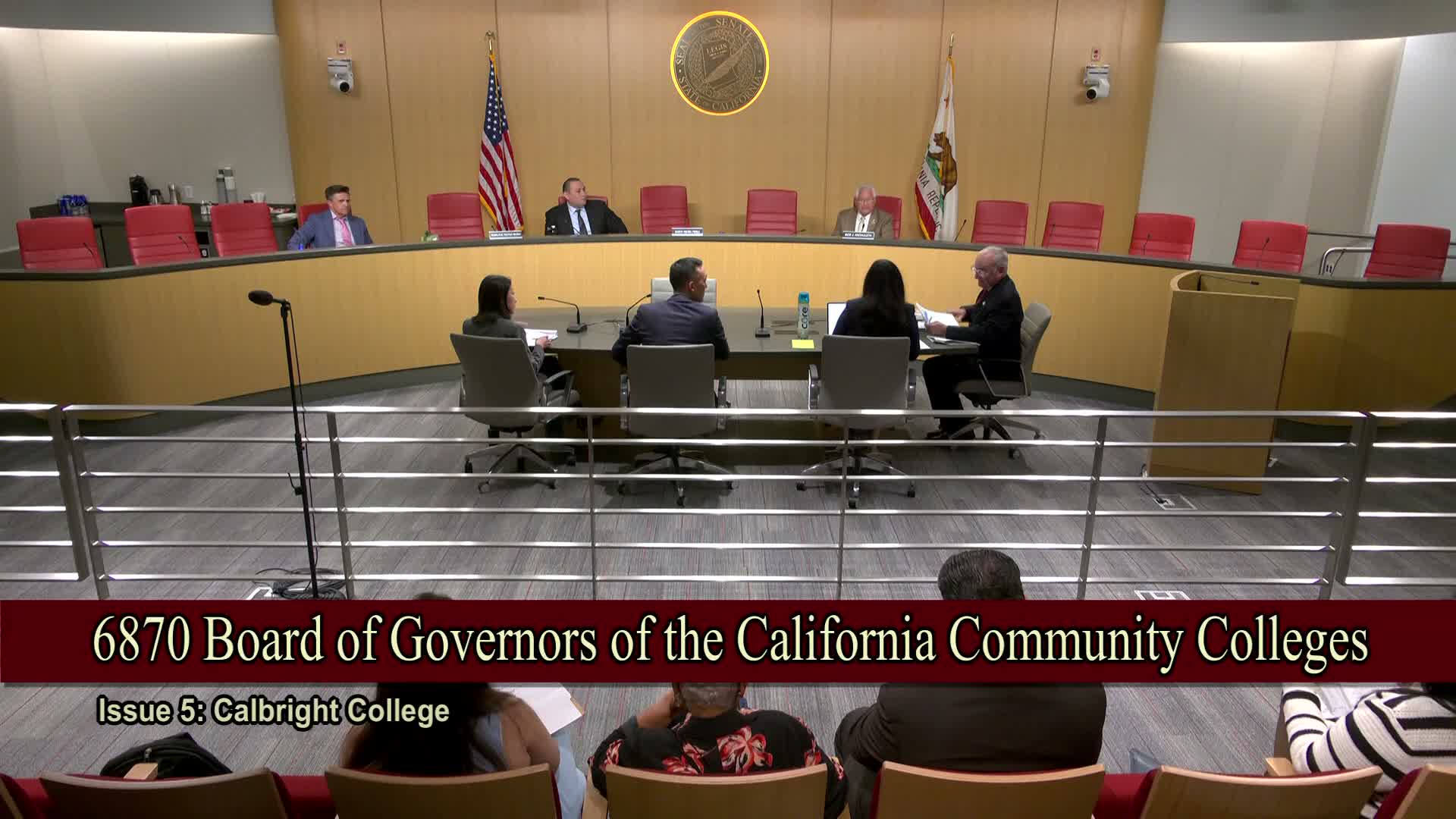
Summary
Calbright President Ajita Menon described rapid enrollment and improved outcomes and asked for $38M ongoing proposed by the Governor; the Legislative Analyst's Office recommended either transitioning Calbright to the Student‑Centered Funding Formula or providing smaller one‑time funds while accountability measures are finalized.
Ajita Menon, President and CEO of Calbright College, told the subcommittee that Calbright serves adult learners statewide and is seeing rapid growth in enrollments and completions, with reported wage gains among completers. Calbright requested the Governor's proposed $38 million ongoing to sustain statewide delivery and scale programs that aim to serve learners who are older, working and disproportionately BIPOC.
The Legislative Analyst's Office responded that the proposed ongoing level is roughly 23% higher than Calbright's estimated current‑year spending and argues the funding level is not tied to clear enrollment or outcome expectations. LAO recommended transitioning Calbright to the Student‑Centered Funding Formula (SCFF) beginning possibly in 2027–28 or providing smaller one‑time funds in 2026–27 while implementation details are worked out. LAO also noted that Calbright's programs are non‑credit and that SCFF has different performance components for non‑credit programs.
Calbright leaders and the Chancellor's Office discussed the model's structural differences: Calbright operates a competency‑based, flexibly‑paced online model with frequent enrollment start dates and different attendance accounting than seat‑time FTES. Calbright said these differences are anticipated in statute and asked for funding that accounts for its statewide, competency‑based delivery while agreeing to ongoing accountability reporting. The subcommittee asked for follow‑up on benchmarks and cost‑per‑outcome measures.
The hearing did not resolve the funding approach; members and analysts signaled they want more cost and accountability detail before formalizing an ongoing funding decision.