Get Full Government Meeting Transcripts, Videos, & Alerts Forever!
Get email alerts on the Education Student Supports topic
No spam. Unsubscribe anytime.
Conestoga Valley School District outlines midyear MTSS, PBIS progress
Summary
District staff presented a midyear update on its Multi-Tiered System of Supports (MTSS) and Positive Behavioral Interventions & Supports (PBIS), saying a K12 needs assessment and MTSS leadership team are in place and that PBIS Rewards has streamlined behavior data collection across schools.
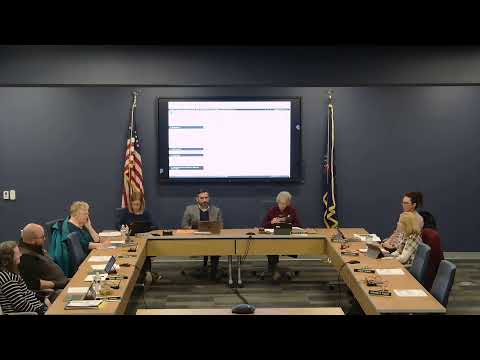
Conestoga Valley School District staff gave the school board a midyear update on the districtMulti-Tiered System of Supports (MTSS) and the Positive Behavioral Interventions and Supports (PBIS) program, saying the effort is shifting the district from paper tracking to a digital, data-driven system.
"It means that 80 percent of your students are successful at tier 1," said Mrs. Strasburg, the districtdirector of academic support, describing the districtgoal for universal instruction and supports. She told the board the district has completed a K12 needs assessment, is building an MTSS dashboard to house resources and is convening a district leadership team to align curriculum, ESL, attendance and intervention work.
On the behavioral side, the district PBIS coordinator explained the move to PBIS Rewards, a digital platform rolled out to student and staff iPads this school year. "This has really streamlined that for us," the PBIS coordinator said, noting the platform replaced a labor-intensive paper-ticket system and now allows the district to pull behavioral data to target grade- and building-level interventions.
Assistant principals who serve as district coaches described school-specific rewards and interventions. The elementary coach said prizes that students value include teacher time, positive phone calls home and a pizza raffle; the middle-school coach cited donuts with the principal and teacher-run stores; and the high-school coach listed items such as school store merchandise, DJ-for-a-day and a planned slushie machine. Coaches said some parents have reported intermittent app glitches, and staff are working with the vendor and the district tech department to resolve them.
Board members asked for clearer month-to-month comparisons and flagged the dashboardred lines on the presentation, which presenters said represent national reference points used by their consultant. District staff said they can report usage and referral metrics monthly; one coach told the board "we are roughly 85, 90%, if not higher" on staff participation in the rewards system across buildings.
Presenters emphasized that tiered supports are fluid: students can move between Tier 1, Tier 2 and Tier 3 as needs change, and the district plans additional Tier 2 training with the goal of building-level teams completing that training by mid-February. Next steps reported to the board include continuing professional development, integrating PBIS Rewards with building practices, and using monthly district leadership team data to design targeted interventions.