Governor’s commission urges intergovernmental office, cites $11 billion statewide need for school repairs
Loading...
Summary
The governor’s commission on school construction told the Legislature it estimates up to $11,000,000,000 would be required to replace or renovate Maine’s school buildings over time and recommended a small, quasi‑independent intergovernmental office to coordinate planning, data, procurement and financing rather than creating a new finance authority.
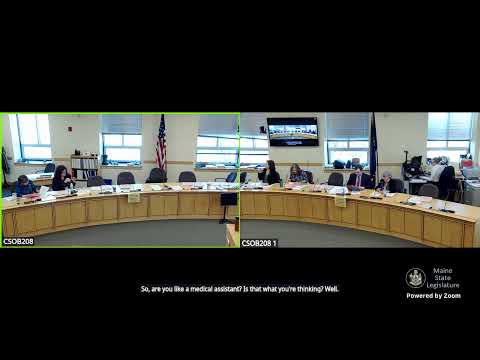
Valerie Landry, chair of the governor’s commission on school construction, presented the commission’s final report to the joint standing committee on education and cultural affairs, saying the work was driven by the executive order goal that “every child in Maine should be able to attend a safe, modern, efficient, and accessible public school regardless of where they live.”
Landry told lawmakers the commission relied on about 50 public meetings, MEPRI research and Maine Department of Education data and concluded that replacing or renovating the state’s existing public school buildings would cost roughly $11,000,000,000 if done as an immediate replacement calculation. “That statement became the commission’s overriding goal,” she said, explaining the figure is the result of statewide inventory and benchmarking against other states.
The report identified two urgent problems: the financial scale of needed work and health and safety issues. Landry cited a 2024 MEPRI in‑person survey of about 250 schools that found mold and air‑quality concerns in nearly half of those buildings and said that evidence reinforced the need for targeted investment.
Rather than creating a new school building finance authority, the commission concluded existing entities such as the Maine Bond Bank and the Maine Health and Higher Educational Facilities Authority perform important financing roles. “We did conclude, however, that a streamlined, quasi independent entity is needed to convene, coordinate, develop, monitor, and report on the essential activities that are not happening now and that cannot be done in any existing state agency,” Landry said. The commission proposed an intergovernmental office of school infrastructure to pull together data, technical services, procurement and cross‑jurisdictional planning.
On cost‑reduction strategies, the commission recommended centralized procurement (citing national estimates of up to 14% savings in some contexts), prioritized investment in deferred maintenance (the presentation cited a 7% compounding cost of deferral and a commission estimate that each dollar invested in maintenance can yield multiple dollars in savings), and better statewide data and analytics to guide decisions.
Committee members pressed the commission on consolidation, local control and how the intergovernmental office would operate. Landry said consolidation is not a one‑size‑fits‑all solution: the commission found limited definitive national data about cost savings from consolidation but noted educational and staffing advantages in some rural consolidations and recommended better data to quantify tradeoffs.
Rhonda Sperry, superintendent in RSU 64 and a commission member, described a local consolidation example: in 2016 her district consolidated five elementary schools into a single building serving about 520 students, enabling new programming (pre‑K, nurse office, gym, library) that the prior buildings lacked. “When the community began to understand the benefits from an educational perspective beyond the potential cost savings in a consolidated building, they got behind the project,” Sperry said.
Lawmakers also asked for details about how the commission’s recommendations would intersect with the state revolving renovation fund and how much the proposed office would cost. Landry said the commission recommended convening a six‑person working group to define governance, statutory changes and the estimated operating cost so lawmakers would have a concrete proposal to consider.
A committee member clarified the $11,000,000,000 figure represents a baseline replacement/renovation calculation (if all schools were replaced immediately) and that the commission envisions addressing needs over time in prioritized “bites.” Landry said the table and methodology appear on page 51 of the report and were benchmarked against similar state calculations.
The committee closed discussion by thanking the commission and scheduling follow‑up work sessions to translate recommendations into legislative options.