Get Full Government Meeting Transcripts, Videos, & Alerts Forever!
Get email alerts on the Transit topic
No spam. Unsubscribe anytime.
Council member Walling urges vote to place Tri-State Transit levy on May ballot
Summary
Council member Sarah Walling told the Huntington City Council that Ordinance 2026-06 simply puts the Tri-State Transit Authority (TTA) levy on the May primary ballot so voters can decide whether to continue local funding; members debated the tight filing deadline and options if the council postponed action.
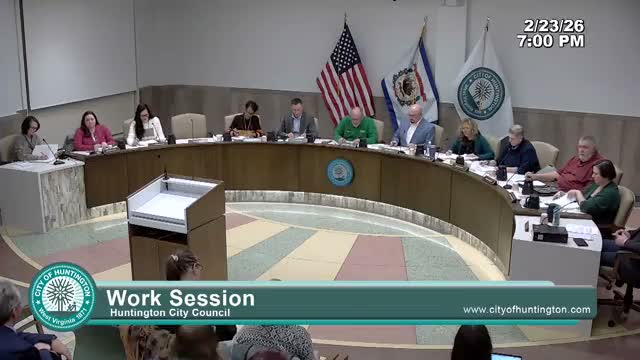
Council member Sarah Walling, sponsor of Ordinance 2026-06, told the Huntington City Council at its Feb. 23 work session that the measure "puts TTA's levy ... on the ballot in the May primary" so voters in Cabell and Wayne counties can decide whether to continue the local funding stream for the Tri-State Transit Authority.
"All it does is it puts TTA's levy, which has been in place since I was literally 3 years old, on the ballot in the May primary so that the Cabell County voters ... can decide whether or not they want to continue to fund that levy," Walling said, answering council questions about the scope of the ordinance.
Council members pressed on scheduling and public access. One council member asked whether postponing tonight's vote would cause the city to miss the deadline to place the question on the May primary ballot; Walling and peers described alternatives — suspending rules by a two-thirds vote or calling a special meeting — but said those options would either require a supermajority or force the public to return on short notice. Council members repeatedly flagged the compressed timeline: an exchange in the discussion identified the practical filing cutoff as the coming Monday, and speakers said materials would need to be in the clerk's office the next day to meet the deadline.
Council debate focused on process, not policy: Walling and others emphasized the narrow scope of the ordinance (it would only submit the levy question to voters), while colleagues urged clarity for voters and fairness to the public if an item were delayed. No formal vote on Ordinance 2026-06 is recorded in the transcript of the work session.
What happens next: Council members discussed options including voting that night, suspending rules by a two-thirds vote, or setting a special meeting; one member suggested returning the item to committee or delaying to the next regular meeting to allow the parking board and other stakeholders to weigh in. The transcript ends with discussion of timing but contains no final action on the ordinance.
Provenance: Topic introduced at SEG 010 and discussed through SEG 138.