Get Full Government Meeting Transcripts, Videos, & Alerts Forever!
Get email alerts on the Land Use topic
No spam. Unsubscribe anytime.
Boca Raton council hears proposal to let large RB‑1 parcels seek mixed‑use development with affordable set‑asides; neighbors press traffic and school concerns
Summary
Councilors reviewed draft text amendments to the CIMD ordinance that would allow some RB‑1 parcels (20+ contiguous acres) to pursue mixed‑use projects with 10% affordable and 5% workforce housing; residents at the Palmetto Park Square site urged traffic, school‑capacity and small‑business impact studies and asked the council to require more analysis before any ordinance sponsorship.
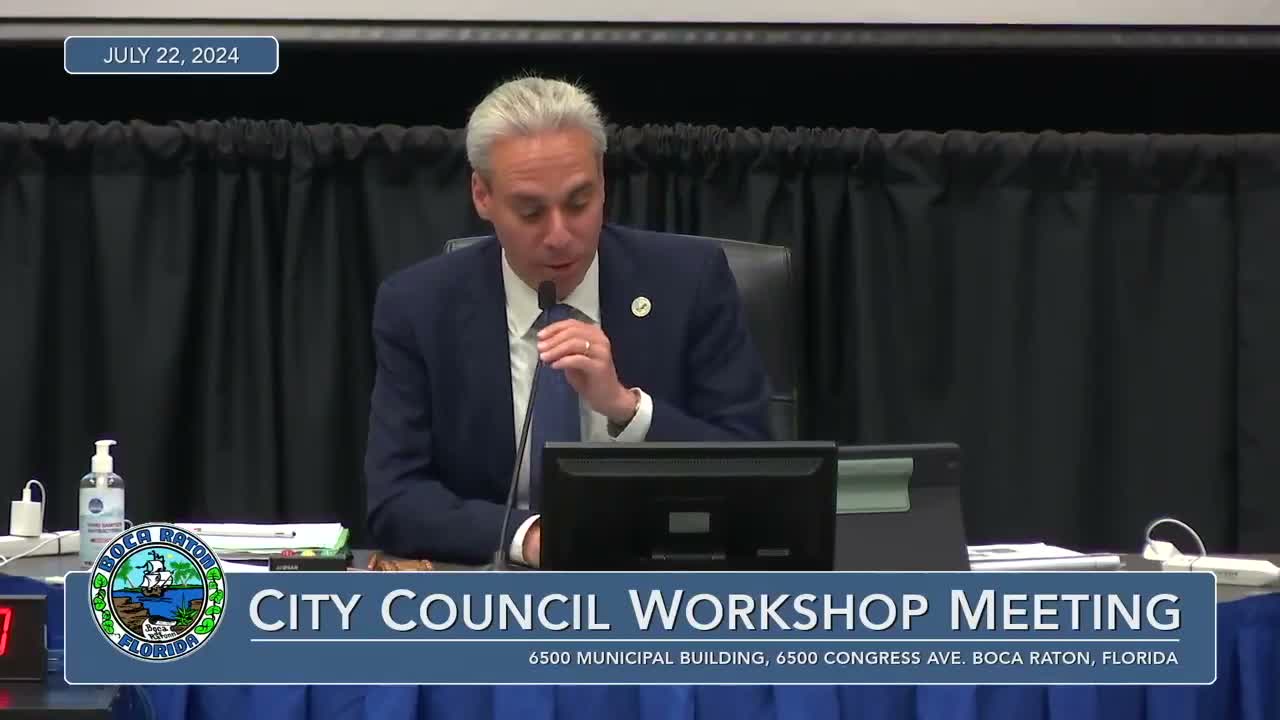
A draft text amendment to Boca Raton's Commercial Industrial Mixed‑Use Development (CIMD) ordinance drew weeks of technical scrutiny and hours of public comment at the July 22 workshop as councilors and residents debated whether to allow certain RB‑1 parcels to qualify for mixed‑use residential development.
The draft, presented by Michael Marshall of Nelson Mullins Riley & Scarborough, would create an exemption allowing RB‑1 properties with at least 20 acres of contiguous land to pursue CIMD projects that include a mandatory affordability component. Marshall said the proposal would require projects to provide both 10% affordable units and 5% workforce units, cap density at 15 units per acre where projects abut single‑family neighborhoods, and retain a floor‑area‑ratio cap of 0.5. Setbacks and additional landscaping requirements tied to building height were described as tradeoffs to limit impacts on neighboring homes.
Why it matters: supporters say the changes give the city more control over how 'Live Local' opportunities are implemented, while neighbors warn that converting largely commercial parcels to housing could sharply increase traffic, strain schools and reduce parking and foot traffic for long‑standing small businesses.
Council members repeatedly asked staff to check whether the draft text aligns with recent state law changes. One recurring concern was how the state Live Local legislation and related provisions (referred to in the meeting as 'SP 328') affect local height and density limits; councilors asked staff to ensure the city would not inadvertently grant rights that exceed state law.
Residents and business owners who spoke during an extended public‑comment period focused on the Palmetto Park Square site as an example of where the amendment could apply. Laurie Colbert, a neighboring homeowner, told the council, 'The traffic today is a nightmare,' and said adding what she estimated as several hundred rental units would worsen congestion and create safety risks for children crossing local streets.
Small business owners also urged caution. Peter Izzo, who said he operates a shop in the subject plaza, said removing on‑street parking or starting construction in the busy winter season could jeopardize tenants' viability and urged the city to consult owners before any permanent changes.
Council reaction and next steps: After hearing residents and reviewing staff comments, several councilors said the applicant should return with more refined plans and that staff should perform further analysis — traffic studies, concurrency and school‑capacity reviews, and clearer language on whether the proposed setback language describes ground‑level yard increases or upper‑story stepbacks. Council members did not vote on an ordinance; they signaled support for additional study, community outreach and—if the draft is later sponsored—formal readings and public hearings. The council indicated appointments and formal action on this matter will follow the city’s normal prioritization and text‑amendment cycle.
Authorities and references mentioned at the workshop included the Live Local Act and the local CIMD ordinance adopted earlier in the year; council asked staff to identify specific statutory citations and confirm consistency before any introduction.
What’s next: staff will evaluate the draft against state requirements, perform requested traffic and concurrency analyses, and the applicant was urged to meet with neighbors and staff to refine the proposal before any sponsorship or priority decision by the council.