Get Full Government Meeting Transcripts, Videos, & Alerts Forever!
Get email alerts on the Homelessness topic
No spam. Unsubscribe anytime.
Rescue Mission urges Fort Wayne to back low‑barrier homeless center as shelters near capacity
Summary
Thomas McArthur, president and CEO of the Rescue Mission, told the Fort Wayne Common Council the city needs a low‑barrier homeless center to fill gaps for single men and provide an on‑ramp into recovery services as existing shelters reach capacity.
Thomas McArthur, president and CEO of the Rescue Mission, told the Fort Wayne Common Council on Feb. 10 that the city needs a new, low‑barrier homeless center to meet rising demand and create an “on‑ramp” to longer‑term services.
McArthur described the Rescue Mission’s two campuses and said the organization’s regular bed capacity is about 500, with monthly averages in recent winter months near 438 and spikes into the mid‑400s on extreme cold nights. He said the winter contingency shelter at the Salvation Army provides 55 temporary beds and “last night all 55 beds were utilized.”
“Through the power of Jesus Christ, we wanna provide a home, we wanna provide food, and we wanna provide hope,” McArthur said, describing the Mission’s faith‑based work and clarifying that services do not require religious participation. He stressed the Rescue Mission is privately funded and does not receive state, local or federal operating dollars.
Council members asked whether the Mission has seen people bused into Fort Wayne from other communities. McArthur said a five‑month pilot intake question found 22 people brought by bus; 12 were local and 10 arrived from elsewhere, and the Mission has adjusted intake to try to track origin and reasons.
McArthur argued a low‑barrier shelter would fill an important role distinct from the Rescue Mission’s model: “This, lower barrier shelter would allow an on‑ramp that currently does not exist,” he said, adding that lower‑threshold access can be a precursor to the Mission’s advocacy and case‑management work. He described the transition as requiring repeated interactions to build trust: “It takes about 7 to 10 interactions of relationship to build enough trust for someone to be willing to take a step forward.”
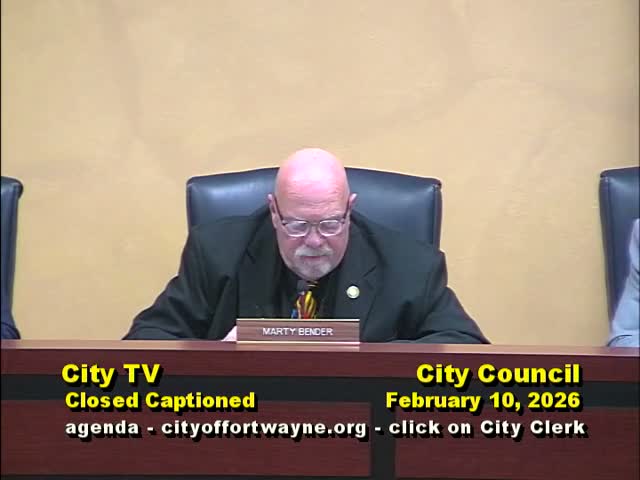
Council President Marty Bender and other members who toured the Mission praised staff and operations. Bender said the tour was “very impressive” and highlighted the Mission’s work providing safe sleeping space, meals and medical assistance.
Why it matters: Fort Wayne’s shelters reported near‑capacity usage during the winter season, and multiple speakers during the meeting’s public comment period linked the demand for shelter to broader concerns—rising rents, medical debt and housing instability. Council discussion and the Rescue Mission’s presentation signal momentum toward creating an additional, lower‑barrier option, an approach advocates say would reach people who currently cannot access existing programs.
Next steps: The Mission asked council to continue coordination with the mayor’s office and with other providers on a proposed low‑barrier shelter and safety‑parking options; no formal council action on a specific shelter location or funding was recorded at the Feb. 10 meeting.