Get Full Government Meeting Transcripts, Videos, & Alerts Forever!
Get email alerts on the School Budget topic
No spam. Unsubscribe anytime.
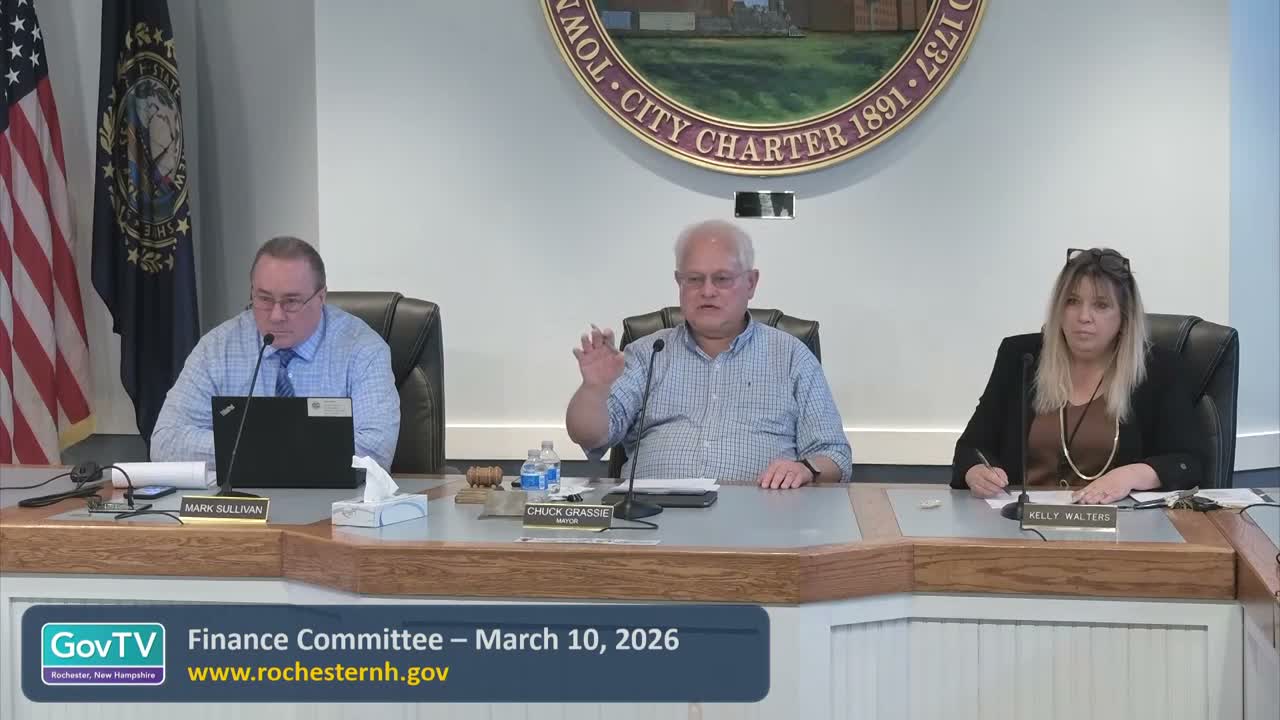
Finance committee hears pleas to protect schools as district warns of roughly $4.5 million shortfall
Summary
At a joint finance committee meeting, the Rochester School Board chair warned of an approximately $4.024.5 million structural shortfall. Councilor Susan Rice urged the administration to produce the full city fiscal model; multiple public commenters asked the city to partner with schools to avoid cuts.
The Rochester City Council finance committee on the evening’s agenda heard a detailed presentation from the Rochester School Board chair that the district faces an approximately $4 million to $4.5 million structural shortfall and appealed to the city for collaboration to avoid classroom cuts.
Councilor Susan Rice, speaking during public input as a member of the Rochester City Council, told the committee the shortfall is not a sudden problem but the result of the city's fiscal structure and outdated public financial materials. Rice said much of the information posted online is for fiscal year 202324 and that officials are preparing budgets for fiscal year 2027 using data she described as "already two years old." She pressed the administration to share the financial model behind the school shortfall and asked: "Was the 4.3 to 4,500,000 projection generated through the finance department's tax-cap modeling?"
Rice cited specific figures from city documents, saying the tax-cap's allowable increase appeared to be about $3,300,000 (roughly 4.17%), with the city and county combined share around $1,340,000 and local and state school components about $1,950,000. She added that the city's adopted debt totals, combining issued and authorized amounts, were roughly $243,000,000 and that the unassigned fund balance appeared to be about $24,000,000 with $14,000,000 already committed, leaving roughly $10,000,000 available. Rice noted the water and sewer enterprise funds reportedly owe about $4,700,000 to the general fund and said there is no formal repayment plan yet in place.
"When you compare that number to the total general fund expenditures, it works out to roughly 8%. Our own ordinance says the acceptable range is 8 to 17%, which means we are operating at the absolute bottom of the permitted range," Rice said. She closed by asking the council and public to be shown the full model behind the school projection: "I'm just simply asking to see the plumbing."
The school board chair (identified in the record only by role) told the committee the district already runs a lean system and faces a roughly $4.5 million structural shortfall driven by rising costs, contractual obligations and state funding that "has not kept pace." The chair cited the district's per-pupil spending around $19,177, noting that figure is approximately $3,500 below the state average of $22,700 and that the gap equates to roughly $12 million when multiplied across the district's enrollment. The chair said the superintendent and business administrator estimate up to about $2.5 million in current-year savings from salary, benefits and unfilled positions that could be available but said collaborative, longer-term structural solutions are required to maintain classroom stability.
Members of the public urged the committee to give the school board more time and to use city resources and policy tools to avoid cuts. Val Dunn, a downtown business owner, asked the committee to support the board's request for flexibility and "a more realistic path forward before major cuts are made." Jillian Pierce (Ward 4) told the committee "the school budget crisis is not a school problem, it is a city problem," citing research linking strong schools to local economic growth. Alyssa Dow urged the preservation of the Maple Street magnet program and asked the city to identify a viable long-term location and to reconsider policies that shift costs to the district, such as charging rent for rec center space. Desiree Crossley, vice president of the ERSPTA, asked the city to use reserves and stabilization tools where appropriate and to adopt public benchmarks that connect budget choices to operational outcomes. Sarah Cantrell shared personal experience in Rochester schools and asked the committee to find funds to protect teaching positions and programs.
The committee did not take final action on school funding tonight. City staff and the city manager said formal budget documents are forthcoming: the city manager told the committee that school budgets are due to the city manager by March 25 and that his proposed budget will be presented to council at the April workshop, when the committee can expect the formal presentation.
The committee acknowledged the competing pressures Rice describedrising debt, limited tax-cap growth and committed fund balancesand several members asked for clearer modeling from the administration before decisions on school cuts are finalized.