Get Full Government Meeting Transcripts, Videos, & Alerts Forever!
Get email alerts on the County Compliance topic
No spam. Unsubscribe anytime.
Clark County workshop weighs options after compliance officer position lapsed
Summary
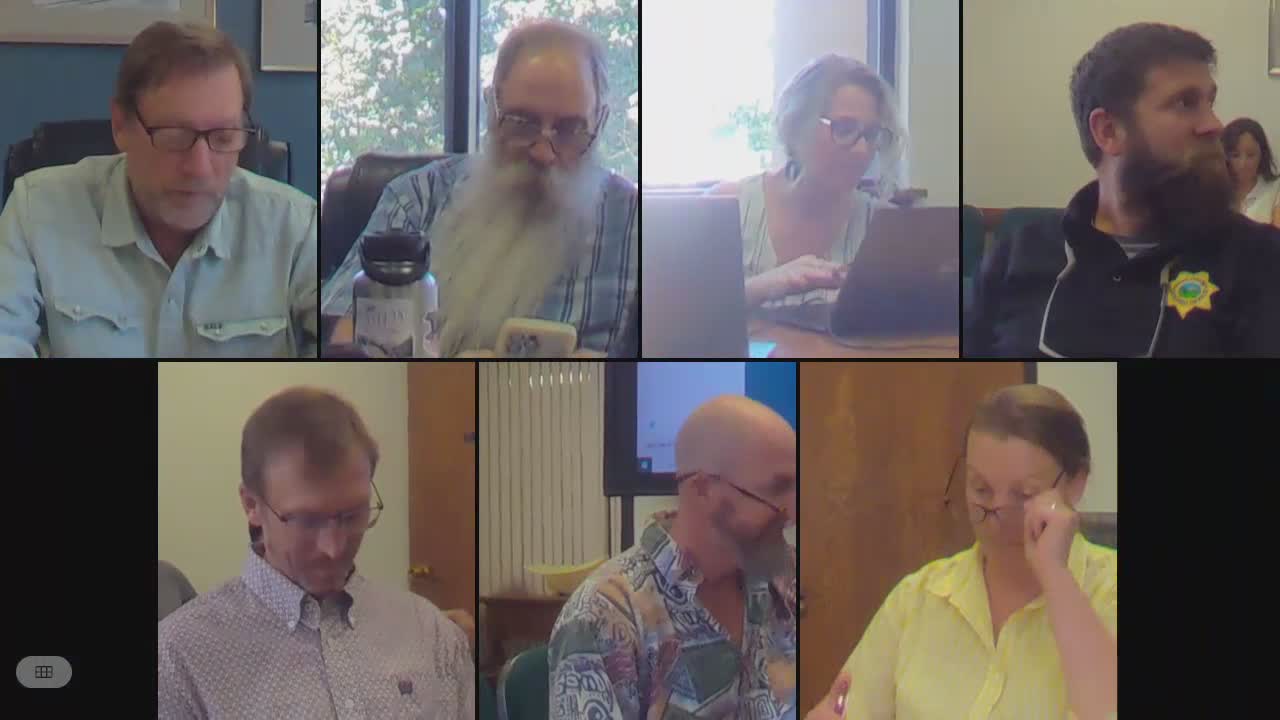
Clark County commissioners and staff met Sept. 2 to review how the county will handle compliance complaints after the departure of a dedicated compliance officer, debating centralized intake forms, standard operating procedures and whether enforcement should prioritize education or fines; no formal vote was recorded.
Chair opened a Sept. 2 workshop on county compliance in Clark County and said the meeting’s purpose was to discuss how complaints should be handled now that the county’s compliance officer position is vacant. Participants urged creation of a standardized intake and follow‑up process to prevent members of the public from being bounced between departments.
The commission heard a history of the program: commissioners previously hired a compliance officer who built procedures, coordinated across departments and conducted investigations; when that officer left, complaint handling stalled and many files went without resolution. A committee member said the compliance officer’s work often prevented cases from escalating to the attorney’s office by resolving issues via education and mitigation.
A legal perspective in the workshop emphasized the evidentiary threshold required for prosecution. An agency official explained that to pursue criminal charges the county needs probable cause and proof of each statutory element, and that photographic and documentary evidence are key. Another participant noted that each day a violation continues can represent a separate offense, which increases the documentation burden for prosecutions.
Speakers discussed two broad enforcement approaches. One model described from other Montana counties relied on a former sanitarian and contract attorney who documented violations and used daily fines as leverage; that “stick” approach could generate substantial penalties and sometimes cover program costs. Participants said Clark County intentionally moved toward a compliance‑and‑education model in recent years but that shift also removed a source of funding tied to fines.
Several participants recommended a hybrid system. They proposed an SOP (standard operating procedure) modeled on neighboring counties that starts with a documented investigation and warning letters, escalates to enforcement only after follow‑up fails, and clarifies which department collects evidence and initiates legal referrals. An agency official and staff member offered to share a 20‑page Gallatin County template that outlines investigation letters, enforcement orders and when to seek legal services.
The workshop also covered intake logistics. Staff members and commissioners argued for a central complaint form and a single intake point (the commission office was discussed) so that members of the public aren’t repeatedly redirected. Some speakers supported requiring a signed complaint to begin formal investigative work; the legal advisor cautioned that criminal prosecutions sometimes start from anonymous tips and that requiring signatures could create inconsistent treatment between similar violations.
Participants raised privacy and public‑records concerns about anonymous complaints. Staff said the health department sometimes takes anonymous tips for health‑and‑safety issues, while another advisor noted that the county cannot guarantee anonymity if a public‑records request compels disclosure; the group suggested the SOP should explain anonymity limits.
Workshop attendees agreed on next steps: draft an SOP that defines intake, investigation and interdepartmental coordination; consider training for department staff on the minimum documentation needed for legal referral; and meet again in a few weeks to continue developing the process. Chair moved to adjourn and the motion was seconded; the record shows the motion was made and seconded but no formal vote tally appears in the transcript.
The county did not adopt a new compliance officer or a final policy at the workshop; participants left with an agreement to draft procedures, share neighboring‑county templates and reconvene to refine a centralized intake and tracking process.