Get Full Government Meeting Transcripts, Videos, & Alerts Forever!
Get email alerts on the Housing Repair topic
No spam. Unsubscribe anytime.
HRDC outlines Park County home-repair program to preserve older, low-income owner homes
Summary
HRDC program manager Catherine Neely told commissioners the Park County Home Repair Program, funded by a Montana CDBG housing-stabilization grant, will offer 0% loans forgiven over 15 years to address health, safety and energy-efficiency needs for income-eligible homeowners; limited funding means roughly 15 households can be fully served at current funding levels.
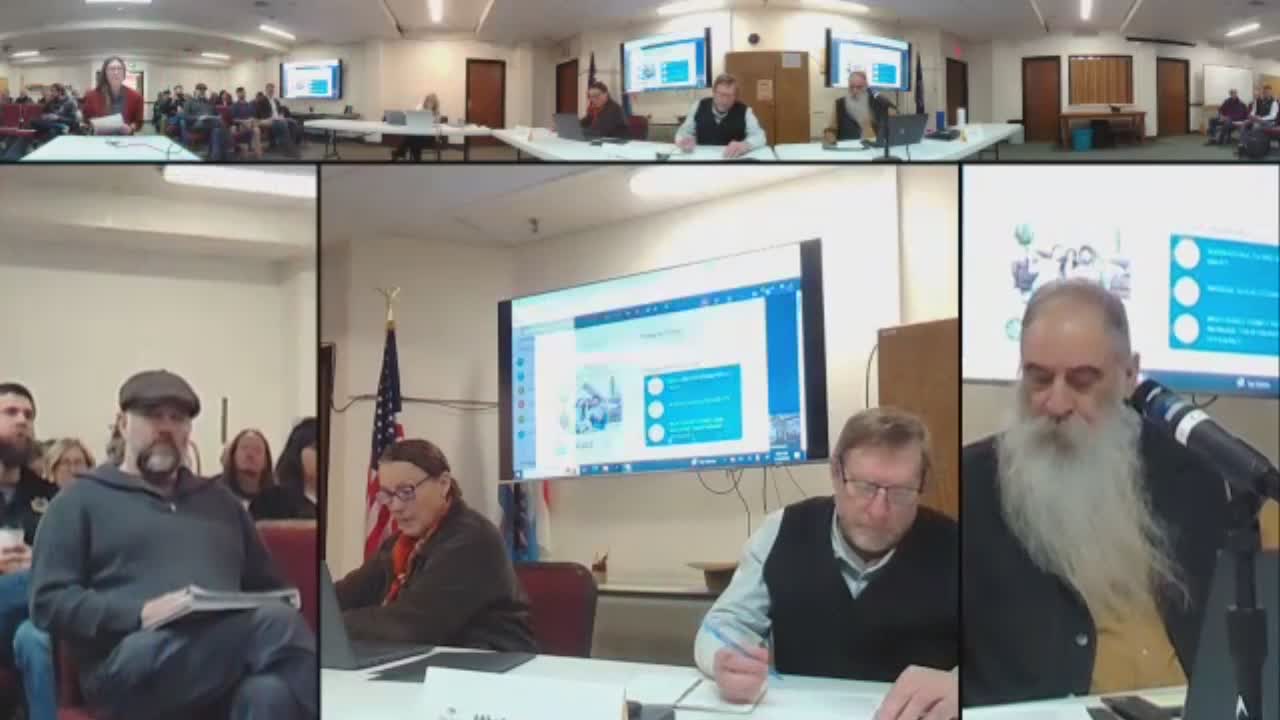
Catherine Neely, Park County Housing Coalition program manager with HRDC, presented the Park County Home Repair Program to commissioners on Feb. 10, saying the program’s goal is “to preserve the homes of low and moderate income county homeowners” by addressing critical health and safety hazards, improving accessibility and weatherizing homes.
The program is funded through a Montana Department of Commerce Community Development Block Grant (CDBG) housing-stabilization award in partnership with Park County and is structured, Neely said, as “a 0% interest, 0 monthly payment loan with a 15 year term.” She told the commissioners the loan is forgiven progressively — “6.6% of the loan is forgiven annually,” — and that homeowners sign a restriction agreement obligating them to remain in the home for the affordability period or repay the remaining balance to the program so funds can be recycled to other households.
Neely outlined eligibility and scale: the program serves owner-occupied, single-family detached homes located in Park County where household income is at or below 80% of the area median income; for a two-person household she cited a current threshold of $64,400 annually. She said HRDC received 62 pre-applicants from across the county, noted demographic patterns (about 43% of pre-applicants are households with at least one senior age 65 or older, and at least 15% report a household member with a disability) and said many applicant homes are very old — a large share are century homes.
On funding limits, Neely said the grant provides roughly $600,000 for rehabilitation work. “If we invested the minimum of $40,000 into each home, we could serve at most 15 households,” she said, and that the need considerably exceeds available funds. Neely described HRDC efforts to extend reach through additional grants, partnerships with building suppliers and volunteer support for outreach and inspections.
Kristin Galbraith, the county’s point of contact on the grant, said the county partnered with HRDC in 2023 and that the grant covers her administration time and reporting obligations; she added staff and HRDC will continue seeking additional funding and may ask the commission for support on future grant applications.
Neely urged commissioners and community members to submit ideas and contact information (she provided an email and cell number on screen) and said HRDC is screening pre-applicants for particular health-and-safety hazards recommended by health-department partners.
Next steps: staff and HRDC will continue applicant screening, pursue additional funds and return to the commission if further county support for grants is needed.