Get Full Government Meeting Transcripts, Videos, & Alerts Forever!
Get email alerts on the Gardner Neighborhood Plan topic
No spam. Unsubscribe anytime.
Park County commissioners table Gardner neighborhood plan after residents press for more public review
Summary
After presentations from the neighborhood steering committee and extensive public comment for and against the proposal, the Park County Commission voted to table final adoption of the Gardner Neighborhood Plan until its Sept. 30 meeting so residents can review a revised boundary map.
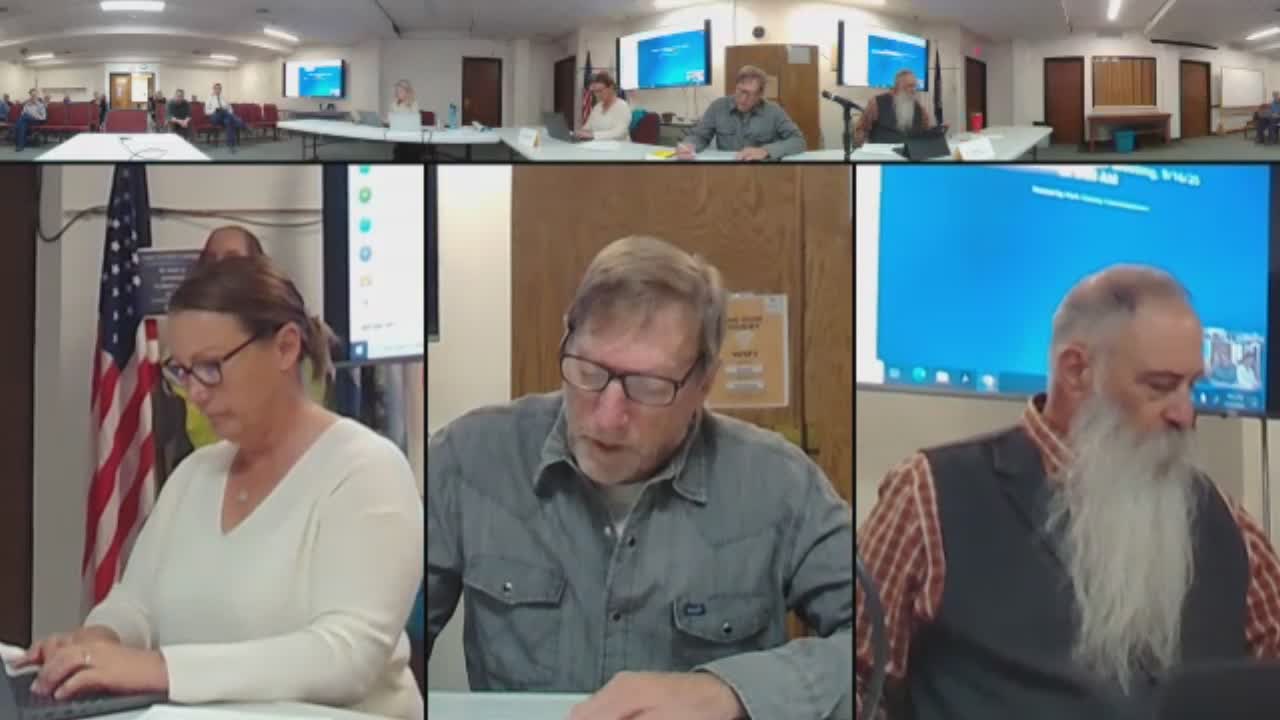
Park County commissioners on Sept. 16 delayed final adoption of the Gardner Neighborhood Plan after several residents said they had not seen the final boundary map and urged more outreach.
Pat Balsley, a member of the steering committee, told commissioners the plan grew from a 2018 partnership with Future West and several years of public workshops. “Of those who are at that final workshop, the majority said we would like to work with Park County,” Balsley said, describing goals that include preserving historic character, managing growth, strengthening community services and encouraging affordable housing.
Lynn Chan, a committee member who outlined last-minute edits, said the plan’s page 21 now clarifies the plan’s physical boundary: “The boundary for the Gardiner neighborhood plan will be the same as that for the Gardiner Resort Tax District,” she said, and stressed the plan is nonregulatory and intended as a guide rather than a set of enforceable ordinances.
Several residents urged caution. Sabina Strauss said turnout at Gardner meetings had been low and questioned whether the resolution could claim to represent the entire community: “Most meetings and most outreach was completed by about 30 to 40 Gardner citizens” out of an 800–900 basin population, she said, and asked the commission to postpone adoption and hold a workshop in Gardiner.
Catherine Daley of the Park County Housing Coalition (HRDC) urged adoption and cited local housing statistics, saying Gardner’s population had fallen by about one-third since 2014 and calling the plan a blueprint to address affordability and supply. “The Gardner plan is intended to give the community a blueprint for addressing this,” Daley said, citing rising home prices and declines in school enrollment.
Commissioners debated whether the map update should be more widely distributed before a final vote. Commissioner Vermillion said the updated boundary addressed many concerns and moved to table adoption until Sept. 30 so the public could review the new map; the motion was seconded and carried by the commissioners present.
The commission’s decision does not adopt the plan; it postpones formal action to give residents time to review the boundary and for commissioners to consider any additional outreach or documentation. The chair also asked staff to consider forming a committee to review the county’s growth policy so commissioners and the public can compare the plan’s recommendations with county policy.
Votes at a glance: the commission voted to table the Gardner Neighborhood Plan until Sept. 30. At the same meeting the commission approved several other routine items, including acceptance of an MDOC matching grant for the Horse Creek Bridge replacement, signing an annual reimbursement request for landfill monitoring, a FY ’26 MBCC subrecipient agreement for the Missouri River Drug Task Force, and an ARPA-funded contract for siding on the Yellowstone Gateway Museum storage building.
The commission is scheduled to reconvene Sept. 30, when the Gardner plan will return to the agenda for further consideration.