Get Full Government Meeting Transcripts, Videos, & Alerts Forever!
Council amends AHAC rules to reflect state changes, staff estimates SHIP funding near $700K
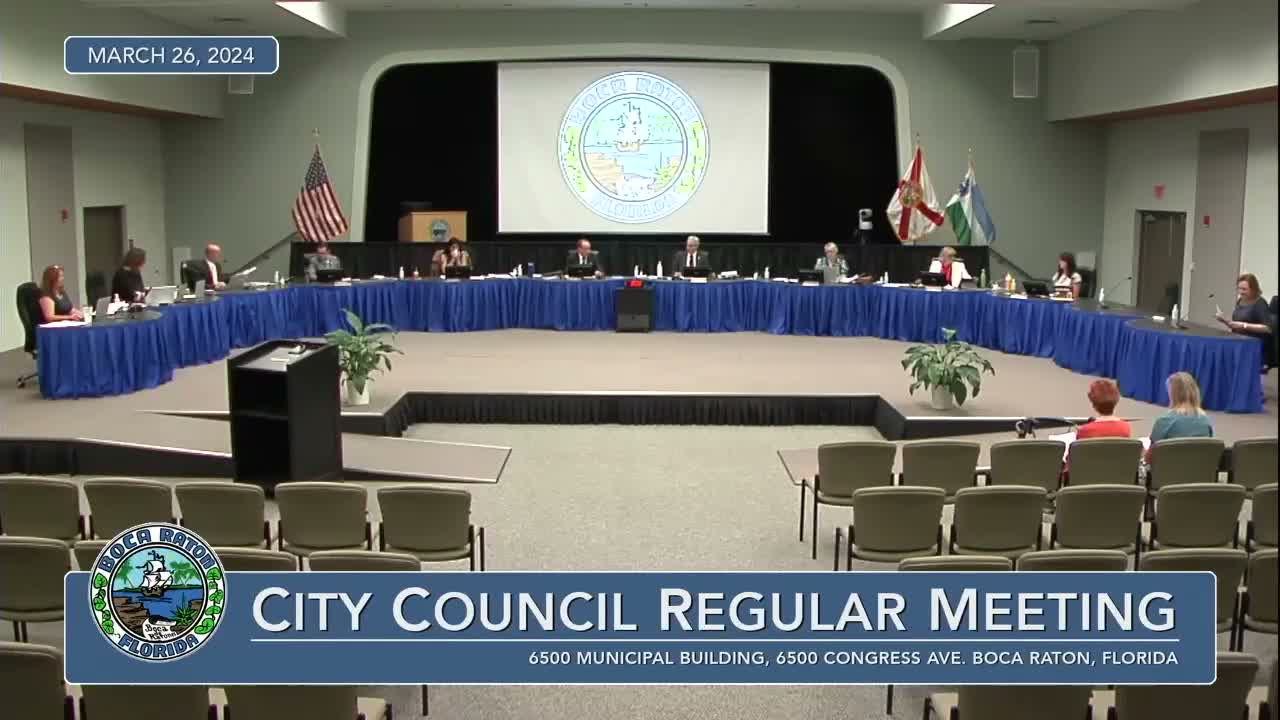
Boca Raton City Council · March 26, 2024
AI-Generated Content: All content on this page was generated by AI to highlight key points from the meeting. For complete details and context, we recommend watching the full video. so we can fix them.
Summary
The council unanimously passed Ordinance 56-91 to reduce Affordable Housing Advisory Committee membership to nine and require annual reviews when state SHIP allocations exceed $350,000; staff estimated the city's SHIP allocation at $700,000–$740,000 for the upcoming year.
The Boca Raton City Council on March 26 approved Ordinance 56-91 to amend the city code governing the Affordable Housing Advisory Committee (AHAC) so it conforms to recent changes in Chapter 420 of the Florida Statutes.
Theresa McClurg, community improvement administrator, summarized the…
Already have an account? Log in
Subscribe to keep reading
Unlock the rest of this article — and every article on Citizen Portal.
- Unlimited articles
- AI-powered breakdowns of topics, speakers, decisions, and budgets
- Instant alerts when your location has a new meeting
- Follow topics and more locations
- 1,000 AI Insights / month, plus AI Chat
30-day money-back on paid plans