Get Full Government Meeting Transcripts, Videos, & Alerts Forever!
Get email alerts on the Medical Marijuana topic
No spam. Unsubscribe anytime.
Rep. West Kevin’s bill to expand employer zero-tolerance for medical marijuana fails in House
Summary
The Oklahoma House rejected HB 31-27, which would have allowed private employers broader written drug policies (including 0-tolerance rules) beyond statutorily defined safety-sensitive roles. Debate centered on testing limits, workers’‑comp implications and constitutional concerns; the sponsor signaled possible reconsideration.
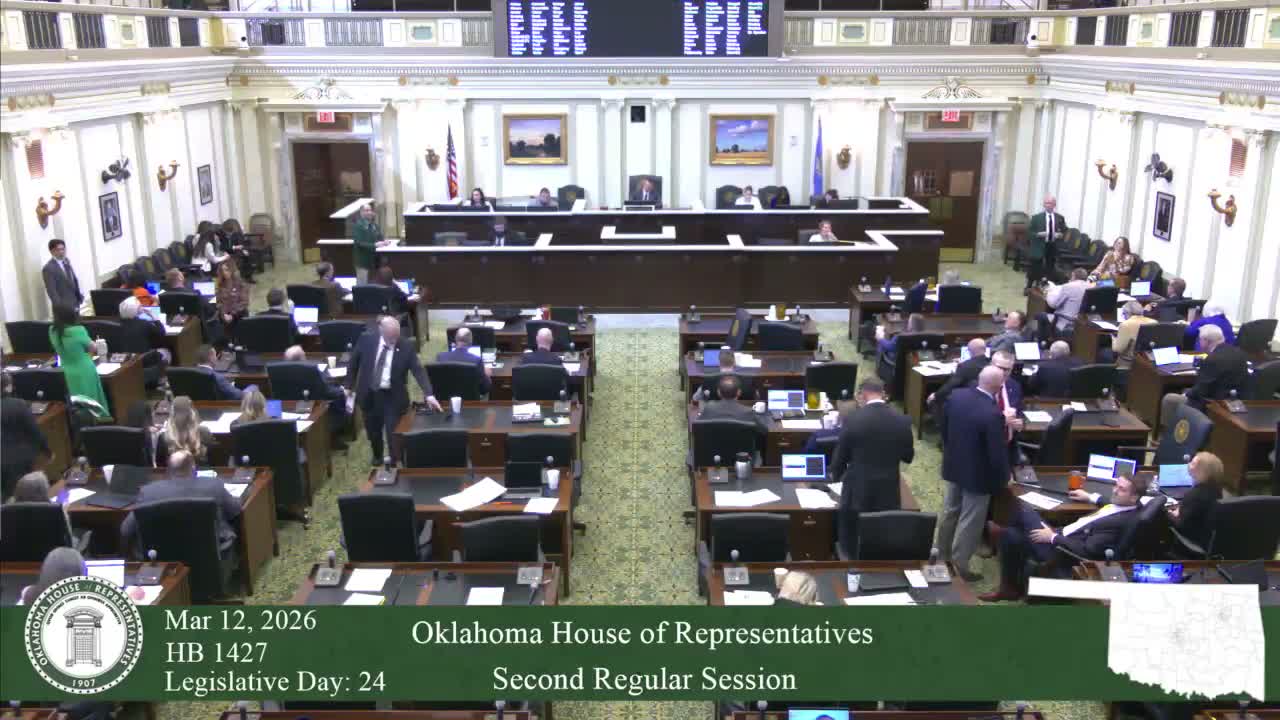
The Oklahoma House on a close roll call rejected House Bill 31-27, a measure by Representative West Kevin that would let private employers adopt written drug-and-alcohol policies — including 0-tolerance rules — for positions beyond the statute’s current list of safety-sensitive jobs.
Representative West Kevin, the bill’s sponsor, said the measure is permissive and gives employers "some latitude to adjust their drug policy to fit what works for their business," and that no business is required to implement a 0-tolerance policy. He told the House employers could, for example, designate "our skid steer operators are 0 tolerance" while allowing other positions different rules.
Opponents raised practical and legal concerns. Representative Kennedy warned that "THC stays in your system for weeks and weeks," asking how courts or employers could distinguish recent impairment from past use. Representative Timmons and others asked whether the bill would harm veterans and other medical-card holders; Timmons said he had spoken with veterans using marijuana for PTSD and expressed concern about denying them protections without a reliable tolerance standard.
Legal questions also surfaced. Representative Harris asked whether the bill might raise due‑process issues because it would let employers adopt rules that apply beyond safety‑sensitive positions. Several members noted testing technology generally shows presence rather than current impairment, and that standards for marijuana differ from alcohol breath tests.
On the final vote the clerk announced 47 aye, 46 nay; the chair declared the bill failed for want of the necessary majority as recorded. Representative West said he would "serve notice" he might seek reconsideration on a future legislative day.
The bill drew unusually sustained questioning on the House floor and several members urged clearer statutory safeguards for workers and clearer guidance on testing and workers’‑comp interactions before giving employers broader authority.