Get Full Government Meeting Transcripts, Videos, & Alerts Forever!
Get email alerts on the K12 Budget Support topic
No spam. Unsubscribe anytime.
Legislative analysts lay out Idaho K‑12 public school support budget; $22.3 million rescission proposed after lower support‑unit forecast
Summary
LSO analyst Kellen McGurkin told JFAC that revised forecasts cut expected support units from 15,954 to 15,722, prompting a requested $22.3 million ongoing rescission that would lower the FY2026 base and affect FY2027; the presentation also detailed health‑insurance rate changes and the governor's recommended offsets.
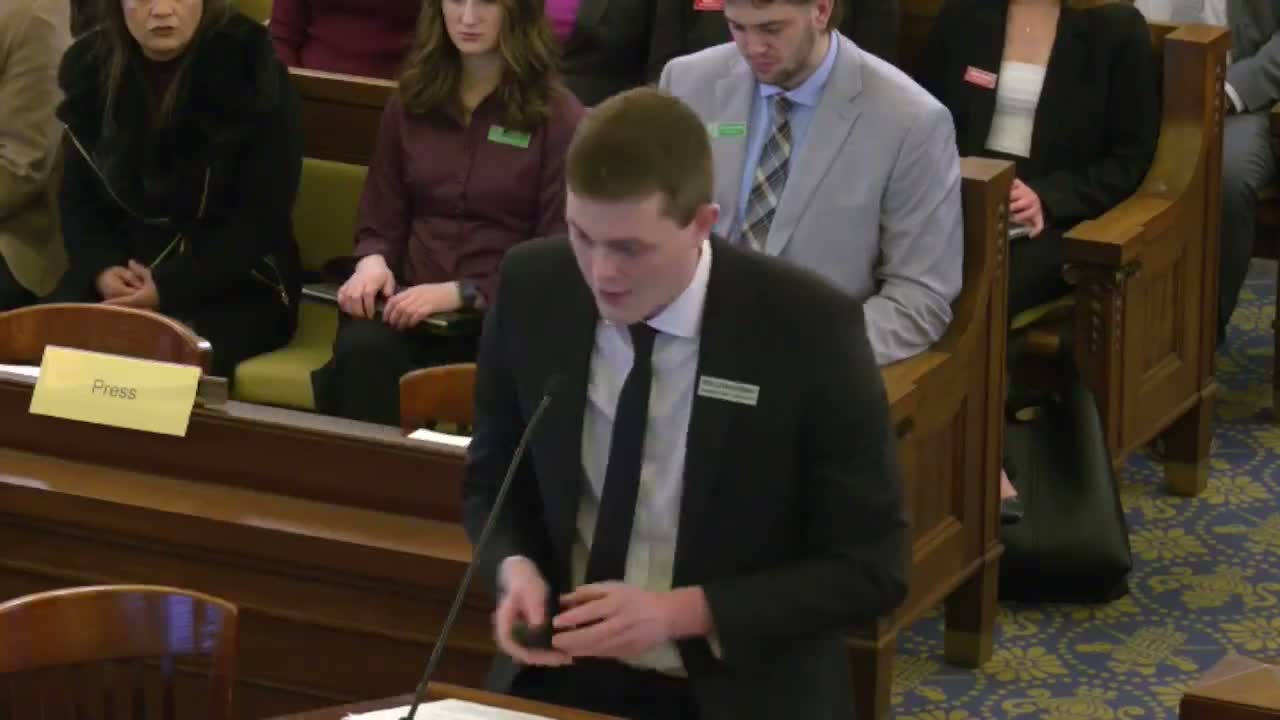
Kellen McGurkin, a budget and policy analyst with the Legislative Services Office, told the Joint Finance-Appropriations Committee that the public school support budget is driven by the state's support-unit formula and a revised forecast that reduced projected support units for FY2026.
"The public school support program represents the state and federal funding appropriated to support public schools serving grades K through 12," McGurkin said, and he explained that the state's formula pays roughly 1.55 staff per support unit and that 87% of state K‑12 funding flows through that calculation. McGurkin said the updated forecast lowers expected support units to 15,722 from 15,954 and that change, together with updated career-ladder placement estimates, produced a requested ongoing rescission of $22,300,000 to the FY2026 base.
Why it matters: Because those support-unit forecasts set the statutory baseline for many distributions, an ongoing rescission would change the starting point for FY2027 appropriations unless the committee votes otherwise.
McGurkin walked members through the LBB "big sheet" showing the FY2026 original appropriation, FY2026 revised appropriation, the agency's FY2027 request and the governor's FY2027 recommendation. He identified the largest drivers as salary apportionment tied to career-ladder placements, health-insurance funding per unit and discretionary (operational) dollars per unit.
On health insurance, McGurkin said the agency book used an earlier, larger estimate but the governor's recommendation reflects a lower projected increase: "The updated number that's in the governor's recommendation I believe is closer to a 15% increase," he said, adding that the governor proposes two rates for LEAs on‑ and off‑the state plan to better match reported costs.
McGurkin also described policy recommendations the governor included to reduce general fund pressure, including the use of PSIF (Public School Income Fund) balances and a proposed transfer of interest earnings as part of a set of one‑time and statutory exceptions.
What changed and what's next: The rescission request stems from the revised support‑unit forecast; committee members asked for follow-up data (for example, the number of employees not covered by the state's 1.55 FTE staff allowance and the exact split in the school district facilities fund between bond repayment and new construction). McGurkin told members he would follow up with requested detail. The committee paused after the presentation and moved to the superintendent's briefing.
Sources: Presentation and answers to questions by Kellen McGurkin, Legislative Services Office.